This post may contain affiliate links. Please see our full Disclosure Policy for details.
Growing plants in water—a method known as hydroculture—is not only low-maintenance but also offers a sleek, modern aesthetic that fits perfectly into any home, from minimalist apartments to lush, bohemian retreats. Water plants make an excellent display as they are easy to maintain, minimize soil mess and dependence, create a visual calming effect, space-efficient decor, and are super suitable for beginners while improving air quality and encouraging biodiversity!
We’ll explore creative water plant display ideas that will instantly elevate your space, backed by expert tips on plant selection and long-term care.
It’s important to note that while many plants can survive in water, only specific species thrive long-term. Transitioning plants to water reduces the risk of soil-borne pests (like fungus gnats) and provides a unique x-ray view of the root systems—a major trend in living art horticultural movement.
5 Cool Water Plant Display Ideas to Elevate Your Room
Before getting to the 25 creative ideas, let’s talk about the 5 cool display designs:
1. The Floating Forest Wall Gallery
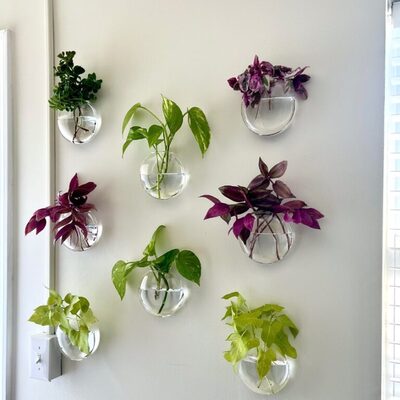
Instead of traditional shelving, use wall-mounted glass test tubes or specialized hanging bubbles. By arranging these in a geometric pattern, you create a living gallery. Use different lengths of vines to create a cascading waterfall effect down your wall.
- Best Plants: Pothos (Epipremnum aureum), Heartleaf Philodendron, and English Ivy.
2. Tabletop Micro-Ripariums
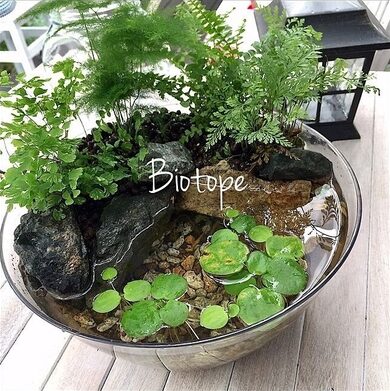
A riparium is a type of aquarium that modeled after the shoreline where plants grow both above and below the water. The trend has shifted toward Micro-Ripariums—small, shallow glass bowls featuring a mix of submerged mosses and emerged stalks.
- Best Plants: Peace Lilies (roots only), Syngonium (Arrowhead Plant), and Spider Plants.
- Visual Interest: Add Seiryu stones or smooth river pebbles to anchor the plants and add texture.
Biotope
3. Repurposed Vintage Glassware
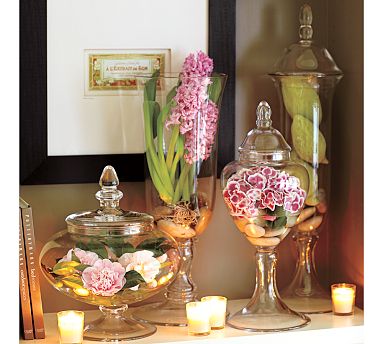
Sustainability is key in modern decor. Scour thrift stores for antique decanters, blue glass apothecary jars, or even laboratory beakers. The varying heights and colors of the glass add a curated collector vibe to your space.
- Insight: Darker glass (like amber or cobalt) can actually help slow down algae growth by filtering out some of the light that hits the water.
4. The Zen Stalk Centerpiece
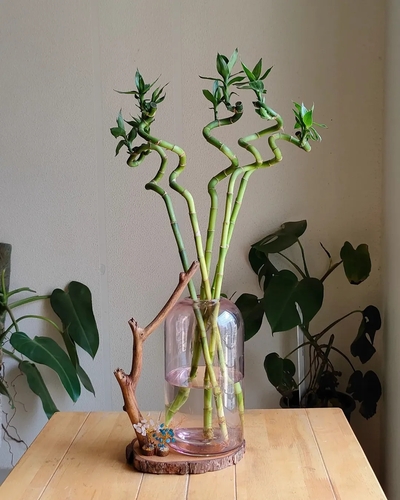
Lucky Bamboo (Dracaena sanderiana) remains a staple for a reason. To elevate it, move away from the standard plastic pots. Use a wide, shallow ceramic basin and secure the stalks with black polished river stones.
- Architectural Grouping: Instead of one stalk, group 10–15 stalks of varying heights to create a miniature forest look.
Siddham Jain
5. Floating Aquatic Islands
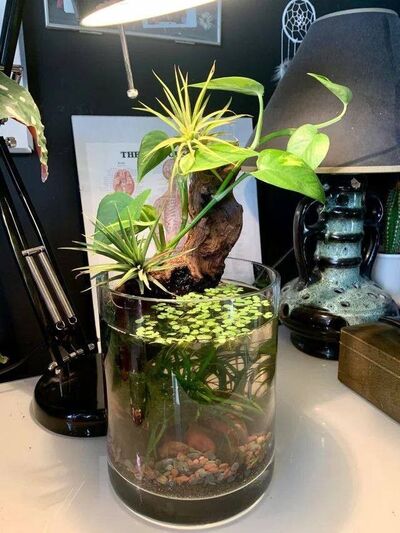
For larger glass vessels or indoor ponds, use floating plants. These sit on the surface, their roots dangling gracefully into the water below. These plants act as natural filters, keeping the water clearer for longer.
- Best Plants: Water Lettuce or Amazon Frogbit.
Types of Water Plants
Based upon their position and water consumption, water plants are categorized as:
- Floating Plants: Plants that float freely on the water surface. The roots hang in the water and absorb nutrients directly while providing shade and cover for algae and fish underneath. Common examples include small and fast growing Duckweek, velvety floating rosettes, water lettuce, water hyacinth, small photosensitive mosquito ferns, and red root floaters are common floating plants that grow easily.
- Submerged Plants: Plants that grow beneath the water surface and are anchored in the bottom soil. They keep the water clear by absorbing extra nutrients and play a vital role in oxygen production through photosynthesis. Common examples include Hornwort (reduces algae), Elodea, Tape Grass, Fanwort, and Parrot’s Feather.
- Border Plants: Plants that live and grow in the shallow edges (6 inches) of ponds or boggy soil. Their roots are submerged in water, and their foliage and flowers propagate above the waterline. Common examples include cattails, pickerel weed, water iris, arrowhead, sweet flag, and marsh marigold.
- Aquatic Flowering Plants: More suitable for outdoor ponds, these plants are rooted in deeper water (1-3 feet). Their flowers and leaves float on the surface. Examples: Water Lily, lotus, water poppy, floating heart, and bogbean.
- Houseplants: Some water loving houseplants are ideal for displaying in water. These include Pothos, Philodendron, Lucky Bamboo, Spider Plant, Peace Lily, Chinese Evergreen, and Monstera. They make a spectacular display in glass vases, jars, recycled bottles, or hanging planters.
- Bulb Flowers: Seasonal varieties, orchids, tree buds, and pits are also ideal for growing in water source filled in a bottle underneath the bulb allowing roots to form and find the water source. It makes a spectacular roots system visible to eye through the glass.
Best Plants for Water Displays
- Pothos cuttings: Fast-growing, resilient, and propagates easily in water.
- Lucky Bamboo: A low-maintenance aquatic plant that thrives excellently in hydroponic conditions and can be used with different water plants for displays.
- Philodendron cuttings: A fast-growing, long-term plant with heart-shaped leaves and trailing vines.
- Monstera cuttings: Grows easily in water for temporary or long-term use. Helps in creating aesthetic displays with other water plants.
- Peach Lily: An elegant, low-maintenance flowering plant that produces remarkably beautiful flowers without soil.
- Spider Plant: An easy-to-maintain plant that requires bright indirect light and regular water changes (preferably unfiltered)
- Mint: A fast-growing aromatic perennial that produces lilac flower clusters (July-October), making it an excellent choice for water gardens.
- Basil: A decorative and practical water plant for the kitchen.
- Coleus cuttings: The best water display plant that produces vibrant foliage, offering a colorful, striking focal point.
- Wandering Jew: A versatile, fast-growing, and resilient water plant that develops vibrant roots in bright, indirect light.
- English Ivy: Ease of propagation, rapid growth, and stunning, colorful foliage.
- Begonia cuttings: have thick, succulent-like stems and waxy leaves that add texture and modernity to water plant displays.
- Chinese Evergreen: Excellent, low-maintenance tropical plants that thrive in bright, indirect light and adapt well to hydroponic systems.
- Syngonium: The best choice for trailing water display plants due to its ability to grow directly in water in the presence of indirect light.
- Tradescantia: Excellent, fast-growing plant for water-only displays that quickly takes roots in the water.
How to style water plant display like a designer?
Style botanical water displays is a living art that requires comprehensive knowledge of textures, appropriate vessels, contrasting plants, and lighting placement for a dramatic visual effect, tailored to the room’s dimensions. Here are some tips to master this art like a pro.
1. Curate Your Vessel:
Vessels are the plant’s accessories that must complement the interior’s aesthetic. For instance,
- Clear glass vases and beakers: sleek, minimalist, or vintage apothecary bottles that display root systems, combining modern or scientific aesthetics.
- Ceramic and stone bowls: Earthy materials for a natural or matte look for a stable, grounded, and contemporary display.
- Repurposed items: Recycled mason jars, fish bowls, or metal buckets for a Bohemian display.
2. Selecting the thriller, filler, and spiller according to the design:
Use classic container design rules to create a balanced professional arrangement, following:
- Thriller: A centerpiece, a tall, vertical or spiky plant such as Lucky Bamboo, or Sweet Flag.
- Filler: Plants that add body, like a variegated Spider plant or Bushy Arrowhead plant.
- Spiller: Plants that trail over the edges, such as Ivy, Pothos, or Tradescantia.
3. Applying the 5-Step formula:
- Vessel Audit: Remove the selected plants from the nursery containers and place them into decorative, non-draining vessels.
- The 50cm Rule: If a plant is under 90cm, lift it off the floor by placing it on a stylish plant stand, bringing it to eye level.
- Triangle grouping: Group water plants in odd numbers (3-5) and arrange them in a triangular shape instead of a straight line.
- Texture Mix: combine different types of leaves for contrast and depth.
- Lighting: water plant containers must be placed near a light source to accentuate the transparency of the water and the delicate root structure.
4. Bling and Decorative details:
5. Maintenance:
Algae and murky water are two components that demolish the look and feel of a plant display.
- Ensure weekly water change for a refined and professional look.
- Make sure to choose chlorine water for maintaining plant health and longevity.
6. Stem support:
- Use decorative stones to hold stems in place without submerging leaves under the water.
7. Dust the leaves:
- Keep the leaves clean and shiny by wiping them gently with a damp cloth for a fresh feel.
Minimalist Water Plant Display Ideas
1. Clear glass fisbowl:
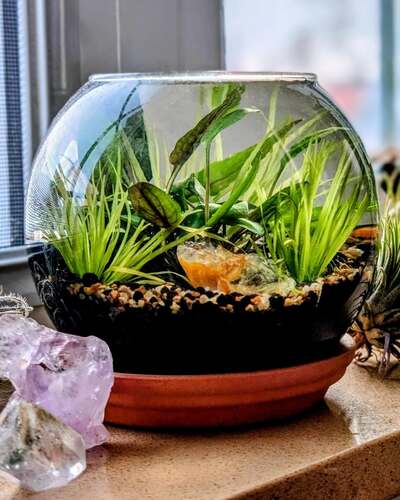
Use a clear vase or a bubble glass bowl to create your botanical oasis featuring selected water plants, like Cryptocoryne Peitchii pink and Blyxa Japonica complimented with aquasoil and fine gravel.
Lilianne
2. Cylinder Propagation Station:
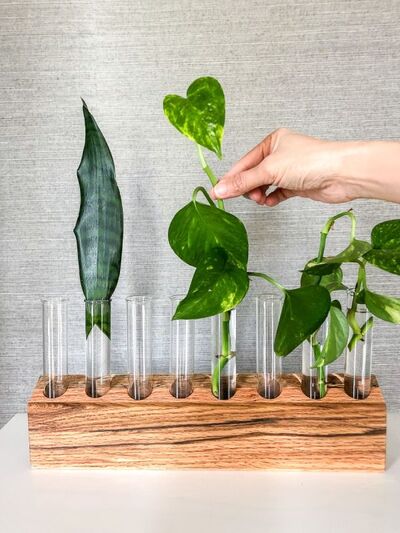
One of the most sustainable idea for water plant displays is recycling test tubes for propagation. This clean and minimalist technique is easy to adapt, decorate and display on windowsills, tables, and mantles.
Home Edit
Shop: Plant terrrium with wooden stand
3. Cylinder propagation in recycled bottles:
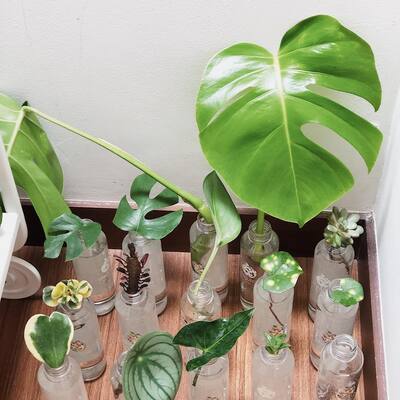
Living green and healthy comes with healthy lifesyle and a clean environment. Recycling empty glass bottles for single-stem plant display is a cost-effective idea to turn any dull corner into a lively one!
Living with Plants
4. DIY wood base vase:
Turn a casual plant and a pot into an aesthetic gem for displaying single-stem bamboo sticks. This raw yet refined look creates a soothing appearance without overcrowding the plants.
Siddham Jain
5. Single Stem in a Bud Vase:
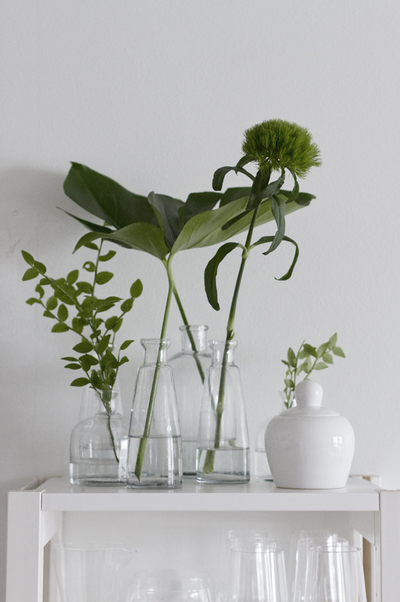
Glass bud vases are a perfect choice for creating a sense of lightness and airiness in a room. Whether you are choosing seasonal flowers, single-stem plants, or a themed event, follow a minimalist approach for a cleaner look.
Dadda
6. Sided Mini Jar Shelf Display
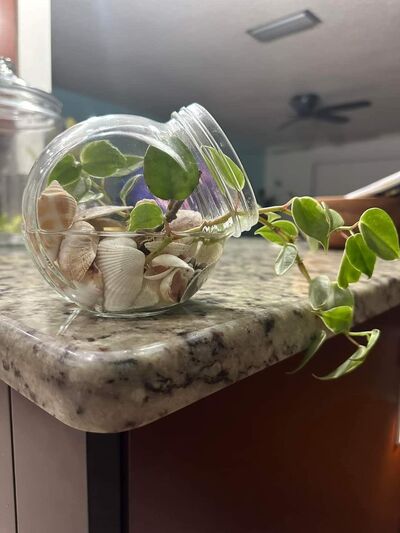
Ideal to tilt and add seashells for a mini hanging plant that will cascade down the shelf for a beautiful effect.
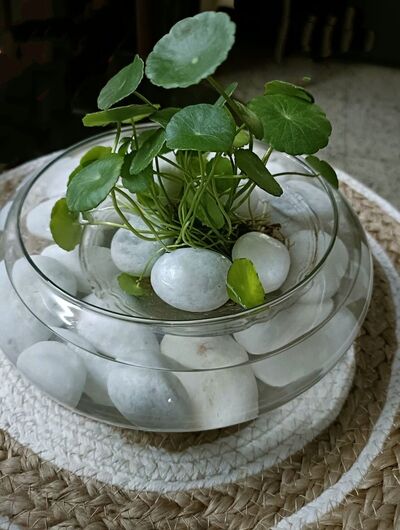
7. Pennyworth Water Display
An elegant display of pennyworth in white pebbles.
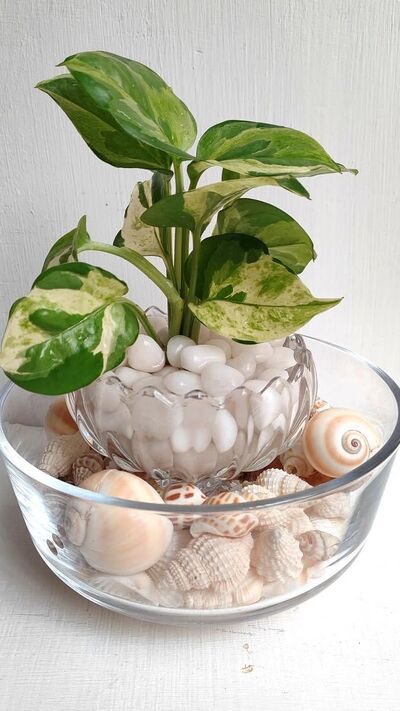
8. Double jar filler plant display
Use a variety of bowl fillers such as seashells and pebbles in a towering position to display your water plants. Simple and effective.
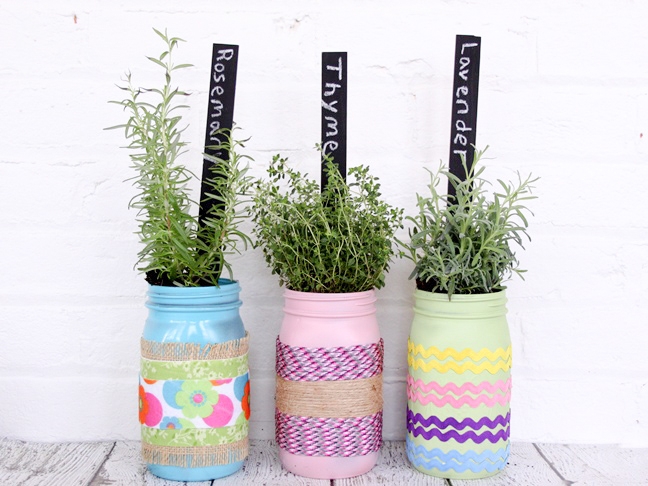
9. Apothecary Jars Display:
Create a stunning display in mason jar planters for herbs or apothecary jars of bulb flowers with stone at the base for supporting root system in small amounts of water under the base to allow roots to grow and submerge into water.
10. Kitchen Herb Water Station:
Recycle mason jars or bottles of different sizes and shapes to create your own hydroponic herb garden.
Pro tip: Use a rooting agent in water to prevent slimy herb roots.
Shop: Hydroponic Herb Garden
Rustic, Natural Water Plant Display
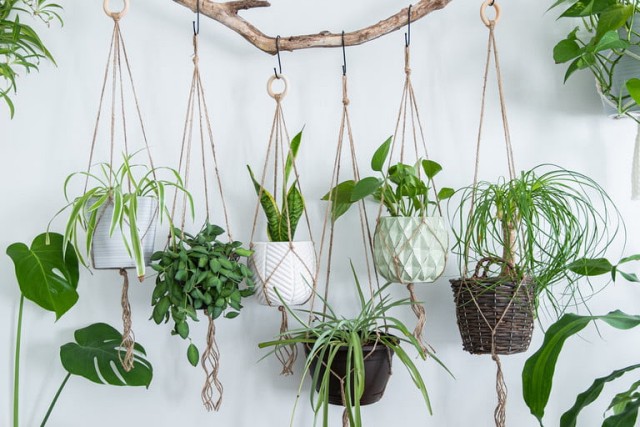
11. Hanging rope pot holder:
Suspend your mini planter pots by learning an easy knot for hanging planters with macrame using rope or yarn on a branch with hooks.
12. DIY wall-mounted plant holder:
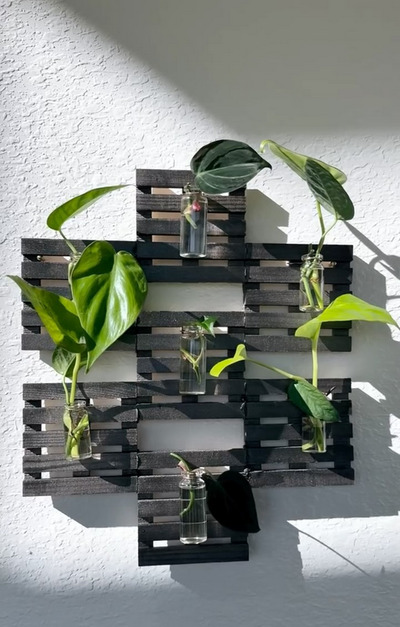
DIY a propagation center using wood crates and empty glass bottles.
Modern, Aesthetic Display Ideas
13. Geometric Glass Terrariums:
Step into serenity with the organic flow of nature. Use a unique-shaped dome and create a rockery with water feature. Display water plants and moss for an extraordinary centerpiece.
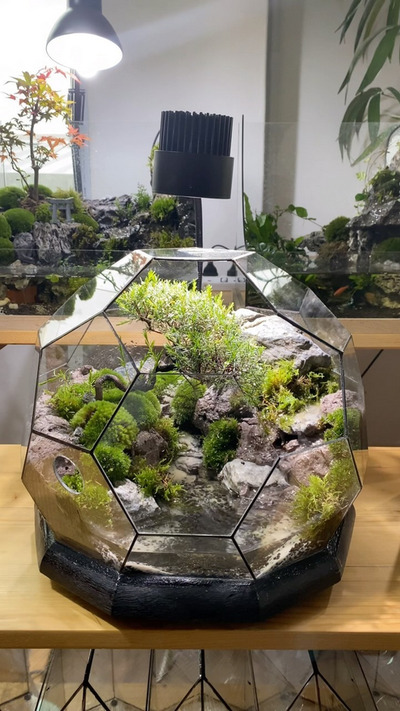
Mossarium Terrarium Malaysia
14. Wall-mounted glass globes:
Use paper and tape to maintain the symmetry of a signature wall-mounted glass globe project for water plant display. This technique is not only unique but adds texture, depth, and botanical features to the design without overspending.
15. Fridge mini planters:
Add aesthetic details to your fridges using wall plant magnets.
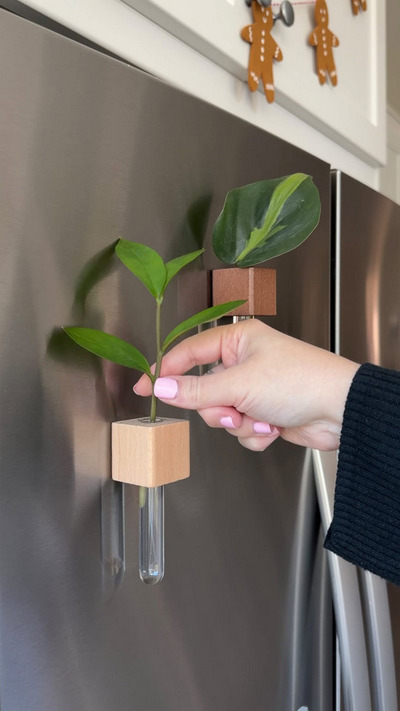
Shop: Mini Vase Magnets
16. Vase with Stand:
Use combination for water and pebbles to display air plants, houseplants, or succulents.
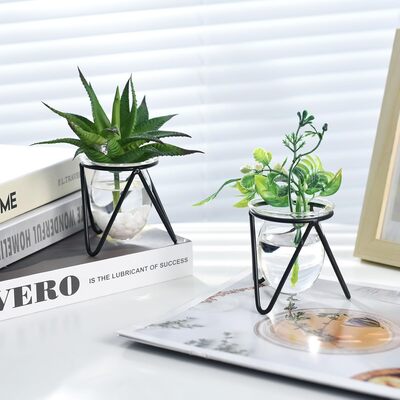
Shop: Glass Vase with Stand
17. Minimal Scandinavian shelf styling:
Use a combination of small and tall vases to curate a spectacular, minimal Scandinavian-style water plant display. The wooden shelves used in this idea add a natural feel and warmth to the display complimenting the theme of the decor.
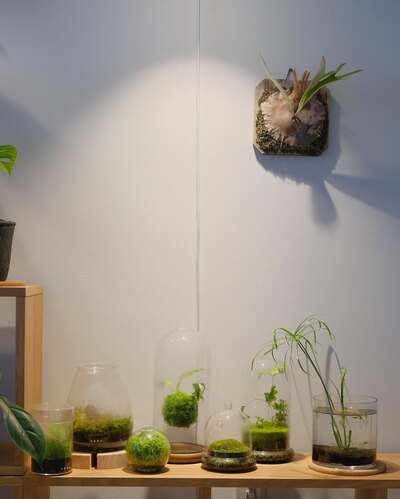
Benji Le
18. Illuminated Glass Container:
LEDs add a contemporary charm to decor items, including plants!
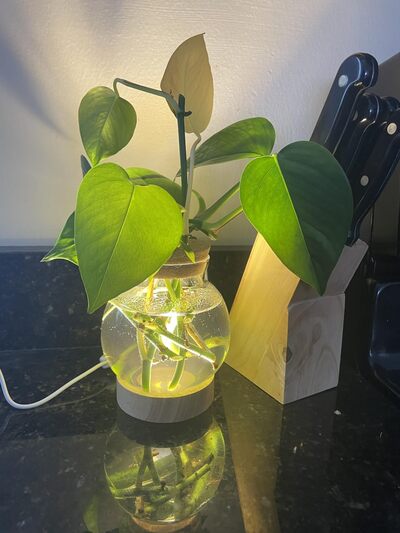
Shop: Lighted Glass Planter
Hanging bulb planters:
There are three unique ways to upcycle your old bulbs as water plant displays:
19. Hanging bulb planters:
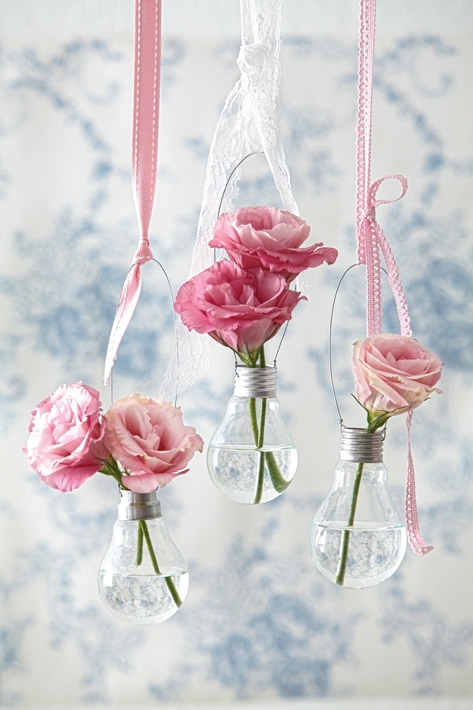
Turn old bulbs into vases for water plants or cut flowers. Use a hammer and nail to make tiny holes on the sides of the metal and loop a wire through to make a hanging, pass a ribbon, lace, or even rope to hang multiple bulbs and different heights for an elegant touch.
20. Painted-Bulb Chandelier:
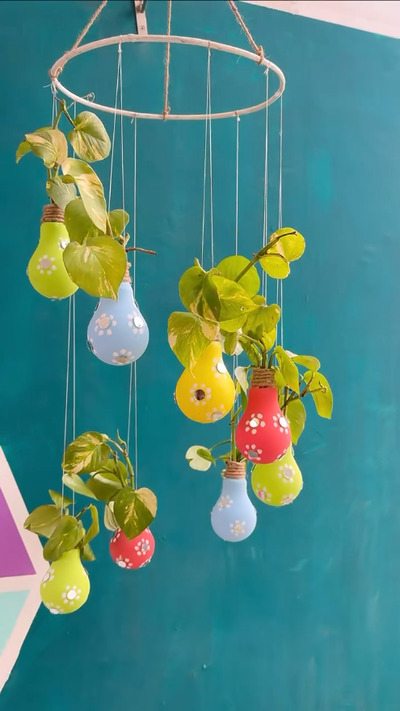
Make a cascading chandelier by upcycling old bulbs and embroidery hoop to make a cheerful plant water hanging display.
Creative Water Plant Displays
21. Miniature Clay Art Water Planter
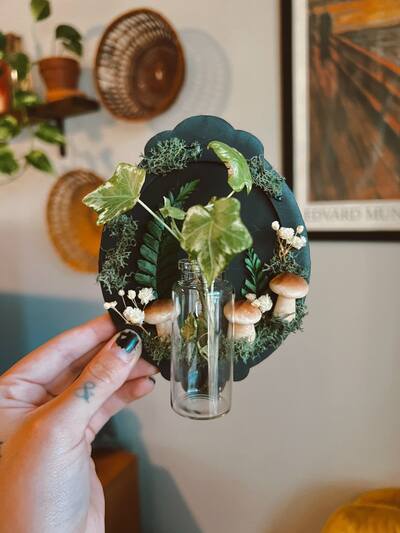
Use mini clay art ideas to decorate a frame with enchanted experiences that are dreamy and add a magnet at the back to display your plant on your fridge.
22. Driftwood Aqaurium
Boil and dry driftwood completely and hot glue to a rock for balance. Display in a glass container with pebbles at the base. Add water plants and pond lilies. Display air plants on the driftwood at the top. Add a tiny fish if you like, the plants will generate oxygen naturally.
23. Orchid in Jars
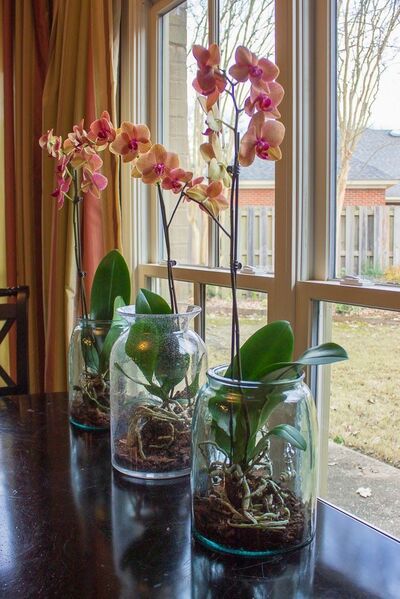
Orchids don’t require a lot of water and sunlight. Keep your orchids in a jar with liquid fertilizer and moss base. Add an inch of water underneath to allow it to stay hydrated in an indirect light location.
24. Water Plant Centerpiece
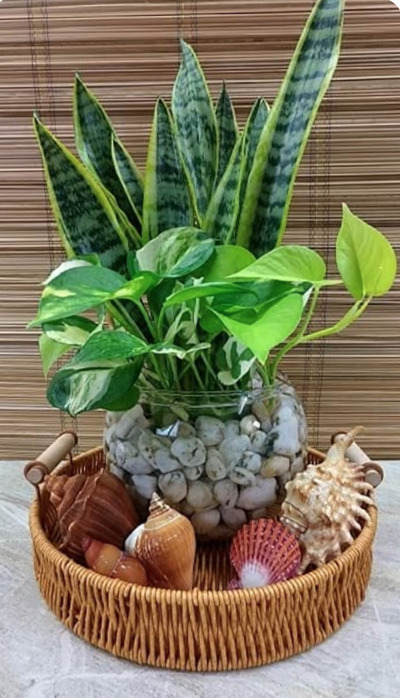
Display vase fillers like seashells or pine cones from your collection around a jar that displays snake plant and pothos in a jar. Keep pebbles to support them and fill water only for root access for longevity.
25. Bulb plant water display
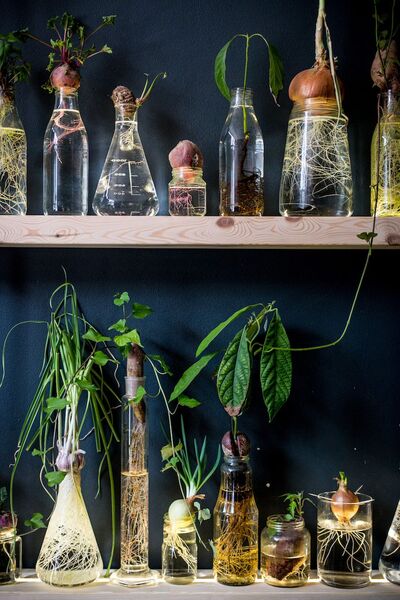
Use lights and dark background to display a cluster of plants for maximum affect. Remember the bulb stays dry and only roots will find their way to the water source underneath.
Essential Care: How to Keep Your Water Garden Alive
Tips for successful growth:
- Nutrients: Water lacks the minerals found in soil. Add a 1-2 drops of liquid fertilizer every month.
- Light: Most of the plant thrive in bright indirect light for growth in water. Avoid direct afternoon sun, which can cook the roots and cause rapid algae blooms.
- Maintenance: Change the water every 1-2 weeks or whenever it appears cloudy.
Common mistakes to avoid:
While every designer, style, and plant properties are unique, here are a few common mistakes to avoid while designing a water plant display.
- Choosing incompatible plant types: A combination of wrong plant types with zero compatibility will not do justice to a design inspiration.
- Overcrowding plants: Less is more. The fewer the plants, more clear aesthetics for visual appeal.
- Poor light placement: Poor light source and placement are not only bad for the plant growth, but also compromise the display’s ability to outstand in an interior decor.
- Neglecting water changes: This can lead to dirt, murkiness, and even algae that is displeasing and can run the vessel.
Common Questions about Water Plants
1. Are water plants low-maintenance?
Yes, water plants are generally low-maintenance, requiring minimum space, nutrients, and exposure to light for growth. These properties make them an excellent beginner-friendly choice for decoration.
2. Which plants can live in water forever?
Thanks to Mother Nature, there are hundreds of plants that can live and thrive in water culture forever in the presence of minimal fertilizers, clean water, and sufficient light. Snake plants, lucky bamboo, spider plants, philodendron, pothos, and various types of ferns are some of the most common indoor water plant species.
3. Which plants are best for beginners?
Pothos and Lucky Bamboo are nearly indestructible. If you tend to forget about your plants, start here.
4. Do plants grow faster in water or soil?
The selection of a medium for plant growth depends on various factors such as selected species, available space, and nutrients. Generally, plants grow 30-50% faster in hydroponics (water) than in soil due to a direct supply of consistent nutrients, oxygen level, and light source. However, for long-term stability and nutrition, soil is a better medium.
5. Can you use tap water?
Yes, most houseplants can tolerate normal tap water. However, the water must be free from chlorine, chloramine, and fluorides to prevent brown, crispy, and stained leaves.
6. How Do You Keep Water Plants From Smelling?
Changing water in plants weekly can remove bacteria, algae, rotten or dead roots, and other impurities that can lead to rot and smell in the water plant containers. In addition, adding a few drops of Hydrogen peroxide or activated charcoal to the container can also eliminate foul odors.
7. Do water plants attract bugs?
Generally, water plants in excess (usually outdoor ones) in stagnant water frequently attract bugs, fungus gnats, mosquitos and ants, providing a moisture-rich breeding ground. Proper drainage, frequent water changes, and avoiding over-watering can eliminate this issue.
8. How do you prevent algae growth?
Algae loves light and nutrients. To minimize it, keep your display out of direct sun, use opaque containers, and don’t over-fertilize. If you see green film, simply scrub the glass and refresh the water.
9. Can any houseplant grow in water?
No. Plants with thick, succulent leaves (like Aloe) or those prone to wet feet will rot. Stick to tropical plants that naturally grow near riverbanks.
10. How to DIY a water plant propagation station?
Common DIY Methods and Materials:
- Wood and test tubes: Convert a wooden log into a test tube holder by drilling holes using a 1-inch Forster bit, sand, and finish with oil or stain.
- Velcro/ Magnetic mounts: Use Velcro strips or magnets to attach small glass jars/test tubes directly to walls or windows.
Recycled Jar Station: Tie empty jars together with tine on a rustic branch to create a multi-vessel vase. - Hanging station: Suspend glass jars/recycled glass bottles with twine according to the height of a wall.
Related: Make plant propagation station that works without test tubes
11. How to make roots look decorative
Remember, the beauty of water plants lies in their clean aesthetics, access to light, and clean glass maintenance. Therefore, regular trimming of roots coupled with decorative substrate can help make roots look more decorative.
Water plant displays are a spectacular blend of creativity, decor, and sustainability. No matter what type of plant you prefer, starting small yet creative set-ups with simple designs can help you gradually master this skill.
Happy Crafting!
Drafted by: Nageen Sohail
Edited by: Hani Shabbir
You will also like:
40 Cool Air Plant Display Ideas
Make Beaded Succulent Plants: A Forever Blend of Craft & Nature