This post may contain affiliate links. Please see our full Disclosure Policy for details.
If your books are piling up on the floor or spilling out of shelves, it might be time to rethink how you store them. The best ways to organize books go beyond simple stacking—they balance function, style, and personality. Whether you’re working with a small apartment, a cozy reading nook, or a full home library, there are clever book storage solutions for every kind of reader.
The best ways to organize books include bookcases, bookshelves and racks to store and display books. You will find creative bookshelf ideas, smart small-space hacks, and organization methods that help you find what you love—without sacrificing style or comfort. Whether you’re going minimalist or maximalist, there’s always a clever way to showcase your love for books—stylishly and sustainably.
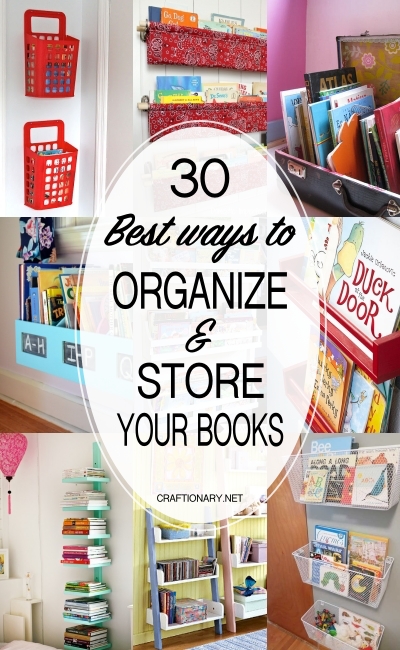
The Best Ways to Organize and Store Your Books
For book lovers, a collection of books is more than just a stack of paper—it’s a treasure trove of knowledge, comfort, and memories. But as your library grows, finding the best book storage solutions becomes essential for both accessibility and decor.
Step 1: Declutter and Prepare Your Collection
Before reorganizing, it’s crucial to know what you have and what you truly want to keep.
The Decluttering Process
Create Piles: Sort books into three categories: Keep, Sell/Donate, and Archive (for sentimental or rare books).
Ask the Right Questions: For any book you’re unsure about, ask yourself:
- Have I read this, and will I read it again?
- Do I still refer to it for work or hobbies?
- Does it genuinely “spark joy”?
Step 2: Choose Your Book Organization System
Selecting a logical system is key to making your books easy to find and enjoyable to look at. Here are the most popular book organization methods:
| ORGANIZATION METHOD: | DESCRIPTION: | BEST FOR: |
| Alphabetical
|
By author’s last name or book title.
|
Large collections where finding a specific book is the priority (the classic library approach).
|
| By Genre/Subject
|
Grouping similar types of books (e.g., Fiction, Thrillers, History, Cookbooks).
|
Readers who frequently choose books based on what mood they’re in.
|
| Fiction/Non-Fiction
|
A simple two-part separation.
|
Smaller to medium-sized, general collections.
|
| By Color (Rainbow)
|
Grouping books by the color of their spine.
|
Visually driven decor, creating a striking aesthetic.
|
| Read/Unread Status | Separating books on your ‘To Be Read’ (TBR) list from books you’ve finished. | Motivation and prioritizing your next read. |
Pro Tip for Non-Fiction: For very large subject-specific collections, consider using a modified Dewey Decimal System (e.g., separating by the 10 main categories) for a precise, library-like structure.
Step 3: Creative Book Storage Solutions for Every Space
No matter your living situation, there are stylish and functional book storage solutions to fit your needs.
Maximizing Small Spaces
When floor space is limited, the key is to think vertically and multi-functionally.
- Floating Shelves: These minimalist shelves create a sleek look and utilize empty wall space above furniture or in narrow areas.
- Vertical Book Towers: Narrow, tall shelving that uses minimal floor space while providing high capacity.
- Look for rotating models for easy access.
Repurposed Space:
- Under the Stairs: Build custom shelving into an unused alcove.
- Above Doors/Windows: Install shelves high up to utilize often-forgotten space.
- Bedside or Coffee Table Storage: Use furniture with built-in shelves or drawers to store your current reads.
- Hidden Storage: Utilize furniture like storage ottomans or beds with drawers to keep books out of sight, reducing visual clutter.
Decorative Display and Styling
A bookshelf is also a piece of decor. Use these styling techniques to make your collection shine:
- Mix Vertical and Horizontal Stacks: Varying the orientation of your books adds visual interest and creates “bookend” stacks, eliminating the need for actual bookends.
- Incorporate Decor: Break up the rows of books with small decorative items like bookends (marble, wood, or themed), plants (succulents work well), picture frames, and small sculptures.
- Gallery Wall Shelves: Use shallow wall shelves to display books with particularly attractive covers facing forward, like a piece of art.
Related: Styling bookshelves and bookcases the way you like it
Step 4: Long-Term Book Preservation and Care
Protecting your physical books from damage is a critical part of book storage. Proper preservation ensures your collection lasts for generations.
Essential Preservation Tips
| PRESERVATION ISSUE: | CAUSE: | SOLUTION: |
| Fading/Yellowing
|
UV Light (Direct Sunlight)
|
Avoid placing bookshelves near windows or use UV-blocking curtains/film.
|
| Mold/Mildew
|
High Humidity and Dampness
|
Do NOT store books in basements, attics, or garages. Store in a cool, dry area with good ventilation.
|
| Slumping/Distortion
|
Shelves that are too full or too empty.
|
Use bookends to keep standing books upright and straight. Store large/heavy books horizontally.
|
| Dust and Pests | Lack of maintenance and dirty spaces. | Dust your books and shelves regularly (at least weekly) using a soft cloth or paintbrush. Inspect for insect eggs before long-term storage. |
Long-Term Archival Storage
For books you aren’t currently displaying or reading:
- Store them in acid-free boxes or airtight plastic containers.
- Ensure they are stored flat or standing upright, not leaning.
- Place silica gel packets in the storage containers to absorb excess moisture.

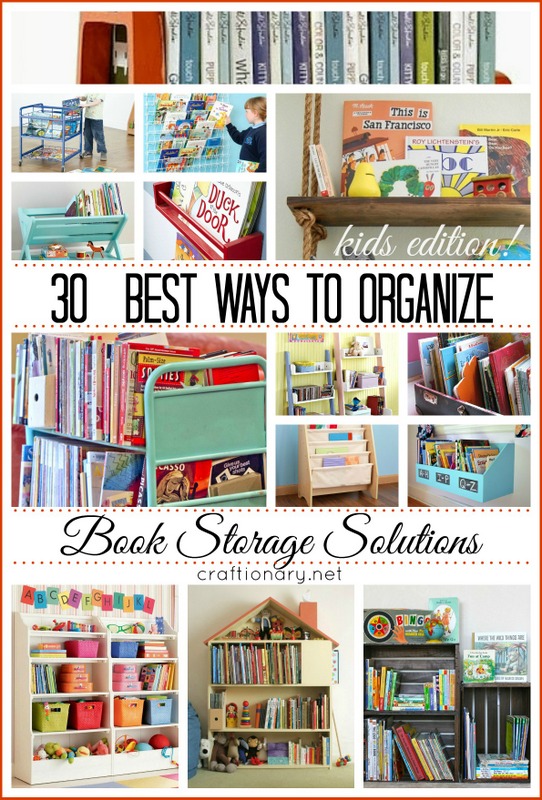
30 Best ways to organize books
I have arranged these books storage solutions in the form of a list:
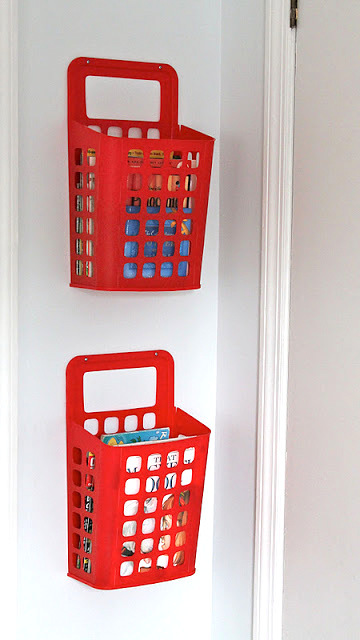
1. DIY waste basket
Ikea waste bins turned reading book baskets in the kid’s bedroom.
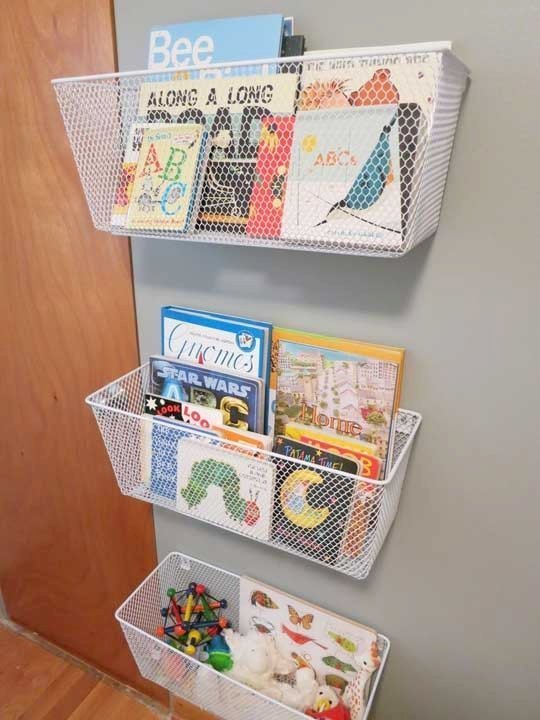
2. Chicken wire basket
Clever idea to use chicken-wire baskets as book racks.
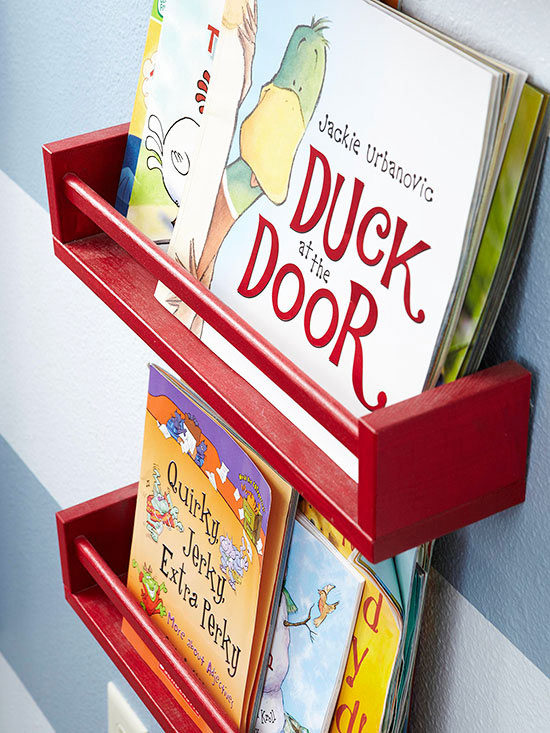
3. Spice Rack
Basic spice racks become shelves for books in kid’s bedroom.
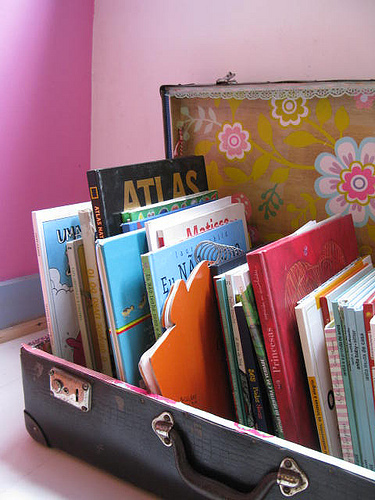
4. Repurposed cases
Use an old suitcase to organize books.
Books Storage Solutions with tutorials
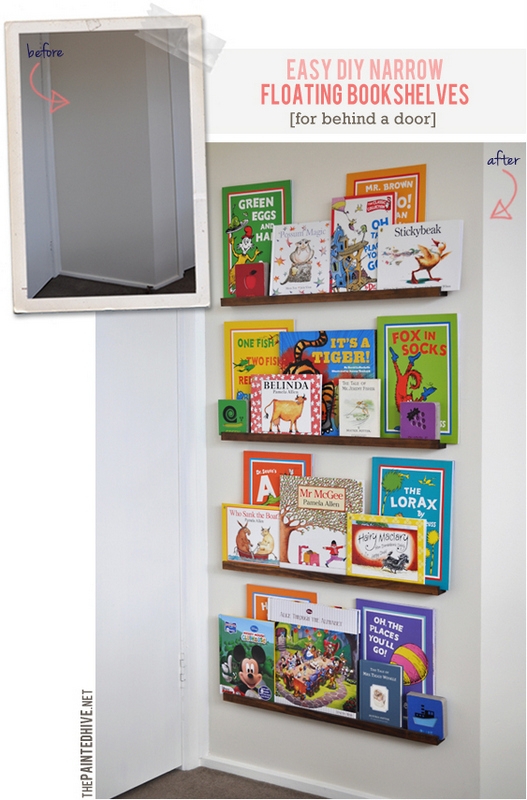
5. Floating shelves
Make behind the door floating bookshelves.
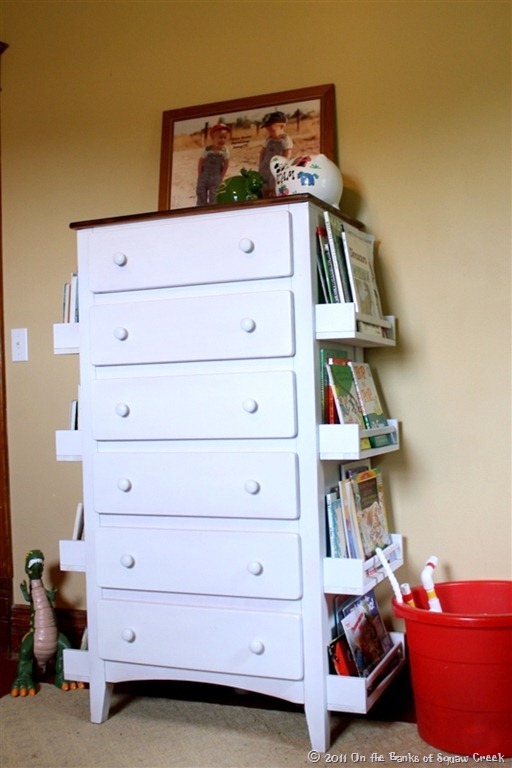
6. Storage solution for children’s books
This is a great idea. I love how the sides of a dresser are well utilized into organizing books! Use some spice racks from ikea, to make this bookshelf.
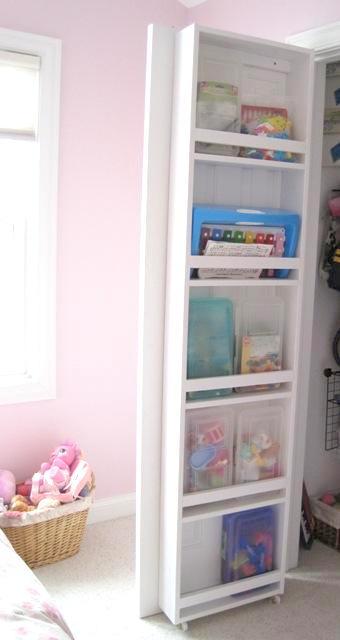
7. Behind closet door books storage
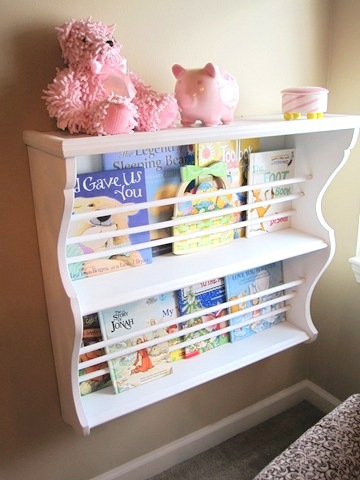
8. Old Hutch
Repurposed top part of an old dresser into book rack.
Related: 40 Efficient uses for old china hutch
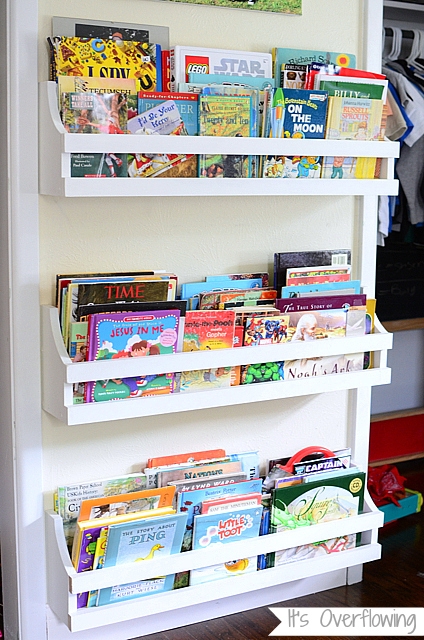
9. DIY Wall mount
Build a wall mount bookshelf with spice racks
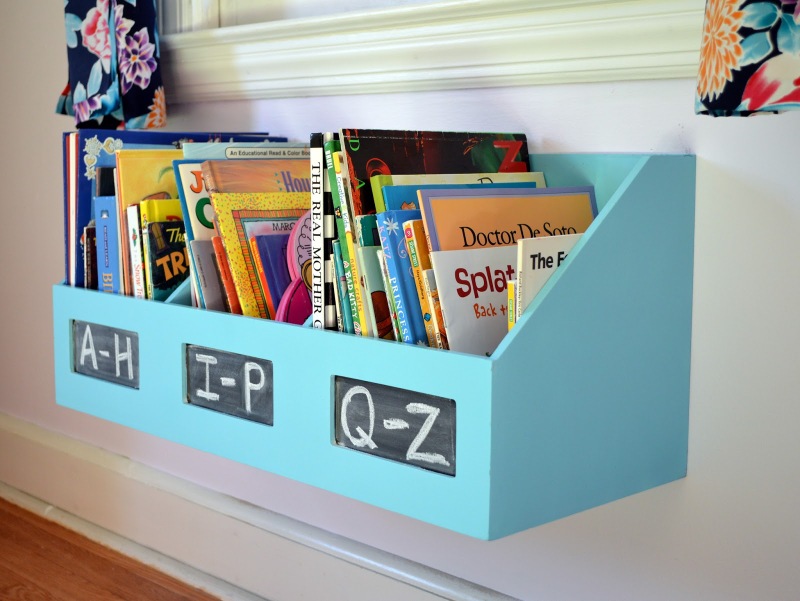
10. Flea Market Finds
Repurposed kids bookshelf from flea market with paint
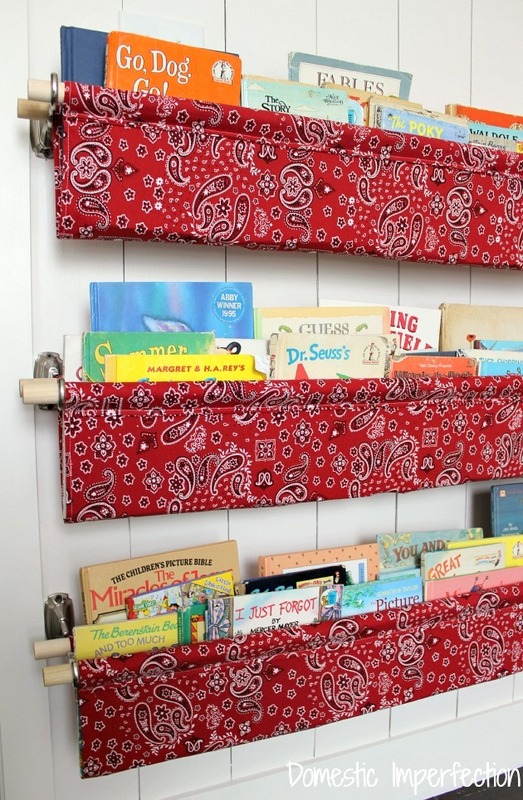
11. Sew Book Slings
Sew these book slings with cloth and wooden dowels. Great idea!
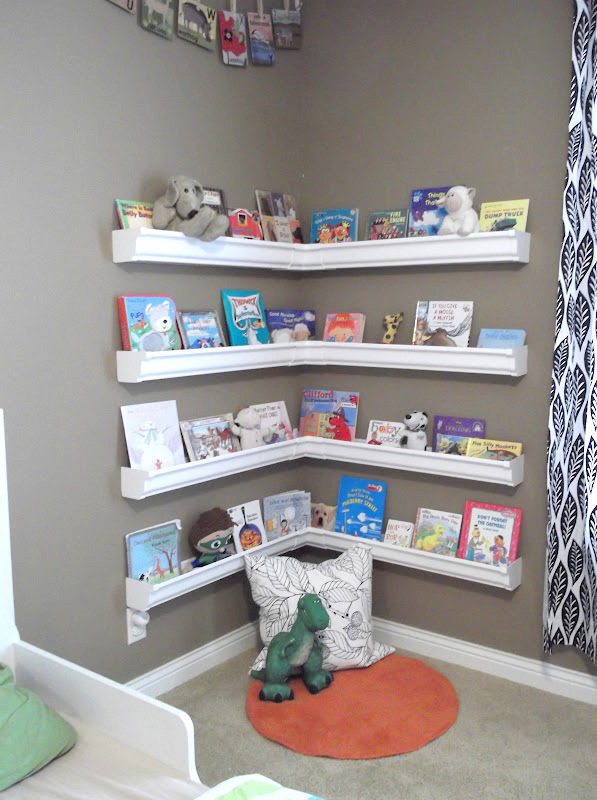
12. Gutters Repurpose
Use gutters to organize books on the wall.
Bookcases, Bookshelves and Book racks to buy
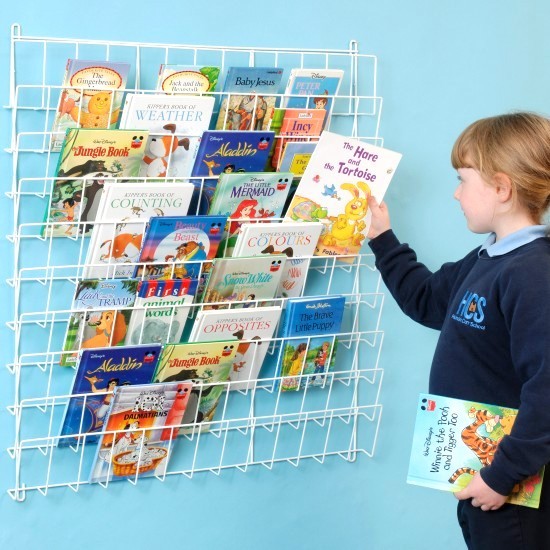
13. Wire Rack
A hanging book rack made with wire or wire racks wall hanging.
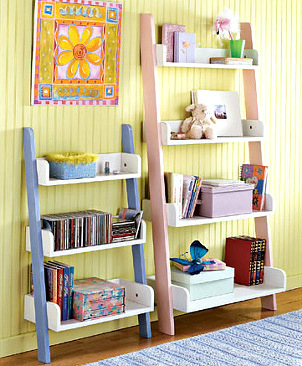
14. Wall Rest Rack
I love the sleek design of these bookshelves and this scalloped bookshelf.
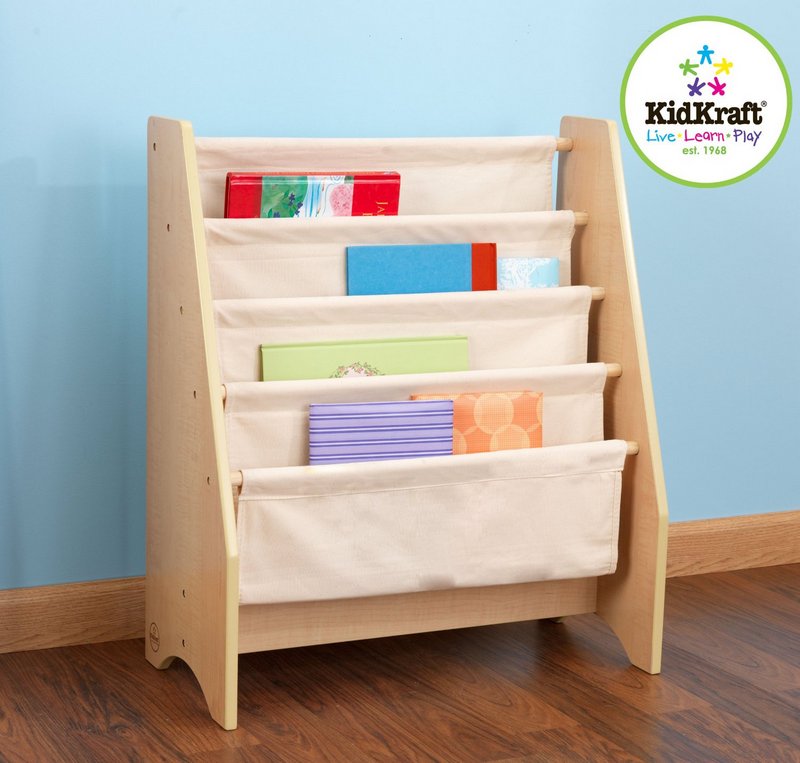
15. Kids Sling Bookshelf
Book shelf with deep pockets perfect for keeping books. This Sturdy metal frame book rack is also good.
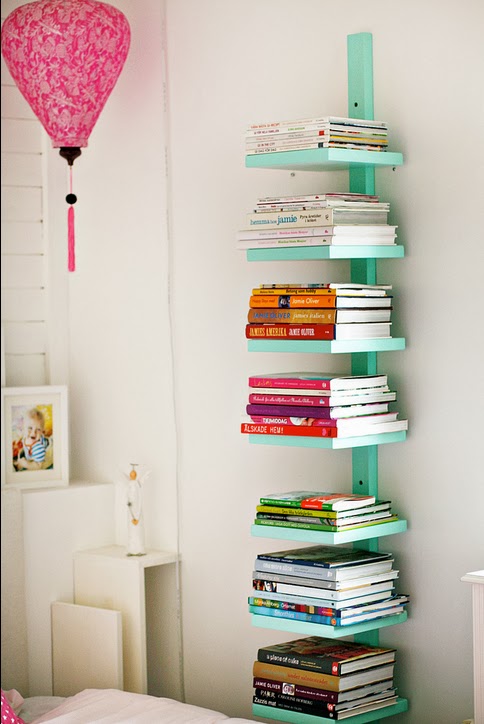
16. Vertical Shelf
Beautiful spine bookshelves made out of wooden blocks screwed into the stud. I love this idea of organizing books by categories and types!
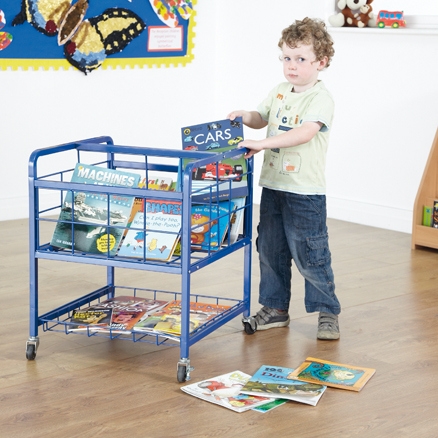
17. Movable Rack
Book storage cart with wheels.
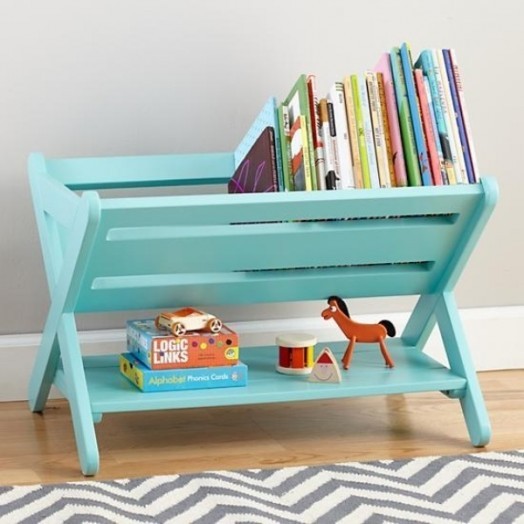
18. Triangle Base Rack
I love this book rack design and color. Such a wonderful piece of furniture to have in kids room/ playroom.
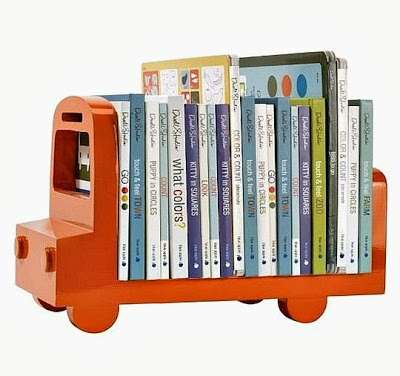
19. Nursery Book Rack
A cute bus-shaped book storage solution.
20. Sleek Book Rack
Another simple bookshelf
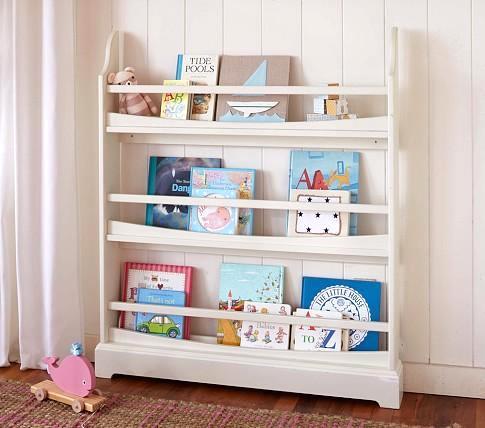
Recycled pallet and crate books storage solutions
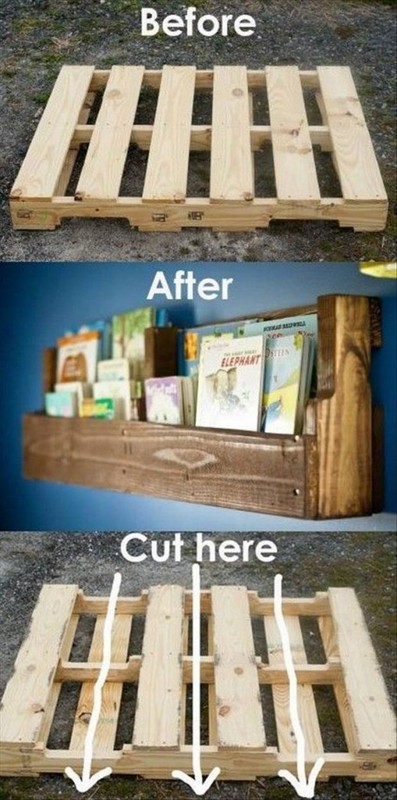
21. Repurpose Pallet
Cut a pallet to make these wonderful hanging bookshelves.
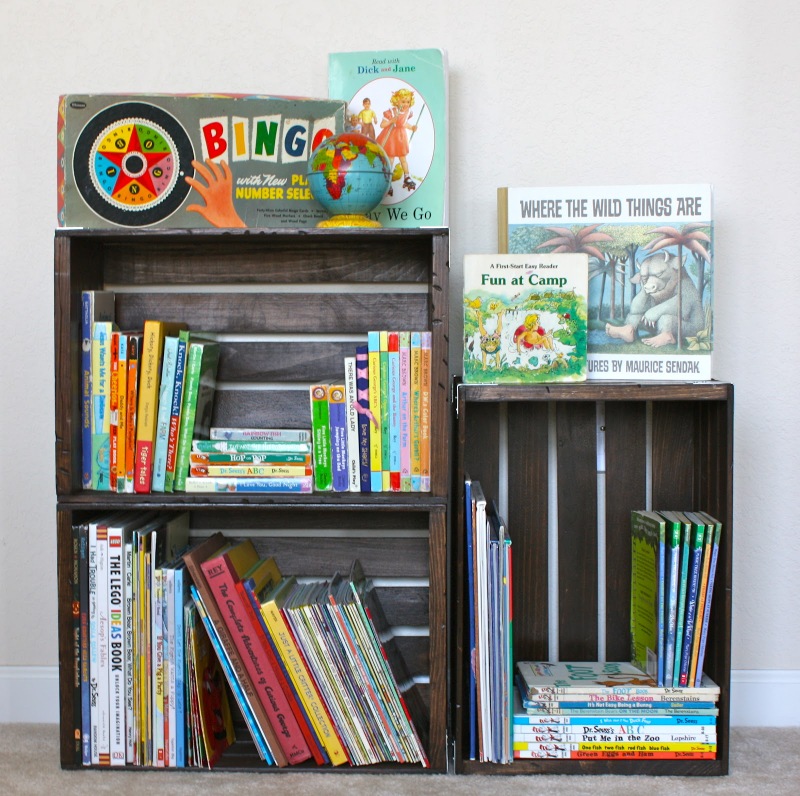
22. Reuse Crates
Reclaim old wooden crates for organizing books and more. Sand and apply a coat or two of wood stain. And they are newer than ever!
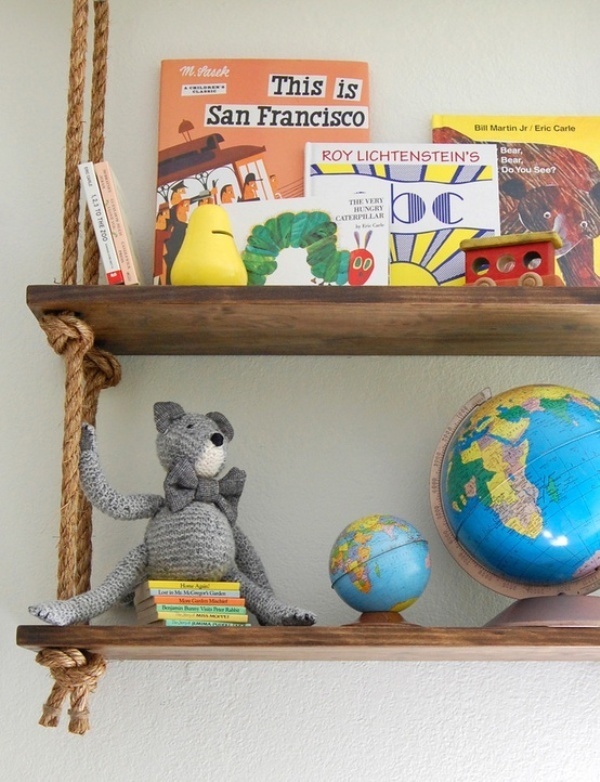
23. Roped Boards
A hanging book rack made with wooden boards and rope.
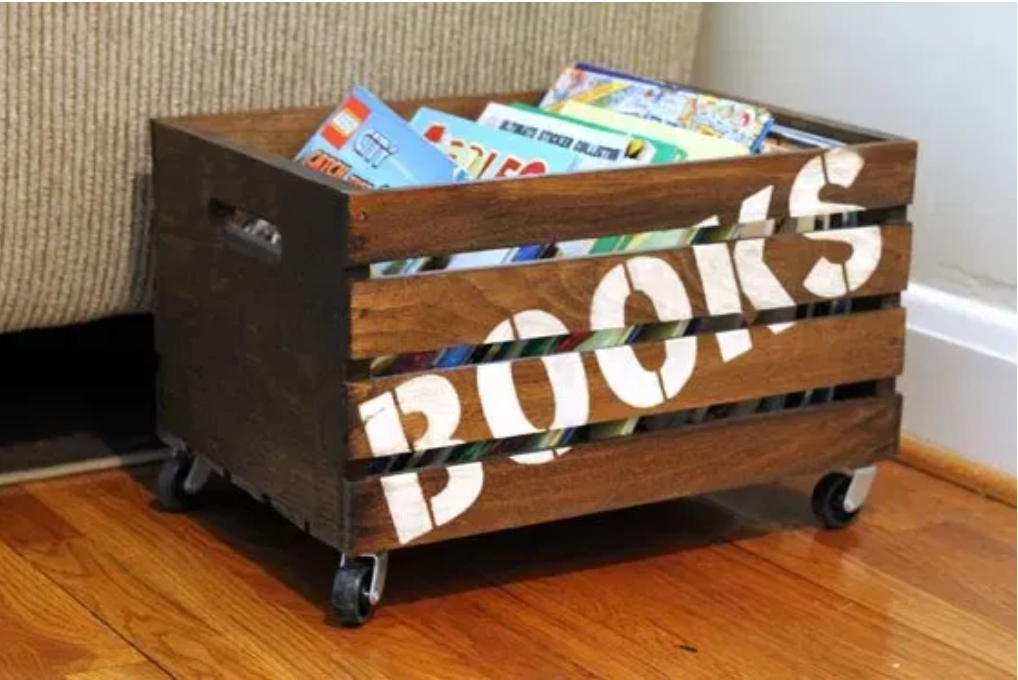
24. Wooden books storage crate
Turn a wooden crate into a portable books storage with wheels.
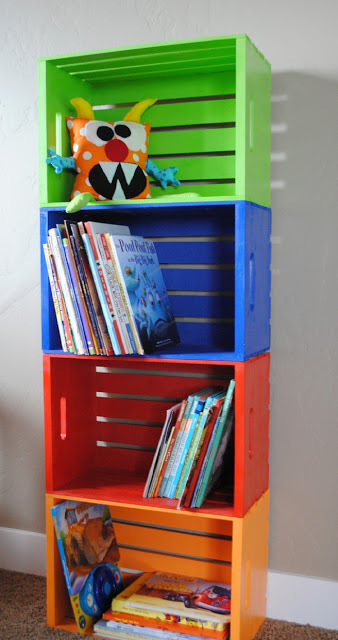
25. DIY bookshelf
Paint and screw wooden crates together to make a bookshelf.
Inspiring ideas to display books
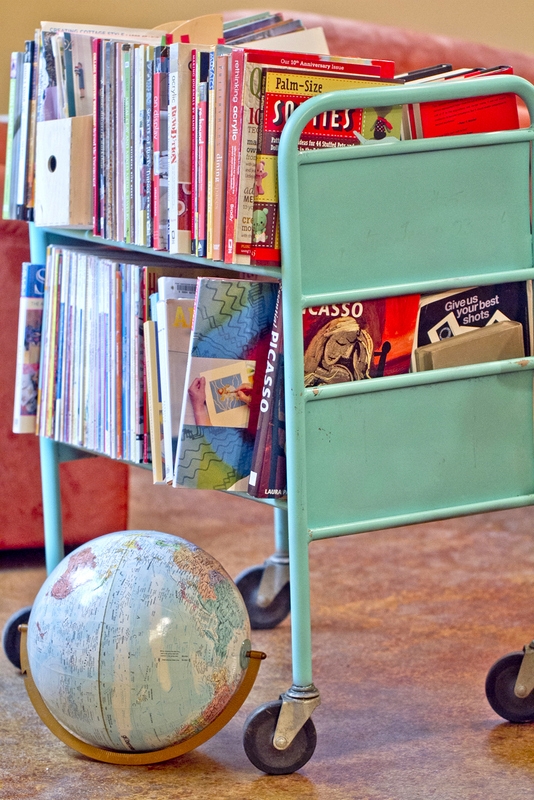
26. Vintage finds
Vintage library cart. A great thrift store find!
27. Create an extended library
I love this idea of using two bookcases together for organization. You can use these bookcases in various settings for different purposes around the house. You can also increase your library in coordination as your collection increases.
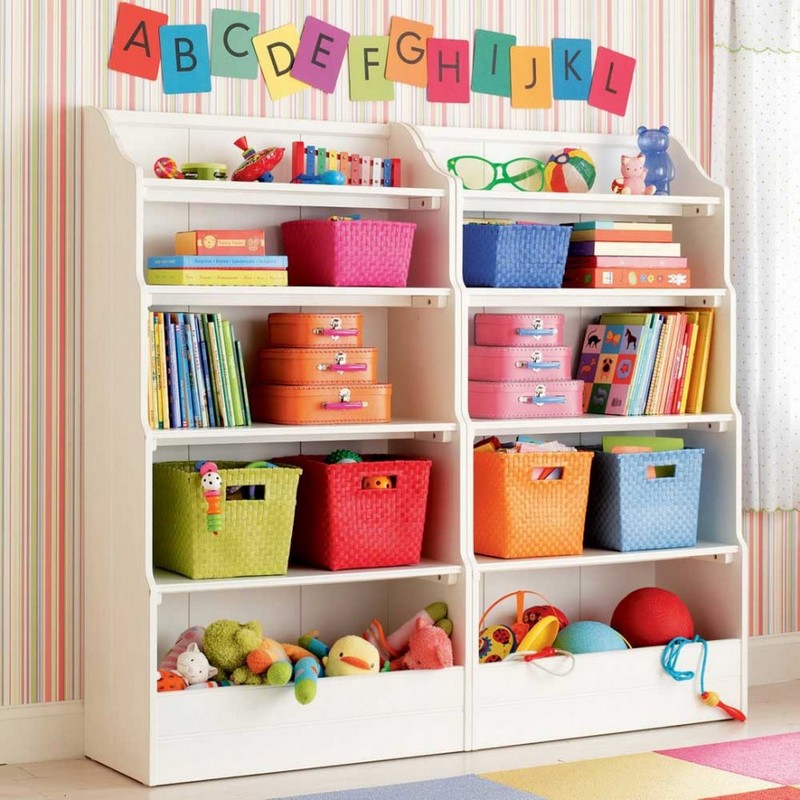
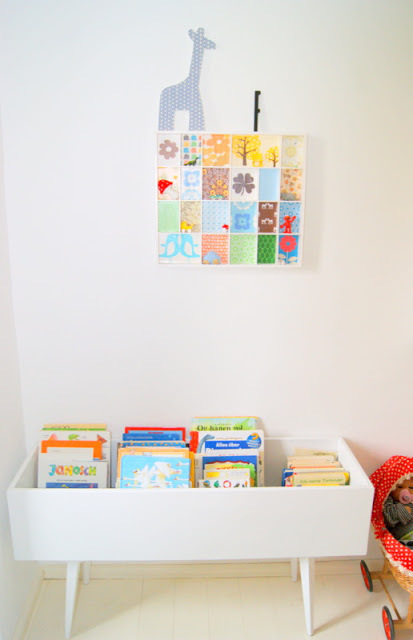
28. Drawer turned book rack
A very cool idea to use a drawer with legs as book rack.
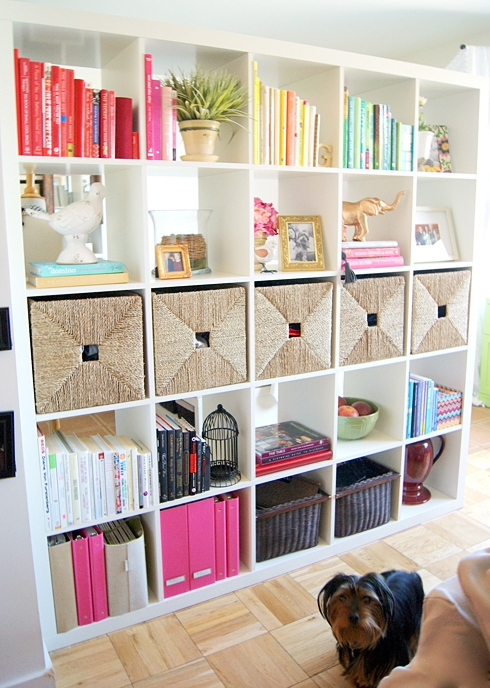
29. Large bookcase
Use a large bookcase to organize books, toys and more in kids room/ playroom.
I love the use of baskets to organize. Attach labels to them for ease of access. The upper squares can be used to display kids toys or art.
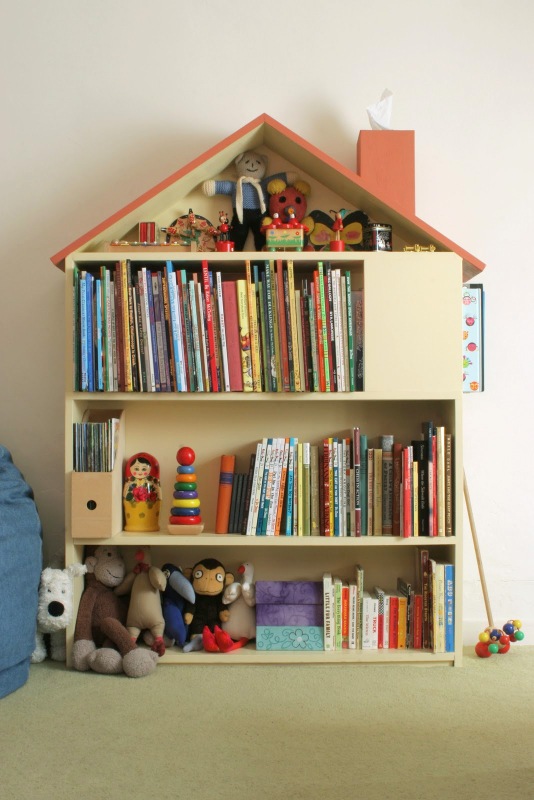
30. Book House
Make a bookshelf with plywood in the shape of a house. Too cute! You can turn any bookcase into a house by just adding a roof on the top. Just glue and screw two plywood boards into a bookcase.
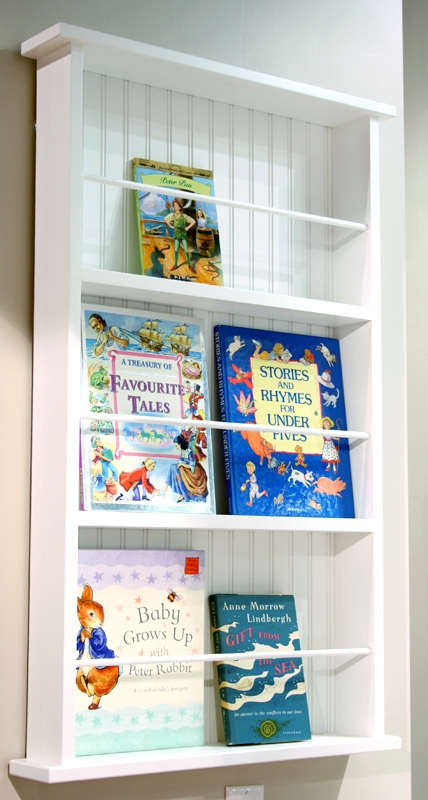
31. Bead board Bookcase
Looks like a bookcase made with wooden boards (as frame), dowels and bead board (for background texture).
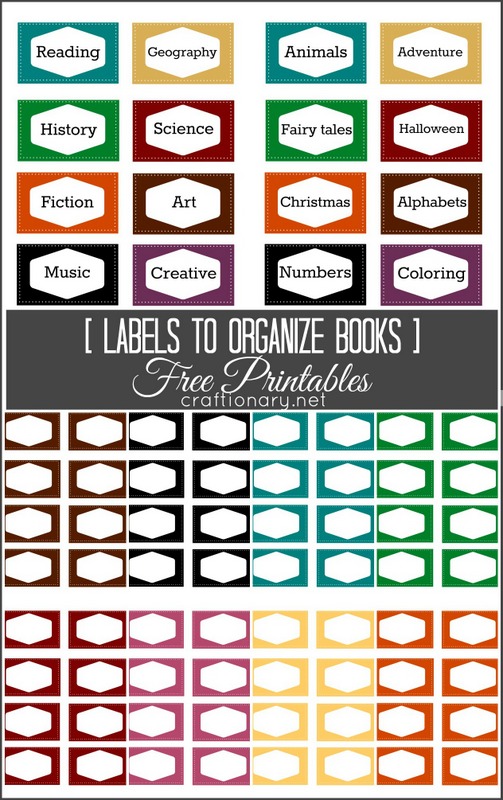
32. Customizable Book Labels
Free Book label printables that you can also customize.
Why Organizing Your Books Matters
A well-organized book collection not only makes your home look tidy but also helps:
- Save time — You can easily find the book you’re looking for.
- Enhance décor — A well-styled shelf adds warmth and character.
- Reduce clutter — Keeping only books you love makes your space feel lighter.
- Encourage reading — A beautiful, organized library invites you to read more.
?1. Declutter and Categorize Before Organizing
Before jumping into storage ideas, sort your books:
- Keep: Books you love, reread, or display proudly.
- Donate or sell: Books you haven’t touched in years.
- Group by category: Fiction, nonfiction, cookbooks, kids’ books, etc.
- Pro tip: Use the Marie Kondo method—keep only books that spark joy or meaning.
2. Choose the Right Storage Solution
Here are the best book storage ideas based on your space and style:
- Floating Shelves: Perfect for modern homes or small apartments. They create an airy, minimalist look and free up floor space.
- Built-in Bookcases: A classic solution for large collections. Custom built-ins can turn a living room wall or hallway into a home library.
- Under-Stair Storage: Transform unused space beneath stairs into hidden book storage.
- Corner Book Shelves: Make use of every inch by adding shelves in unused corners—ideal for tight rooms or studio apartments.
- Book Carts or Rolling Trolleys: Stylish and flexible—move your mini library from room to room!
- Baskets and Crates for Kids’ Books: Encourage reading habits with low, easy-access bins or crates for children’s books.
- Hidden Storage Benches: A multi-purpose idea for small spaces—store books inside benches or ottomans for a clean, modern look.
3. Creative Styling Tips for Bookshelves
Organizing books can also be an art form. Use these techniques for a visually appealing display:
- Color coding: Arrange books by spine color for a rainbow aesthetic.
- Mix décor items: Add small plants, candles, or framed art between stacks.
- Alternate orientations: Combine vertical and horizontal stacks for texture.
- Layer items: Lean artwork or photos behind books for a personal touch.
?4. Organize by Function or Theme
If you’re a frequent reader or researcher, organize your books by:
- Genre or topic – great for large libraries.
- Alphabetical order – practical for quick access.
- Reading status – “to read,” “in progress,” and “favorites.”
- Mood or vibe – cozy reads, travel books, classics, etc.
5. DIY Book Storage Ideas
If you love crafting or want something budget-friendly, try these DIY book storage projects:
- Repurpose old ladders into vertical shelves.
- Stack wooden crates for a rustic, modular library.
- Use pegboards to hang mini bookshelves.
- Attach baskets to the wall for a casual boho look.
?6. Best Book Storage for Small Spaces
When every inch counts, choose functional and aesthetic solutions:
- Use floating ledges above doors or windows.
- Try wall grids for lightweight paperback displays.
- Create book nooks under beds or coffee tables.
- Opt for multi-purpose furniture with storage compartments.
Common Questions About Book Storage
1. What’s the most space-efficient way to store books?
Use vertical storage like tall shelves or wall-mounted racks. Floating shelves and under-stair storage maximize space.
2. How do you organize books without a bookshelf?
Use crates, baskets, benches, or even decorative boxes stacked neatly.
3. How can you make your bookshelf look less cluttered?
Mix books with décor items, leave breathing space between stacks, and avoid overfilling shelves.
4. Should you store books vertically or horizontally?
Both work—vertical stacks make books easy to access, while horizontal stacks add visual interest.
5. How can you protect books from damage?
Avoid direct sunlight and humidity. Use dust covers and keep them off the floor.
6. What is the most space-efficient way to store books?
The most space-efficient ways are to utilize vertical space with floor-to-ceiling shelving (including space above doors) and using floating wall shelves to get books off the floor.
7. How do libraries organize their books?
Libraries primarily use the Dewey Decimal System (for non-fiction) and alphabetical order by author’s last name (for fiction) combined with subject or genre categories.
8. Should you store your books horizontally or vertically?
Generally, books should be stored vertically to maintain the spine’s integrity. However, very large, heavy books should be stored horizontally to prevent them from slumping, which can damage their structure. Horizontal stacks can also be used as visual breaks on a shelf.
I am loving these ideas. I hope you had a good time getting inspired from these best ways to organize books.
You may also like:
How to Stencil Furniture Makeovers that look expensive?





I really like the side-by-side white bookshelf idea, can you tell me where I might find those particular bookshelves or ones similar to it?
Hi Krista, the idea is basically a DIY project created by a fellow blogger. I am unsure if such a piece would be available for purchase somewhere!