This post may contain affiliate links. Please see our full Disclosure Policy for details.
I’ve been making and writing about small-scale craft work for years, and miniatures built from recycled and mixed media are genuinely one of the most rewarding categories to work in — because the constraint (you’re not buying anything, you’re transforming what’s already in your junk drawer) is exactly what makes the results feel original. Nobody else has your specific bottle caps, your specific fabric scraps, your specific broken jewelry. That’s the whole appeal.
This article has actual construction notes, scale guidance, and the small technical details that separate a miniature that reads as intentional art from one that reads as, well, glued trash.
What Counts as a Recycled Mixed Media Miniature, Exactly?
Before the list — a quick definition, because this term gets used loosely online and it’s worth being precise about it for your own planning.
A recycled mixed media miniature is a small-scale object or scene (generally under 6 inches, though there’s no hard rule) built by combining reclaimed materials — packaging, broken items, natural debris, fabric scraps, old jewelry — with craft media like paint, resin, polymer clay, or wire.
The mixed media part matters: you’re not just repurposing one material, you’re combining several textures and techniques in a single small piece, the way a collage artist works, just in three dimensions.
That combination is what gives these pieces their depth. A miniature made from a single material (all clay, all paper) tends to look like a model. A miniature that mixes a rusted metal fragment with hand-painted clay and a scrap of vintage lace tends to look like a found object — like it has history, even though you built the history five minutes ago.
if you are looking for ideas, we have listed 30 creative recycled and mixed media miniature ideas to help you create some impressive pieces.
What is a Miniature?
A miniature is more than just a single small object; it is a whole scene shrunk down to a tiny scale, composed of a few small pieces assembled and organized together to form a single solid story.
Key Terms to Know
- Scale: The ratio of a miniature to real life (e.g., 1:12, where 1 inch represents 1 foot).
- Room Box: A room box is an open-fronted container designed to showcase an entire small interior environment.
- Diorama: A diorama is a three-dimensional scene that is assembled inside a box or display case and frequently has a backdrop.
- Dollhouse scale (1:12): The most popular small scale is the dollhouse scale (1:12), where one inch is equal to one foot.
- Half scale (1:24): 1 inch is equivalent to 2 feet; this small scale works well for room-box scenarios, such as a café or laundry room.
- Kit-bashing: It is the practice of creating tiny furniture or props by recycling parts from unrelated objects, such as bottle caps or computer keys.
- Weathering: It is the process of giving an item a worn, realistic appearance by using methods like gentle sanding or diluted paint washes.
How to Scale a Miniature Project?
Every professional miniature is made at a constant scale to improve accuracy. Two significant scales are 1:24 (half scale), where one inch is equal to two feet, and 1:12 (dollhouse scale), where one inch is equal to one foot. Divide the real-world measurement by the scale number to precisely scale an object. At 1:24 scale, for example, a washing machine that is 24 inches wide becomes 1 inch wide. To make sure that every element in the scene maintains proportionality, you must start with a reference piece, like a door or chair.
Safety Tips for Working with Recycled Materials
There are a few safety tips that you need to follow while making miniatures with recycled materials. Professional miniature makers prepare their materials as carefully as if they were building something full-sized.
- Sterilize natural materials: You must not use the untreated natural materials like twine, twigs, bark, leaves and acorns. Bake these natural material at approximately 200°F for 30 to 60 minutes to eliminate moisture, insects and mold. The baking time depends upon the size of the material.
- Clean everything first: You must clean all the materials like cans, bottle caps, and cork before using them. First, wash all the materials and then let them dry before using glue or paints on them.
- Sand sharp edges: When you are using a metal item like a soda can, you must fold or sand its sharp edges before handling it.
- Prime before painting: Priming is so important for recyclable materials. A thin coat of white acrylic or gesso helps paint to hold evenly on metal or glossy cardboard.
- Use the right glue: Select the appropriate adhesive for the project. Hot glue works quickly on cardboard and fabric, whereas a strong craft or E6000-style adhesive works better on metal and plastic.
- Work at scale: Keep a ruler nearby; miniatures read as realistic when the proportions are consistent throughout the scene.
- Save odd scraps: The true workhorses of miniature construction are thread, wire, bottle caps, corks, and buttons; keep a small bin for each.
How Professional Miniature Makers Work?
Professional miniaturists create each piece the same way they would a full-sized sculpture, only on a smaller scale. Before adding any details, they begin with a floor plan or reference image of an actual space, select a single, uniform size for the entire project, and rough out the layout.
Many professionals also work in small imperfections, a slightly worn floorboard, an oddly arranged shelf, because these make a scene feel like a real, lived-in room rather than a toy.
How to Start Creating Recycled and Mixed Media Miniatures?
To create a recycled and mixed media miniature you do not need to buy so many items, as you already have everything in your kitchen drawer and recycling bin. You can start with something simple, like a popsicle-stick cottage or bottle cap figures. Let the entire process teach you what works best for you. Once you understand how different materials bend, cut, and glue, you will see every bottle cap, cork, and cardboard scrap as a small building block waiting for a new life.
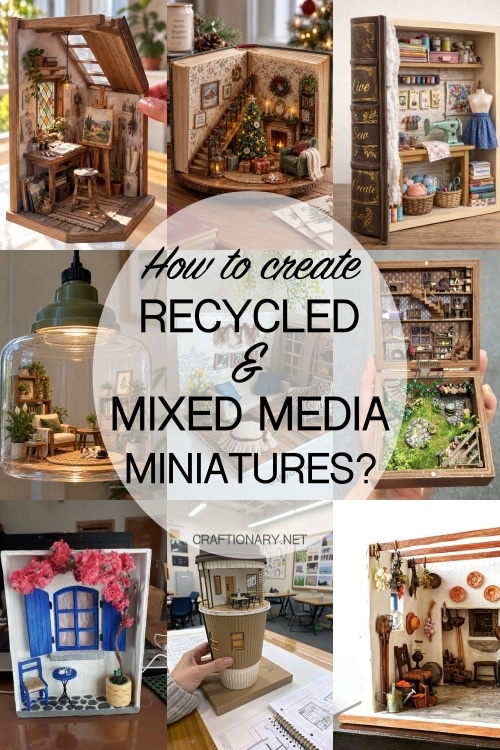
22 Creative Recycled and Mixed Media Miniatures
Whimsical Garden and Nature Display:
Make beautiful miniature gardens with cardboard greenhouses and fairy-garden swing settings using recycled materials.
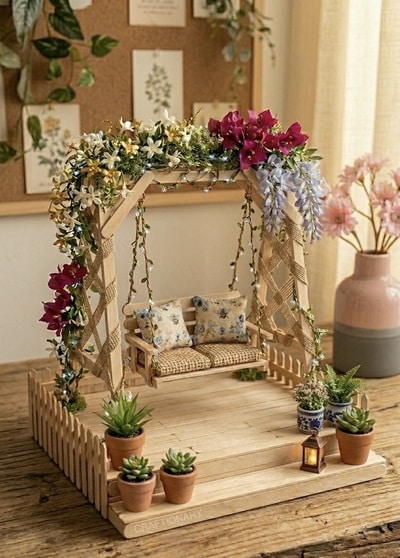
1. Popsicle Fairy Garden Swing
Create a charming fairy swing with natural materials, ribbon, discarded popsicle sticks, and leftover fabric.
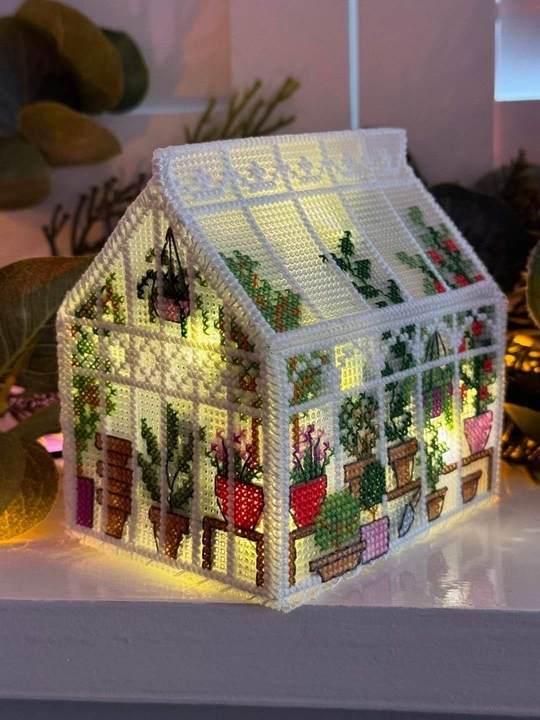
2. Plastic Panels Greenhouse
A miniature greenhouse scene made from cross stitching materials and pattern.
Living Spaces and Portable Doll Houses
You can create adorable homes using cardboard boxes and common packaging, such as travel dollhouses, entryways, tiny living rooms, comfortable reading nooks, and portable multi-room dollhouse designs.
3. Miniature Living Room
Use cardboard and fabric scraps and craft them into a cozy, fully furnished miniature living room.

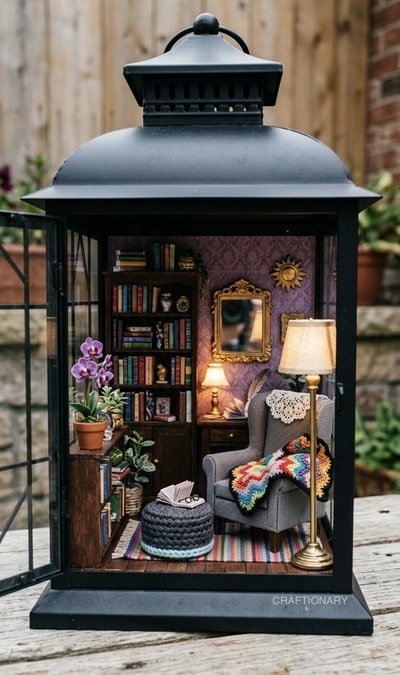
4. Cozy Reading Nook in a Lantern
Create a snug reading nook glowing inside a repurposed lantern, complete with books and tiny furniture.
5. Garden Potting Shed Roombox
Build a rustic potting shed scene with shelves, tools, and terracotta pots from scrap wood.

Noa Art Studio
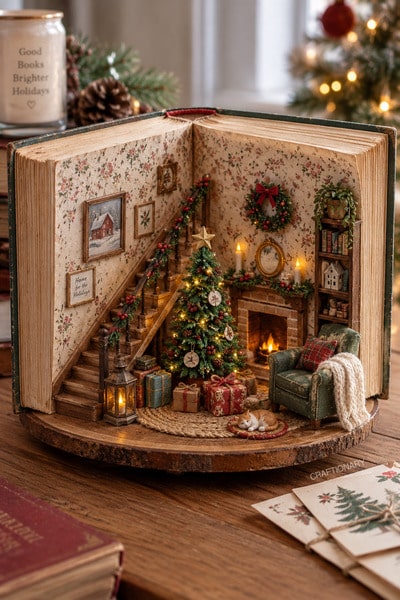
6. Mini Christmas Scene in a Book
This old book is filled with seasonal fireplace warmth, a small Christmas tree, staircase, and decorative items.
Cafés, Shops, Studios, and Workspaces
Use recycled materials to create tea shops, markets, art galleries, sewing workshops, and home offices. These designs promote creative problem-solving, enhance attention to detail, and produce striking small displays.
7. Tailor’s Sewing Studio Book Nook
This sewing workshop, in between books, is equipped with a small sewing machine and bolts of fabric.

Holly
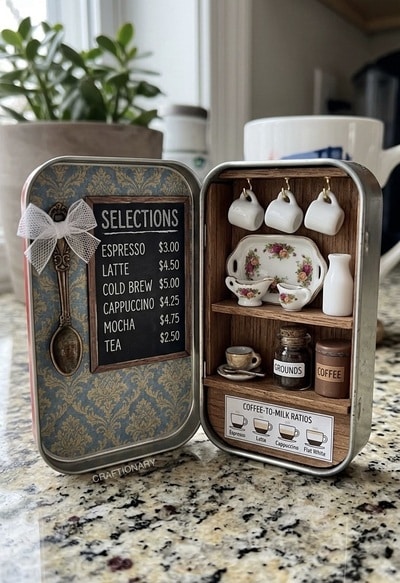
8. Upcycled Mint Tin Coffee Bar
Add a small rare-earth magnet inside the lid and a matching one on a backing card so the tin snaps shut cleanly over a 3D scene built on foam board inside. This is the format most requested for gift-giving because it travels well and doesn’t need a shelf.
9. Coffee Cup Multi-Level Café Building
Make a multi-story café with balconies by stacking coffee cups.

samiksha
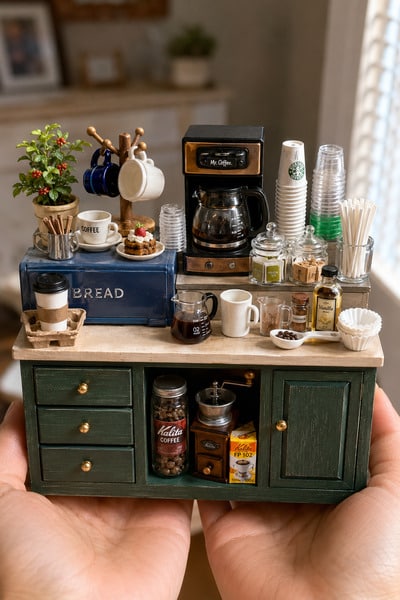
10. Coffee Bar
Using quality products made with wood, polymer clay, paper, and plastic, a stunning miniature coffee bar is established.
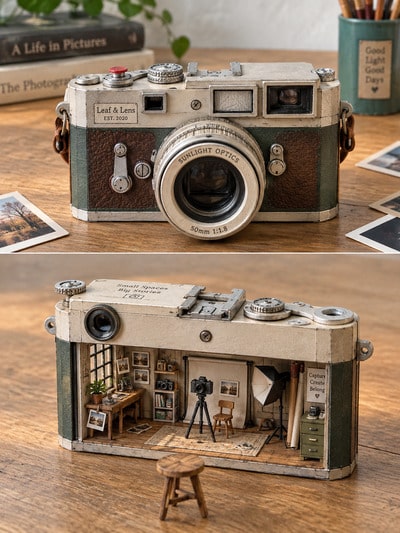
11. Vintage Camera Artist Studio Roombox
You can transform a vintage camera into an artist’s workspace interior, replete with paint palette and canvases.
12. Cardboard Fine Art Gallery Roombox
This cardboard gallery features framed paintings and pedestals with realistic lighting.

Art Archive
13. Art Studio
A unique artist’s space with furniture and art supplies made from scratch using paper and recycled materials.
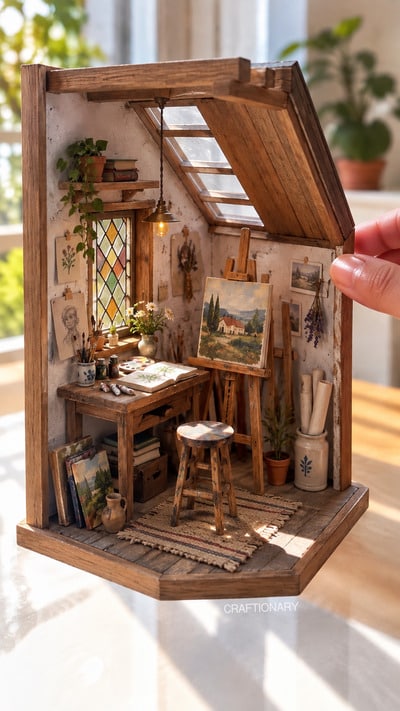
14. Vintage Kitchen
1:20 scale entirely handmade with foamboard, cardstock, strirring sticks, air dry clay, acrylics, tons of glue and wall putty, and some dried herbs.

15. Metal’s studio in a box
1:12 scale metals studio in a box made with some balsa wood, coffee stirrers, and materials around the studio or house.

Specialty Rooms and Architectural Scenes
You can make specialty rooms and architectural scenes such as Mediterranean cafés, nature diorama and vintage laundry room; this section boosts architectural creativity. You can introduce new design trends and reuse materials to build complex settings.
16. Mediterranean Architectural Diorama
This small-scale Mediterranean street features terracotta roofs, arched entrances, and whitewashed walls. Perfect execution of travel memories in a shadow box.

Anita Bolt
17. Miniature in a box
This peaceful house and garden features unique features and details that are intriguing.

18. Upcycled Can Urban Streetscape Roombox
You can transform a few cans into a complete city block with the help of storefronts, lampposts, and cobblestone walkways.

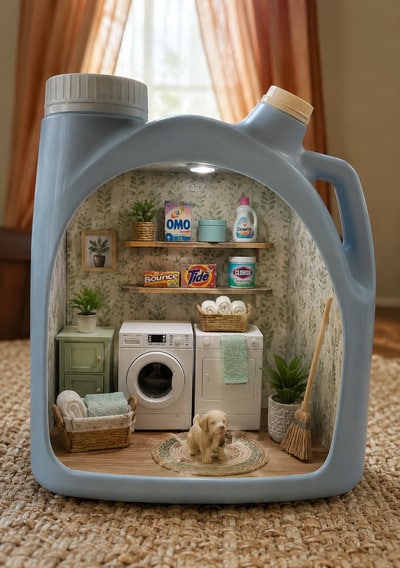
19. Upcycled Detergent Bottle Laundry Roombox
A detergent bottle covers an entire laundry room with machines, shelving, and baskets.
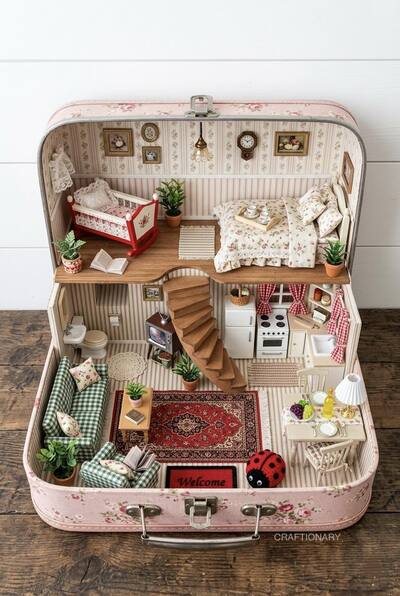
20. Old Lunchbox Dollhouse
Create a multi-room dollhouse with painted walls and small furniture out of a suitcase or lunchbox.
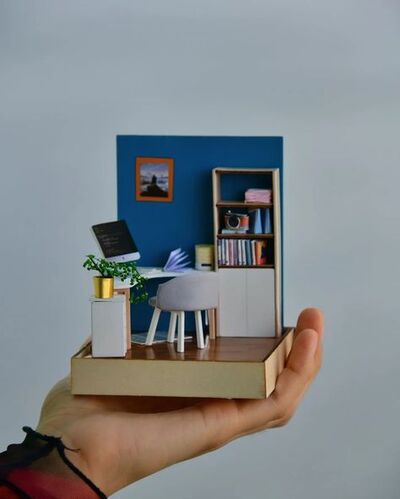
21. Match Box Home Office Diorama
A match box is smaller than your palm and can accommodate a whole home office, with a desk and shelves.
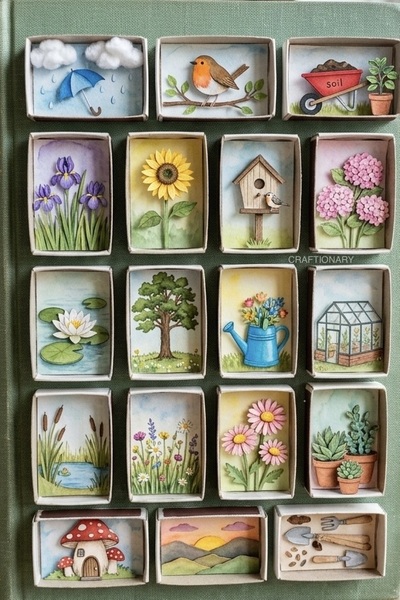
22. Matchbox Miniature Diorama
Turn matchboxes and cardboard boxes into adorable seasonal miniatures to display as a gallery wall on an old book.
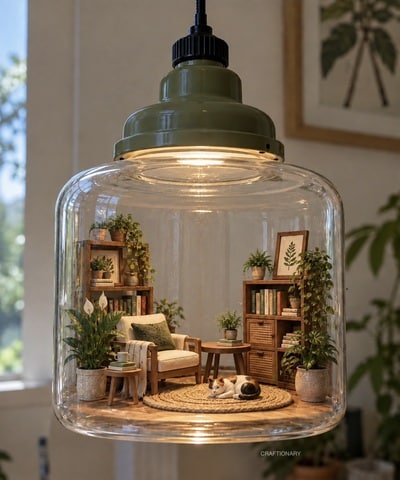
23. Miniature World in a lamp
You may score a vintage hanging lamp at a thrift store and replace the bulb with a sensor light. Give it a night repaint and decorate with miniatures.
Materials Worth Keeping on Hand (So You’re Never Starting From Zero)
If you want to build a recycled miniature kit over time instead of scrambling for materials each time, these are the items worth setting aside as you go: bottle caps (metal, not plastic — they hold paint and resin better), broken jewelry and watch parts, denim and lace scraps, used tea bags, matchboxes and small tins, coat hangers, walnut shells, twigs, and cereal boxes. None of these need dedicated storage — a single shoebox sorted loosely by material is enough to keep you from ever facing a truly blank start.
Techniques That Make Recycled Miniatures Look Intentional, Not Accidental
A few cross-cutting techniques came up repeatedly above because they do a disproportionate amount of work:
- Weathering with a thinned wash. A heavily diluted acrylic paint (roughly 1 part paint to 4 parts water) dabbed into crevices and wiped back off the raised surfaces ages almost any material — plastic, metal, wood — convincingly in under five minutes.
- Deliberate imperfection. Perfectly even stitching, perfectly straight wire bends, and perfectly symmetrical arrangements read as artificial at small scale. Real handmade and aged objects have slight irregularity — lean into it rather than fighting it.
- Scale-appropriate texture. A material that looks fine-grained at full size (burlap, coarse yarn) often looks too chunky at miniature scale. Test a small swatch before committing a whole piece to a textured material.
- Sealing before display. Anything with exposed metal (bottle caps, wire, watch parts) benefits from a matte varnish coat, both to stop tarnish transfer onto other materials and to unify the finish across mixed media.
Frequently Asked Questions About Recycled and Mixed Media Miniatures
1. What is the best glue for mixed media miniatures?
It depends on the material pairing rather than one universal answer. E6000 or a similar industrial craft adhesive handles most metal-to-metal and metal-to-plastic bonds. Hot glue works for fast fabric and paper assembly but can look lumpy at very small scale, so use it sparingly and trim excess while it’s still warm. For paper-to-paper or paper-to-wood, a PVA glue like Mod Podge gives more working time and a cleaner finish.
2. How small does something have to be to count as a miniature?
There’s no official cutoff, but most miniature and dollhouse hobbyists work in standard scales — 1:12 (one inch equals one foot) is the most common dollhouse scale, with 1:24 and 1:48 also popular for smaller-footprint scenes. For non-dollhouse mixed media pieces, fits inside an Altoid tin is a commonly used informal benchmark.
3. Can you really use actual trash in these projects, or does it need to be cleaned first?
Clean it first, always. Bottle caps, tins, and jars should be washed and fully dried before use, especially if resin, paint, or adhesive is going on top — any residue will cause adhesion or curing problems later. Recycled refers to the material’s origin, not its condition when you use it.
4. What’s the difference between a diorama and a miniature scene?
A diorama typically implies a contained, framed, or boxed scene meant to be viewed from one angle, often depicting a moment or setting (think: matchbox or shadow box scenes). A miniature scene is a broader term that includes freestanding or open pieces, like a fairy garden vignette, meant to be viewed from multiple angles. Most of the ideas above can be built either way depending on whether you enclose them.
5. How do you seal a recycled miniature so it lasts?
A matte or satin varnish spray, applied in thin coats after all paint and adhesive are fully cured, is the safest general-purpose sealant across mixed materials. For pieces with resin elements, make sure the resin has fully cured (usually 24–72 hours depending on the product) before spraying anything on top of it.
6. Are recycled miniatures a good beginner craft project?
Yes, and arguably a better starting point than buying a kit, because the low material cost removes the pressure of wasting expensive supplies while you’re still learning proportion and composition at small scale. Start with a single-material piece before combining several materials in one piece.
7. Where can you sell recycled mixed media miniatures?
Etsy, craft fairs, and local maker markets are the most common outlets, and buyers in this category tend to respond well to listings that show the before material alongside the finished piece — it reinforces the upcycled, one-of-a-kind story that makes these pieces distinct from mass-produced miniatures.
A Last Note on Starting
The temptation with a list like this is to read all twenty and feel like you need the right material before you can start. You don’t. Pick whichever category above matches what’s already sitting in a drawer near you right now — the bottle caps from last week’s sparkling water, the jeans with the blown-out knee, the walnut shells from Sunday’s baking — and start with the smallest, fastest project in that group. The scale of these projects is exactly what makes them forgiving: a miniature that doesn’t work can become scrap for the next one in under a minute, which is more than you can say for most craft failures.
Drafted by: Alveena Nazir
Written by: Hani Shabbir
You will also like:
30 Miniature Clay Art Ideas for Tiny DIY Projects
Cute Crochet Amigurumi Miniatures Free Patterns and Instructions
Scrap Fabric Projects – Upcycling, Crafting, and Scrap Busting