This post may contain affiliate links. Please see our full Disclosure Policy for details.
Plaster bas relief art is beautiful, timeless, and increasingly popular in modern textured wall decor. However, plaster is naturally soft, porous, and fragile — which means painting it incorrectly can lead to cracking, flaking, peeling, or surface damage.
You will learn to prime, paint, and seal plaster relief art step by step using safe, durable methods that professionals use.
What Is Plaster Bas Relief?
Bas relief (also called low relief sculpture) is a raised design sculpted from plaster that remains attached to a flat background. It’s widely used in making textured wall art, architectural moldings, and handmade sculptural art. It must be properly sealed and painted to prevent damage because plaster is soft and porous.
Why Plaster Cracks or Chips After Painting
Understanding this helps prevent mistakes. Plaster can break or flake because:
- It absorbs moisture too quickly.
- Paint is applied before it fully cures.
- No primer or sealer was used.
- Heavy brush pressure damages the surface.
- The plaster was not reinforced properly.
- Environmental humidity causes expansion and contraction.
The solution is proper curing, sealing, and flexible paint layering.
Strengthening the Foundation: Before You Paint
The secret to a relief that doesn’t break starts with the mix. If you haven’t cast your piece yet, you can significantly increase its durability with these professional hacks:
- The 10% Acrylic Rule: Add a high-quality acrylic modifier or even simple wood glue to your water before mixing in the plaster powder. This creates an internal polymer matrix that makes the plaster up to 50% stronger and more chip-resistant.
- Upgrade Your Material: While Plaster of Paris is common, professionals often use Hydrocal or Hydrostone. These are gypsum cements that dry significantly harder and are far less likely to crumble.
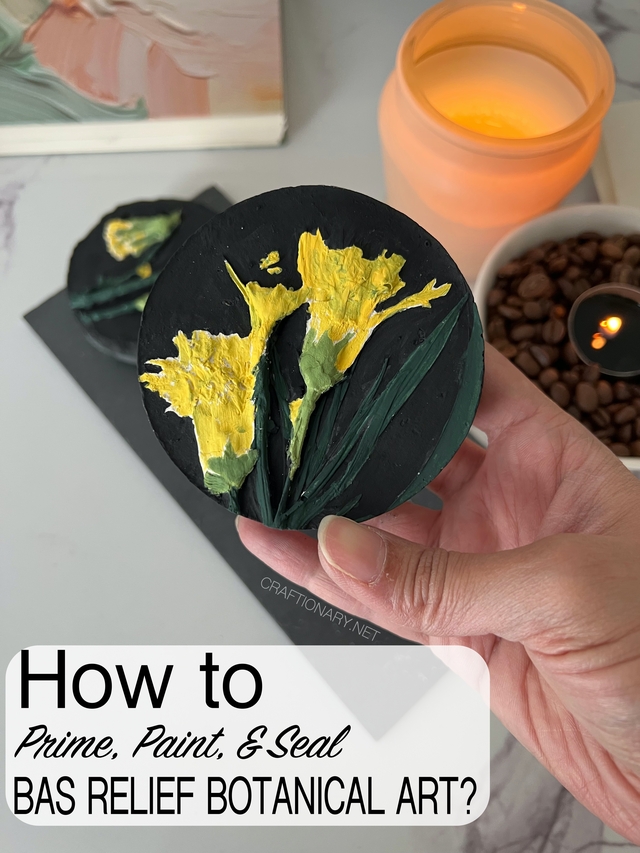
Learn How to Make Bas-Relief Botanical Casting Art before continuing with the painting and sealing.
1. Let the Plaster Fully Cure
This is the most overlooked step. Fresh plaster must cure for at least 7–14 days before sealing or painting.
If moisture remains trapped:
- Paint may bubble
- Sealer may fail
- Surface may weaken
Test: Press your fingernail lightly into a hidden area. If it dents easily, it is not ready.

Let bas relief fully dry
2. Strengthen the Thirsty Surface by Sealing
Plaster is incredibly porous. If you apply paint directly to raw plaster, the material will suck the moisture out of the paint too quickly, leading to an uneven finish and potential peeling. Since plaster is soft, reinforcement is key.
Pro Tip: Never paint on cold plaster. If the relief feels cold to the touch, it still contains moisture. Trapping moisture under a sealer is the #1 cause of mold and flaking paint.
Apply a Penetrating Plaster Sealer (Optional)
Use:
- Acrylic penetrating sealer
- PVA glue diluted 1:3 with water
- Clear matte acrylic medium
Apply with a soft brush and let it soak in. It will:
- Hardens the surface
- Reduces dusting
- Prevents excessive paint absorption
- Reduces cracking risk
Let dry completely (24 hours).
3. Prime the Plaster Relief
Yes — you absolutely need to prime plaster before painting. I recommend using acrylic gesso.
Best primer:
- Shellac: Heavy duty protection for large pieces. Creates a hard shell that penetrates deep and toughens the surface.
- Acrylic gesso: standard for painting. It seals pres without changing the texture allowing you to paint.
- Water-based bonding primer: Budget-friendly and effective to reduce absorbency.
- Spay fixative: Ideal for delicate details where a brush might snap off small peaks.
Apply thin layers with a soft brush or sponge.
Why priming matters:
- Prevents uneven paint absorption
- Reduces peeling
- Strengthens surface
- Helps paint adhere properly
Allow 4–6 hours drying time.

Apply acrylic gesso or your choice of primer
4. Best Paint for Plaster Relief
I recommend using acrylic paints for this project. The safest paints for plaster are:
Acrylic Paint (Best Overall)
- Flexible
- Water-based
- Doesn’t trap moisture
- Excellent adhesion
Latex Paint (For Wall Installations)
- Durable
- Washable
- Flexible
Avoid:
- Oil-based paints (can trap moisture)
- Heavy enamel layers
- Thick coats
5. How to Paint Bas Relief
To add depth to plaster art, highlight raised texture or simply dry brush. Here are two commonly used professional techniques:
Technique 1: Base Coat
- Apply a thin, even base coat.
- Use a soft synthetic brush.
- Avoid overworking the surface.
- Let dry completely.
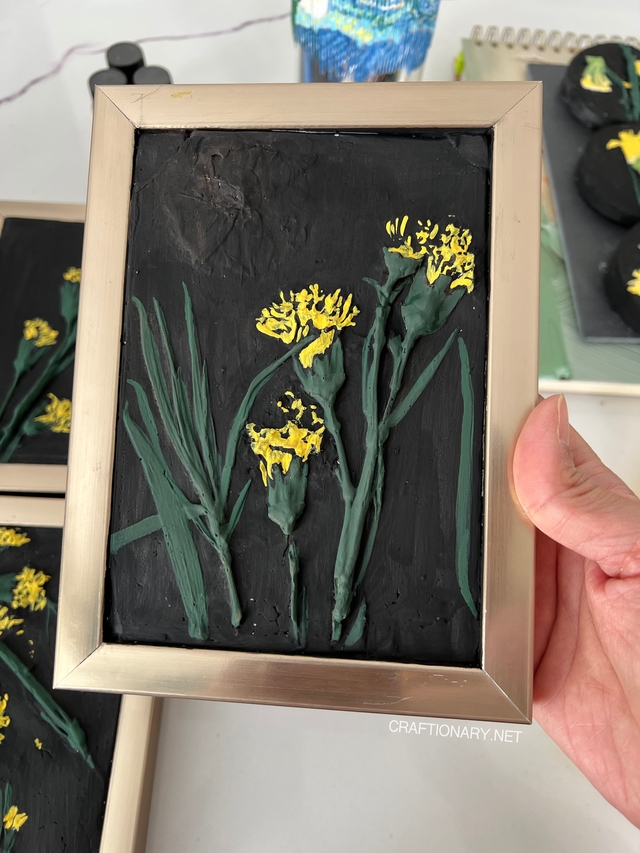
Technique 2: Dry Brushing To Highlight Texture
To make the texture pop, use the dry brush technique.
- Dip a stiff brush into undiluted paint (usually a lighter shade).
- Wipe 90% of the paint off onto a paper towel.
- Lightly drag the brush over the raised edges. This catches only the highest points of the relief, creating a dramatic 3D effect.
- This highlights details without filling crevices.
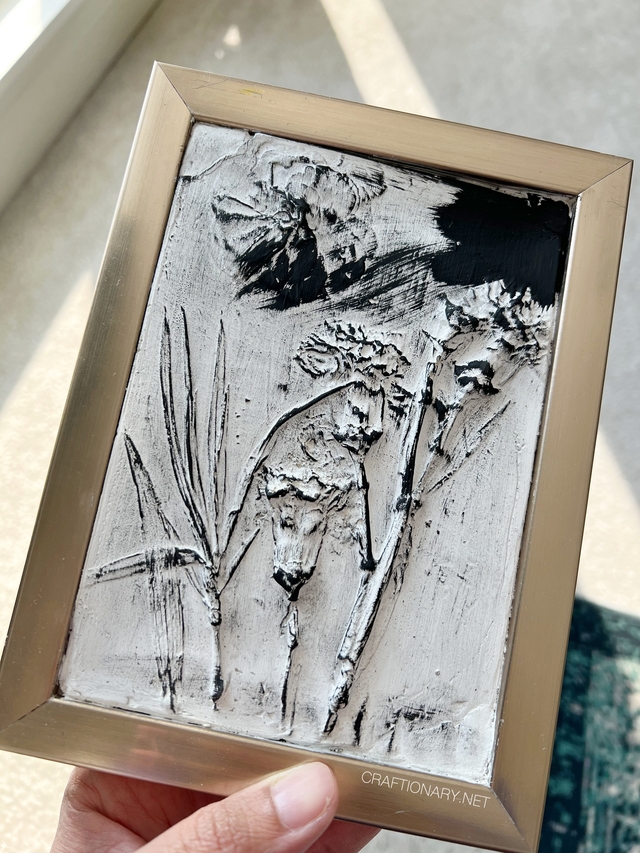
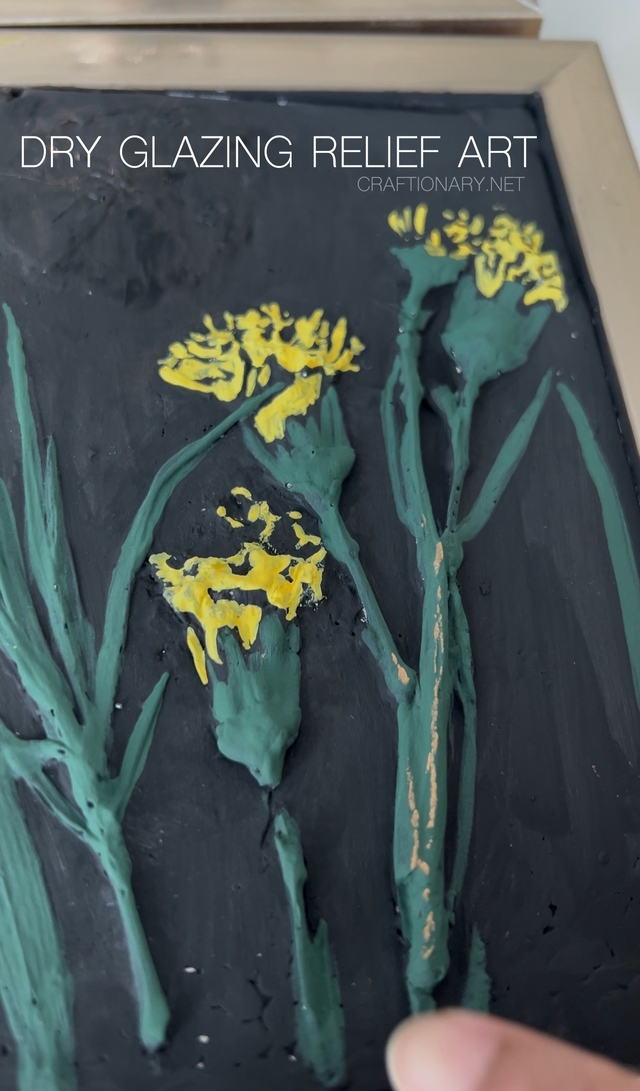
Technique 3: Glazing for Shadow Depth (Base Wash for Antiquing)
- Mix: 1 part Acrylic paint + 3 parts water ( or glazing medium)
- Instead of thick, opaque paint that can clog your details, start with a wash. Brush it over the entire piece, letting it settle into the deep crevices.
- Wipe the excess off the peaks with a damp rag to immediately create shadows.
- This adds dimension and prevents flat appearance.
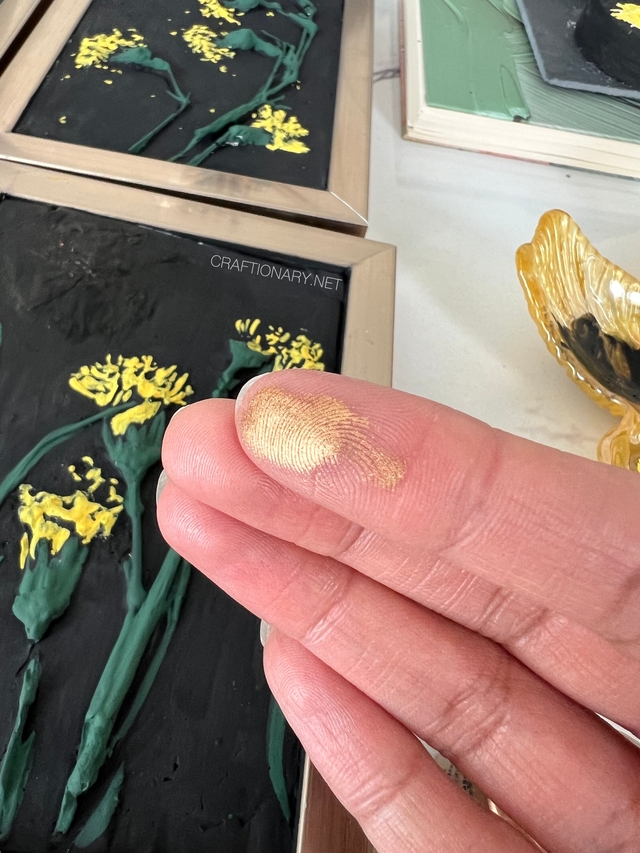
Tip: You can also use small quantities of mica powder on your finger tip and softly rub the relief to glaze it with metallic accents.
6. How to Seal Plaster Relief After Painting
Because plaster is soft, the final topcoat is your armor. This step protects against chipping and moisture damage. I recommend using matte acrylic varnish.
Related: Best Sealer: How to Waterproof Acrylic Paint on Rocks, Wood, Glass Crafts
For Indoor Art:
- Matte acrylic varnish: Protects the paint without adding a plastic shine.
- For a Stone/Marble Look: Apply paste wax with a soft cloth. Let it sit for 24 hours, then buff it. This creates a luxurious, touchable finish that resists fingerprints.
- Polycrylic water-based sealer: Long-lasting protection at low cost.
For High Humidity Areas:
- Clear polyurethane (water-based): Great for long term protection in any environment. Apply 2–3 thin coats and allow 24 hours between each coat. Never apply thick heavy coats.
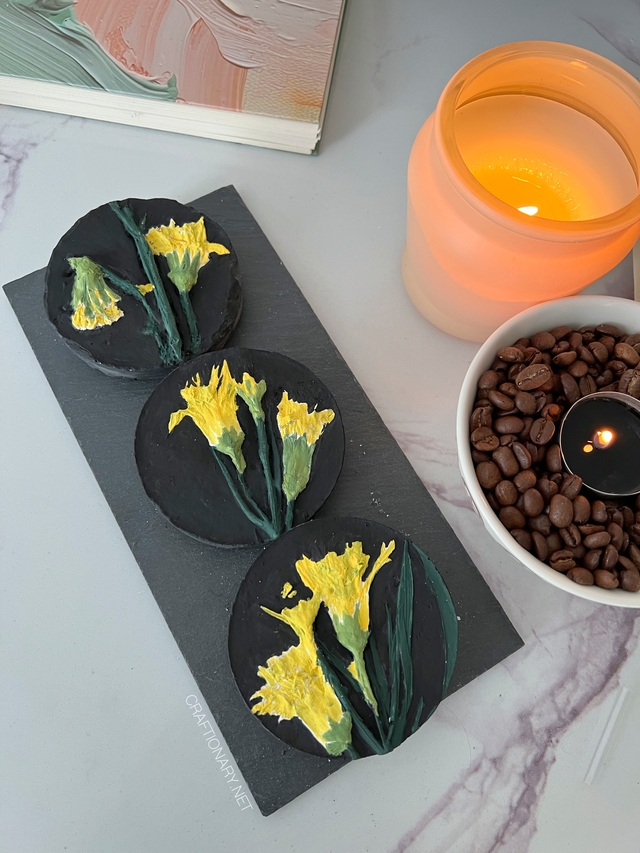
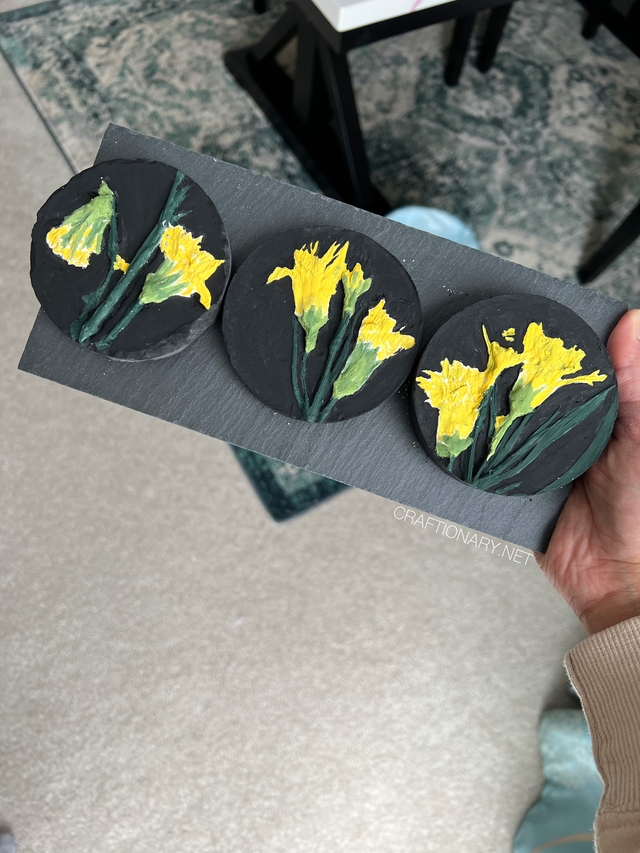
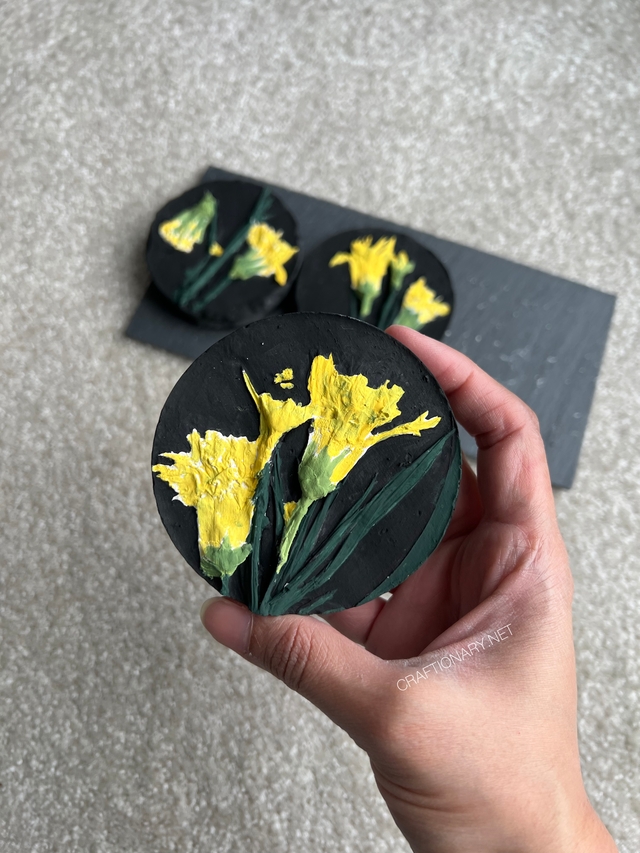
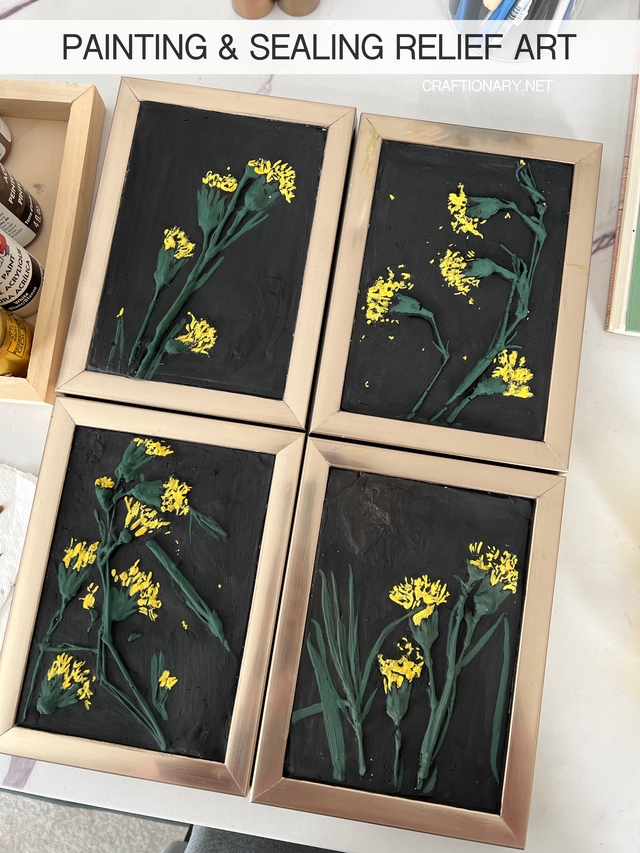
Try arranging them vertically or horizontally on a slate for framing.
Summary of Painting Plaster Relief Art:
Apply a thin layer of gesso to prevent paint absorption. Enjoy painting your piece with acrylic paints. The finally seal it with matte acrylic varnish for best results.
How to Prevent Plaster From Breaking or Cracking
Here are professional tips:
- Always reinforce plaster with mesh or fiber during sculpting.
- Avoid hanging heavy unsupported panels.
- Seal front and back surfaces.
- Keep out of high humidity.
- Use flexible acrylic products only.
- Avoid dropping temperature extremes.
Common Questions People Ask
Can you use spray paint on plaster?
Yes, but only after sealing with shellac or a primer. Raw plaster will absorb spray paint unevenly, resulting in a splotchy look.
Why plaster relief cracking?
Cracking usually happens if the plaster dries too fast (under direct sun or heat) or if the layer on the canvas is thicker than 4mm without a flexible binder like gesso.
How do you fix a broken piece of relief?
If a tip or leaf snaps off, use a clear-drying cyanoacrylate (super glue) or a thick acrylic gel medium to reattach it. Once dry, touch up the seam with a bit of paint and sealer.
Do you need to seal plaster before painting?
Yes. Plaster is porous and will absorb paint unevenly without sealing.
Can you paint directly on plaster?
Technically yes — but it weakens durability and causes uneven absorption.
Why is your plaster absorbing paint?
Because it was not sealed or primed.
What is the best finish for bas relief?
Matte or satin acrylic varnish works best for modern decor.
How do you make plaster art look antique?
Use dark glaze in recesses and dry brush metallic highlights.
How do you protect textured wall art?
Seal with multiple thin acrylic varnish coats and avoid impact areas.
Best Tools for Painting Plaster Relief
- Soft synthetic brushes
- Sponge applicators
- Detail brushes
- Fine sandpaper (320 grit for smoothing before sealing)
- Spray varnish for even finishing
Safety and Longevity Tips
- Wear mask when sanding plaster dust.
- Never rush curing stage.
- Store in dry area.
- Avoid soaking plaster in water.
- Use wall anchors if installing heavy pieces.
If you remember only one thing: The durability of plaster art depends more on sealing and priming than on painting.
Take your time strengthening the surface first, and your bas relief can last decades without cracking.
Written by: Hani Shabbir
You will also like:
100 Things You Can Paint On – Creative Surfaces for Art Lovers
Paper Woven Art: How to Create Strip Weaving from Two Artworks