This post may contain affiliate links. Please see our full Disclosure Policy for details.
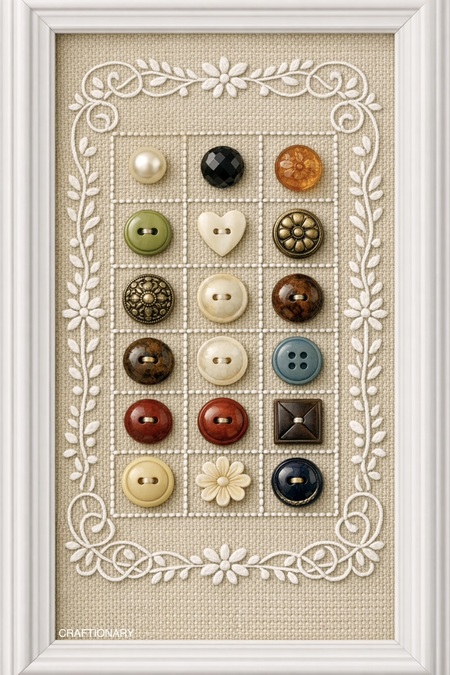
This button sampler is a beautiful way to blend embroidery with a curated collection of buttons. It creates a tactile, vintage-inspired piece that works perfectly as wall art or a personalized gift.
Here is a step-by-step guide to creating your own button embroidery sampler.
Materials Needed
Base and Frame
- Fabric: A sturdy, even-weave fabric like linen or Aida cloth in a neutral oatmeal or cream color.
- White photo frame (with glass removed) or a shadowbox frame (to accommodate the depth of the buttons).
- Cardboard or foam board for backing (optional).
Embroidery Supplies
- Embroidery Thread: White or cream cotton embroidery floss.
- Tools: An embroidery hoop, needles (fine enough to fit through button holes), and fabric marker (vanishing ink).
- Buttons: 16–25 assorted buttons. Mix textures (pearl, wood, metal, plastic), colors, and shapes (hearts, flowers, geometric) for visual interest.
Other Tools
- Ruler, Scissors, Glue (optional) and Pins.
Embroidered Button Art Step by Step Instructions:
1. Preparing the Fabric and Planning the Layout
- Measure your frame: Ensure your fabric is cut at least 2 inches wider than your frame backing on all sides. Iron it to remove wrinkles.
- Grid Setup: Using a ruler and a vanishing ink pen, lightly mark a 3 x 6 grid in the center of the fabric. Each cell should be slightly larger than your largest button.
- Border Sketch: Draw a rectangular border around the grid, leaving about an inch of space. Add simple floral vine swirls at the corners and mid-points of each side. Use carbon paper to transfer your printed design.
2. Embroidering the Frame and Grid
It is much easier to do the stitching before the buttons are attached so the thread doesn’t snag.
- The Grid: Use a backstitch or a running stitch with 2 strands of floss to sew the vertical and horizontal lines of the grid.
- Border Design: You may cutout border design on felt using xtool cutting machine or fill with satin stitch.
- The Floral Border (try these):
- Stems: Use a stem stitch or backstitch for the curving vines.
- Leaves: Use lazy daisy stitches (detached chain stitches) to create the small leaves along the vines.
- Flowers: Use five or six lazy daisy stitches meeting at a center point to create the flower heads.
3. Attaching the Buttons
- Arrangement: Lay your buttons out on the grid to find a pleasing balance of colors and sizes.
- Sewing: Secure each button into the center of its grid square.
- If using a shank button (one with a loop on the back), ensure the fabric is taut so the button doesn’t flop.
- For flat buttons, use 2-3 strands of floss and sew through the holes several times. Tie off securely on the back.
4. Finishing and Framing
- Clean Up: If you used a vanishing ink pen, remove the marks according to the pen’s instructions (usually a light mist of water or ironing).
- Mounting: Wrap the finished fabric tightly around a piece of acid-free foam board or the frame’s backing board. Secure the excess fabric on the back with pins, staples, or lacing.
- Shadowbox: Place the piece inside a shadowbox frame. The depth is essential so the glass doesn’t press down on and flatten your buttons or use photo frame without glass.
Related: Shadow Box Ideas – Practically Smart Ways to Display
Design Tips
- Monochrome vs. Eclectic: While the image uses a variety of colors, you could create a very modern look using only white and clear glass buttons, or a rustic look using only wooden and brass buttons.
- Personalization: If this is for a specific room, try incorporating a few buttons from old family garments to turn the artwork into a family heirloom.
- Creative Variations: Create a theme (floral, vintage, seasonal) or use monogram initials in the center.
- Keepsake: Turn it into a memory frame with meaningful buttons.
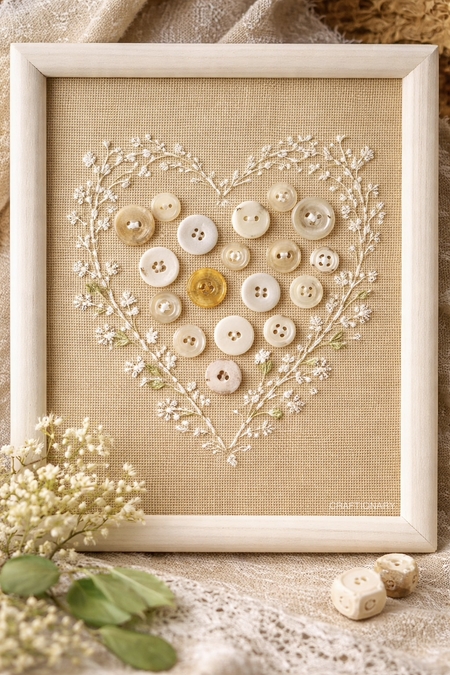
Here’s another idea:
Related: 40 Meaningful Memory Keepsake Ideas to Treasure Life
This framed embroidered button art is a perfect example of how simple materials can create something elegant and timeless. The combination of delicate stitching and unique buttons makes every piece one-of-a-kind.
Take your time with the layout and stitching—the beauty of this project is in the details.
You will also like:
60 Button Art Ideas for your handmade boutique
Slow Stitching: A Guide to Mindful Hand Sewing with Creative Ideas