This post may contain affiliate links. Please see our full Disclosure Policy for details.
From a 3-minute wildflower to an advanced peony — this is the only guide you need for making stunning pipe cleaner flowers at any skill level.
Table of contents:
What Are Pipe Cleaner Flowers?
Pipe cleaner flowers — also called chenille stem flowers — are handmade blooms crafted by bending, twisting, coiling, and looping flexible fuzzy wire into petal and leaf shapes. They’re one of those crafts that sounds simple, looks impressive, and turns out to be wildly addictive once you start.
The fuzzy part of a pipe cleaner (technically called a chenille stem) is what makes these flowers so surprisingly realistic. The soft fibers catch light in a way that fabric flowers can’t quite match, and they hold their shape permanently without wilting, drying out, or dropping petals on your windowsill.
People have been making them for decades — if you grew up in the 80s or 90s, you probably twisted one into a rough approximation of a tulip at some point. But the craft has evolved enormously. Today, skilled crafters are producing roses indistinguishable from real florist blooms, layered peonies with dozens of petals, and botanically accurate orchids — all from a pack of chenille stems that costs a few dollars.
A pipe cleaner bouquet on someone’s desk says something different than store-bought flowers. It says: “I made this for you. That’s a hard thing to beat.”
Whether you’re a parent looking for a rainy afternoon activity, a crafter wanting to add handmade elements to a gift, a teacher running a classroom project, or someone who just stumbled on these on Pinterest and thought wait, you can actually do that with pipe cleaners? — this guide covers everything.
Supplies You Need (And What to Skip)
The beauty of this craft is how little you need to get started. Here’s an honest breakdown of what actually matters:
| Supply | For What | Do You Need It? |
| Pipe cleaners / chenille stems | Everything | Essential — multi-color pack minimum |
| Green pipe cleaners | Stems and leaves | Essential — grab extra of these |
| Scissors or wire cutters | Trimming stems | Essential |
| Floral wire (18–22 gauge) | Longer, sturdier stems | Recommended for bouquets |
| Floral tape | Wrapping stems neatly | Recommended for gifts |
| Beads, stamens, or pom-poms | Flower centers | Optional but adds realism |
| Hot glue gun or strong glue | Securing complex flowers | Optional — not needed for basics |
| Needle-nose pliers
|
Tighter coils and curls
|
Optional for advanced designs
|
Shopping Tip: Don’t buy the cheapest pipe cleaners you can find. Thin, stiff chenille stems are frustrating to work with and produce flat-looking flowers. Look for thick, fluffy chenille stems — the fuzz matters more than you’d think. Multi-color packs of 100–300 stems are the sweet spot for getting started without overspending.
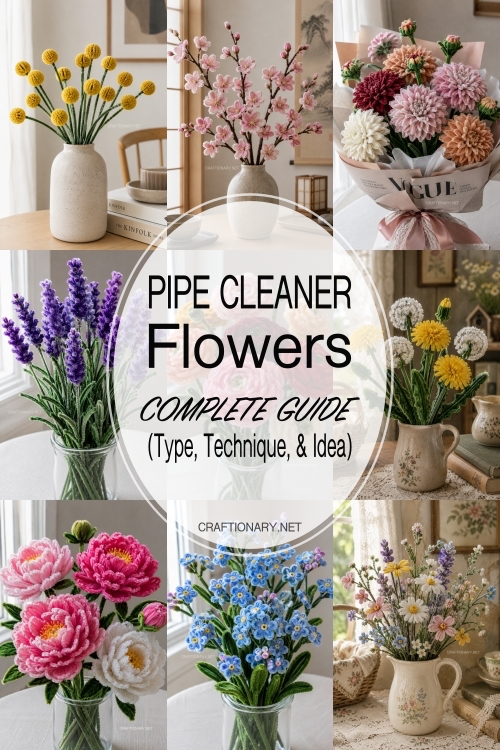
30 Types of Pipe Cleaner Flowers (By Difficulty)
Every common garden flower has a pipe cleaner equivalent. Here’s the full breakdown — from the ones you can finish in three minutes to the ones that’ll take you fifteen and leave you genuinely proud of yourself.
Absolute Beginners (2–4 min)
1. Simple Wildflower: Fold a pipe cleaner in half three times and twist the center once. Fastest flower you can make.
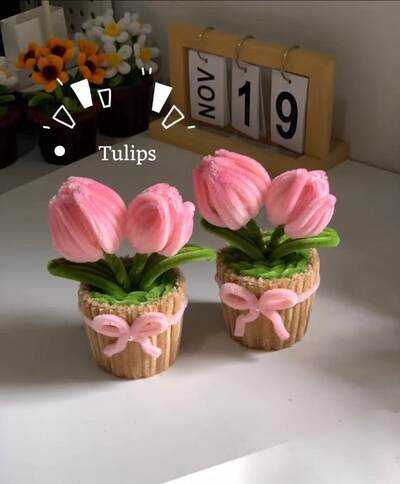
2. Tulip: A single pipe cleaner folded into a cup shape over a green stem. Clean, recognizable, elegant. You can place tiny tulips inside miniature pots for adorable desk display.
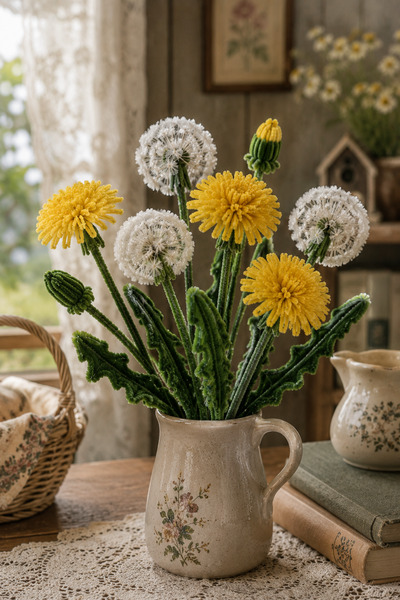
3. Dandelion: Frayed yellow pipe cleaner ends fanned outward from a green stem. Unexpectedly sweet.
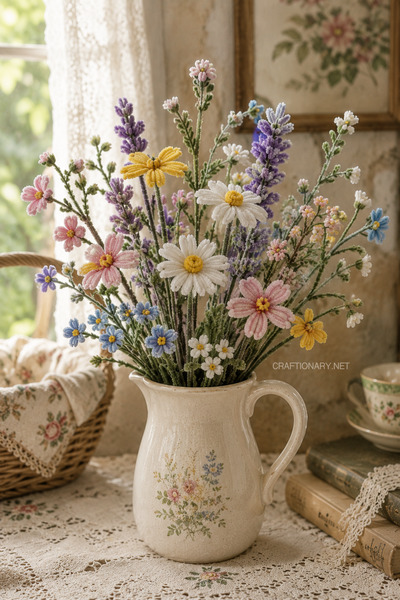
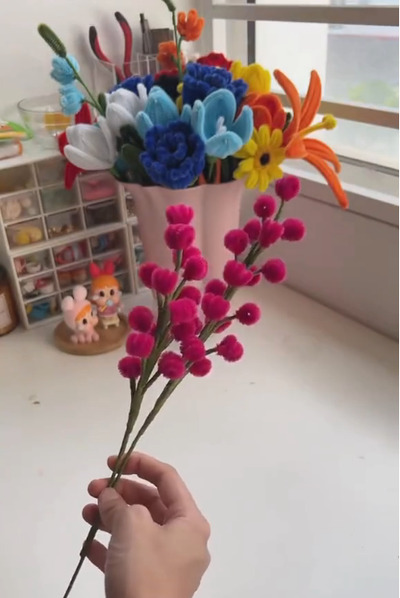
4. Baby Breath: Baby Breath represents innocence, everlasting love, purity, and emotional beauty in bouquets.
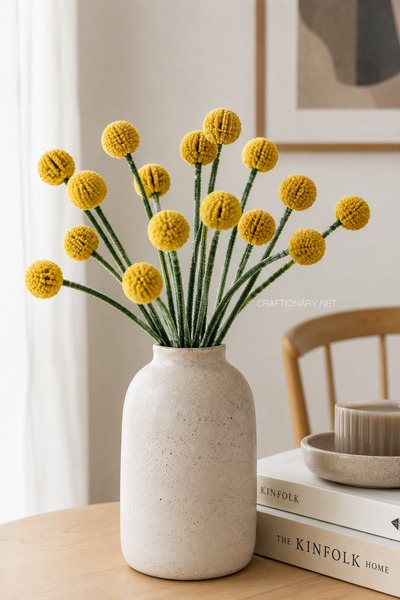
5. Billy Buttons (Craspedia): These simple flowers go well with neutral Scandinavian-inspired home decor arrangements, lavender, and wildflowers.
Beginner (5–7 min)
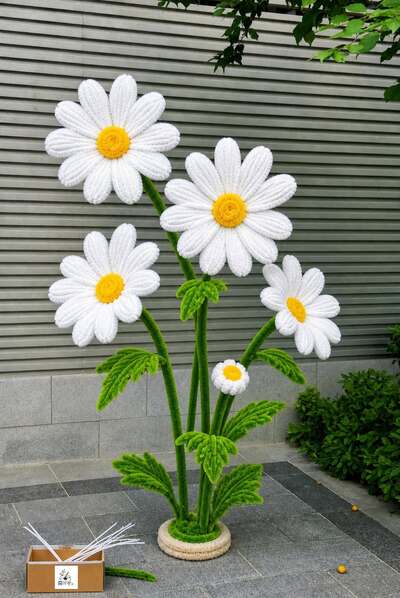
6. Daisy: 5–6 looped white petals around a yellow center. The perfect first real flower for kids and beginners.
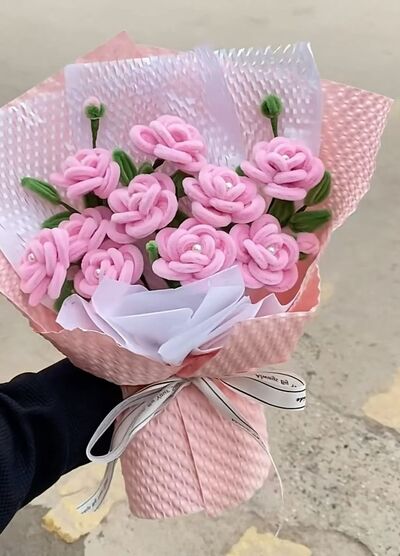
7. Rose: A tight spiral coil creates a flat rose that looks beautiful in every color — the most iconic design.
8. Sunflower: Wide yellow petals around a brown or black pom-pom center. Bold, cheerful, statement-making.
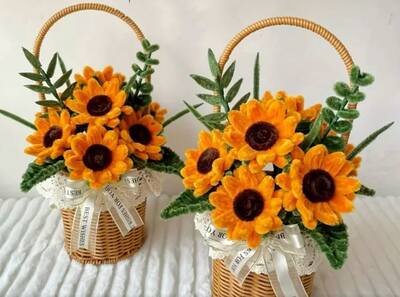
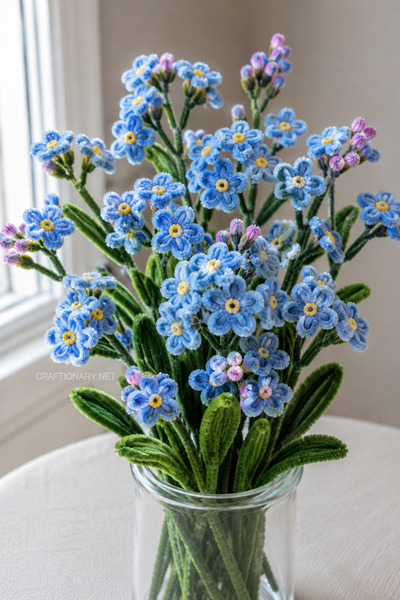
9. Forget-Me-Not: Tiny blue loops clustered together. Great for adding filler to arrangements.
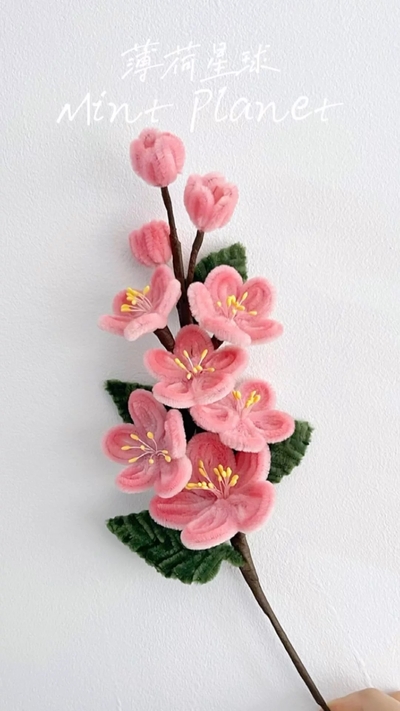
10. Sakura: You can add a Japanese touch to your home with these spring decor arrangements with pale pink cherry blossoms.
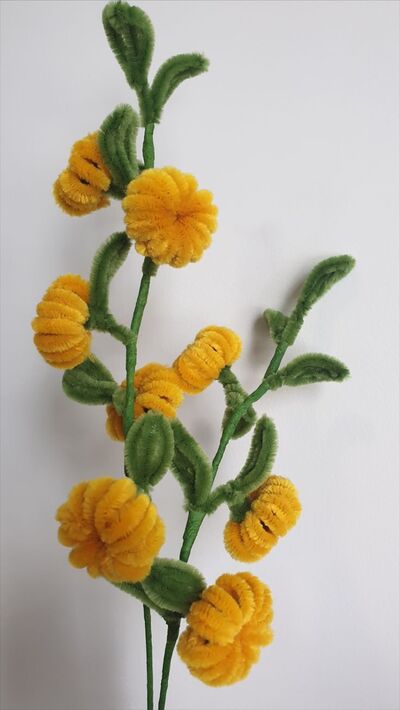
11. Marigold Flower: Twist fluffy orange petals together to create colorful festive marigold flower home decor.
Intermediate (7–10 min)
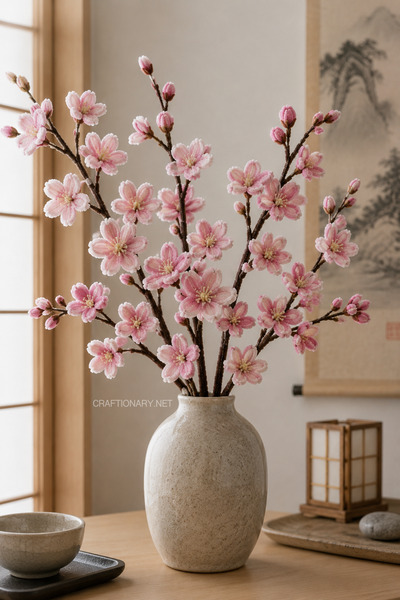
12. Cherry Blossom: Delicate pink loops with a white center. Looks beautiful clustered on a wire branch.
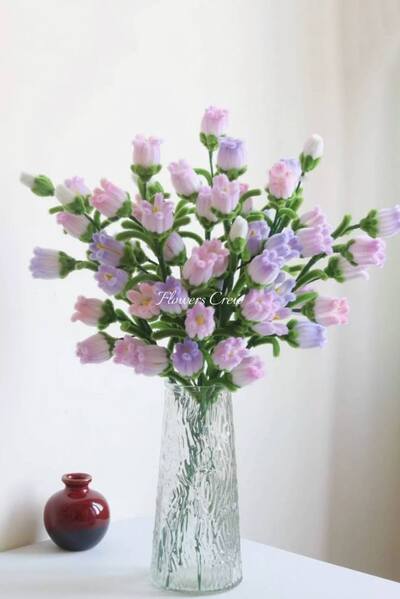
13. Lily of the Valley: Elongated looped petals that curve backward. Add stamens with beads for realism.
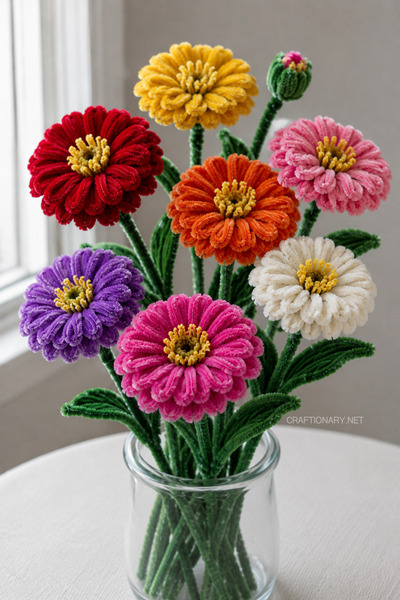
14. Zinnia: Multi-layered flat petals in bold colors. A great exercise in symmetry and layering.
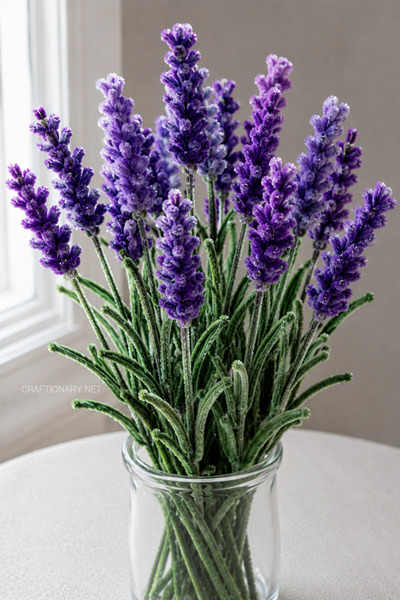
15. Lavender: Small purple loops along a green stem. Adds texture and fragrance-free charm to arrangements.
Common Lavender
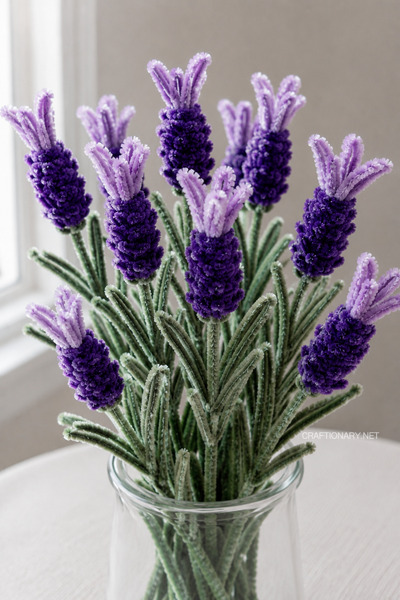
French Lavender
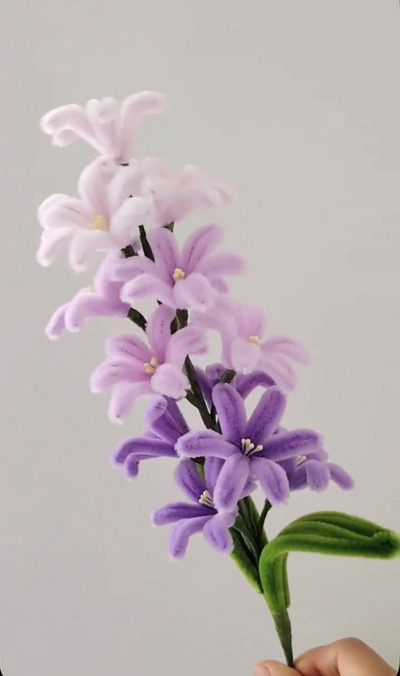
16. Hyacinth Flower: Create individual flowers and clustered them around a stem to resemble realistic hyacinth. It symbolizes sincerity, playfulness, positivity, and heartfelt emotional connections.
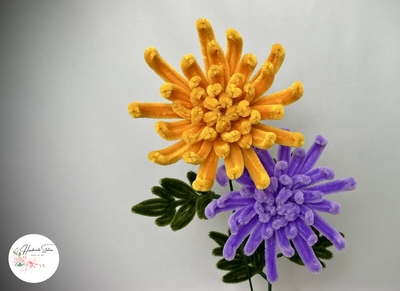
17. Bloom Bright Chrysanthemums: Layer numerous petals together, creating fluffy chrysanthemum-inspired floral statement piece. It represents longevity, joy, positivity, and friendship.
Advanced (10–15 min)
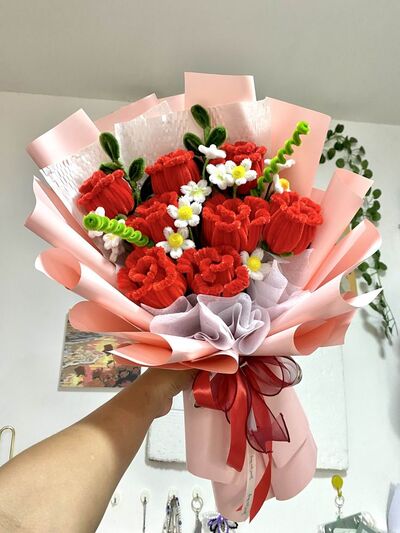
18. Double-Layer Rose: Multiple rings of petals with varying curl. The realistic version that takes the rose from cute to stunning. It represents value, gratitude, sweetness, and gentle emotions.
19. Peony: Dozens of layered petals. Time-consuming but worth it — the showstopper of pipe cleaner florals.
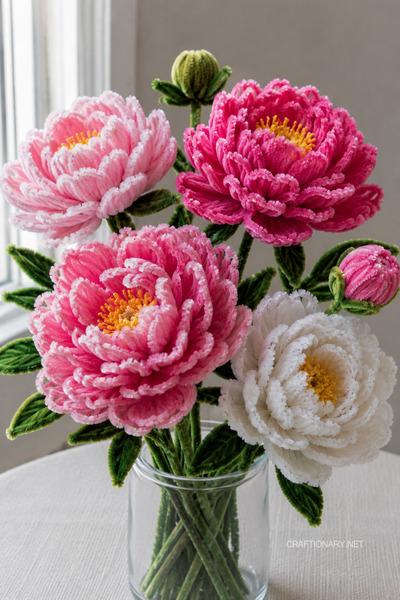
20. Ranunculus: Tightly wound, paper-thin-looking petals in concentric circles. Wildly impressive when done right.
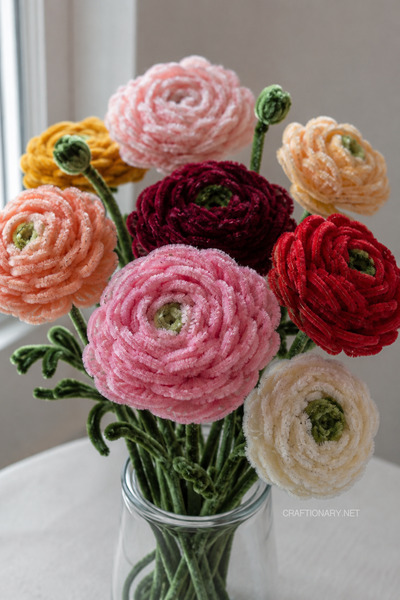
21. Orchid: Botanically accurate petal arrangement makes this the most technically demanding flower in the genre.
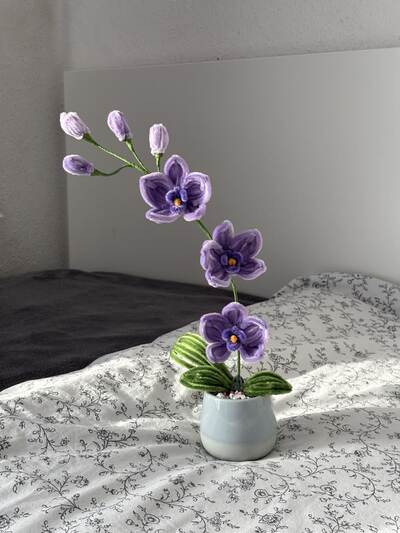
22. Blue Hydrangeas: You can cluster tiny blue flowers together, creating full hydrangea-inspired bouquet arrangements beautifully.
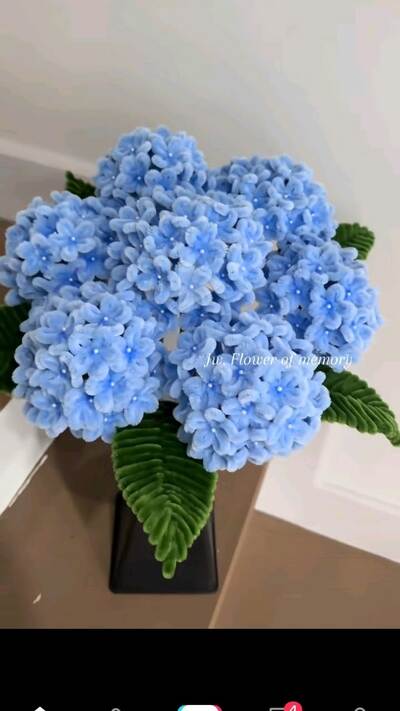
23. Gladiolus: You can create tall, layered blooms for elegant, dramatic pipe cleaner flower arrangements.
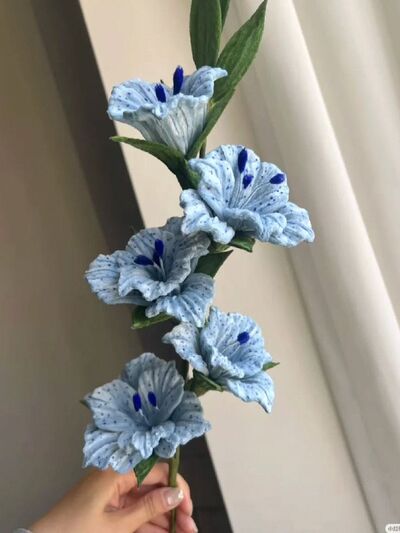
24. Hibiscus Flower: Craft tropical hibiscus flowers using large petals and bright, vibrant colors beautifully.
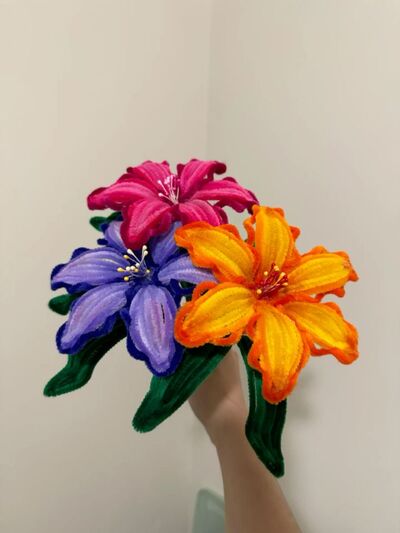
25. Magnolia: Symbolizes dignity, elegance, strength, and timeless natural beauty in floral arrangements.
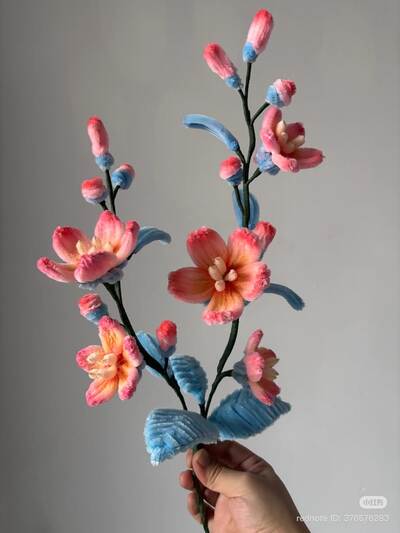
26. Red Spider Lily: Create curled red petals with thin stems for dramatic floral arrangements. To make the stamens, simply use a lighter to carefully heat and fuse the fluffy hair to the wire leaving the top part.
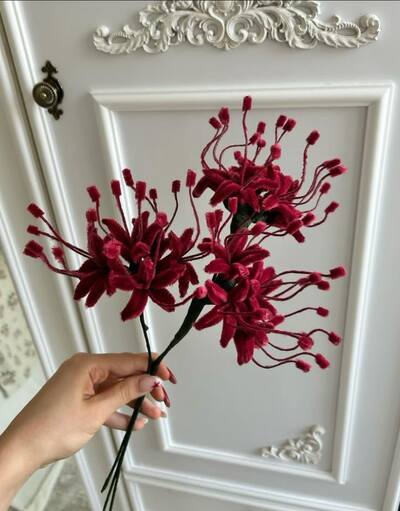
27. Pink Lilies: You can shape soft pink petals into elegant lilies for stylish home decor.
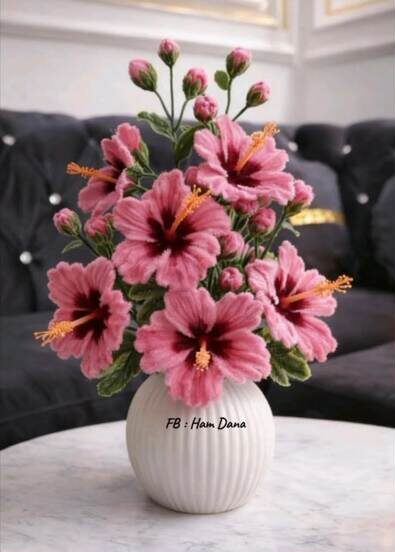
28. Dahlia: Pipe cleaner dahlias are puffy statement flowers with tiered petal loops.
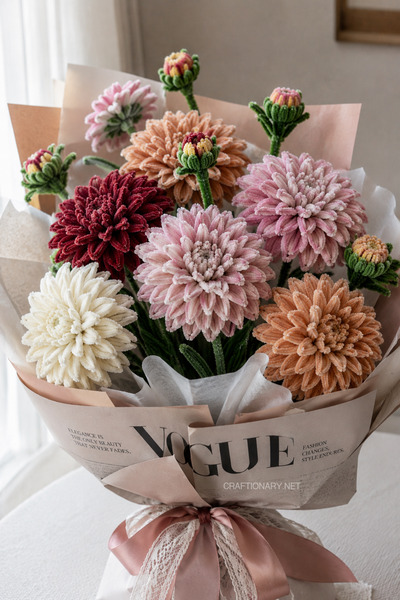
29. Bonsai: Create tiny pink blossom trees for peaceful decorative tabletop arrangements.
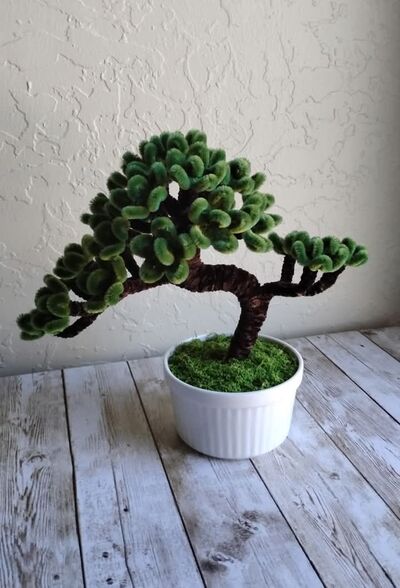
30. Teacup flowers: Use floral foam to display adorable roses and other flowers into a vintage teacup. Makes adorable gift.
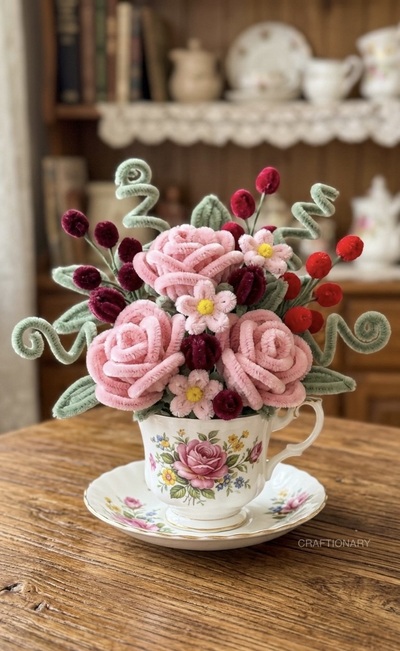
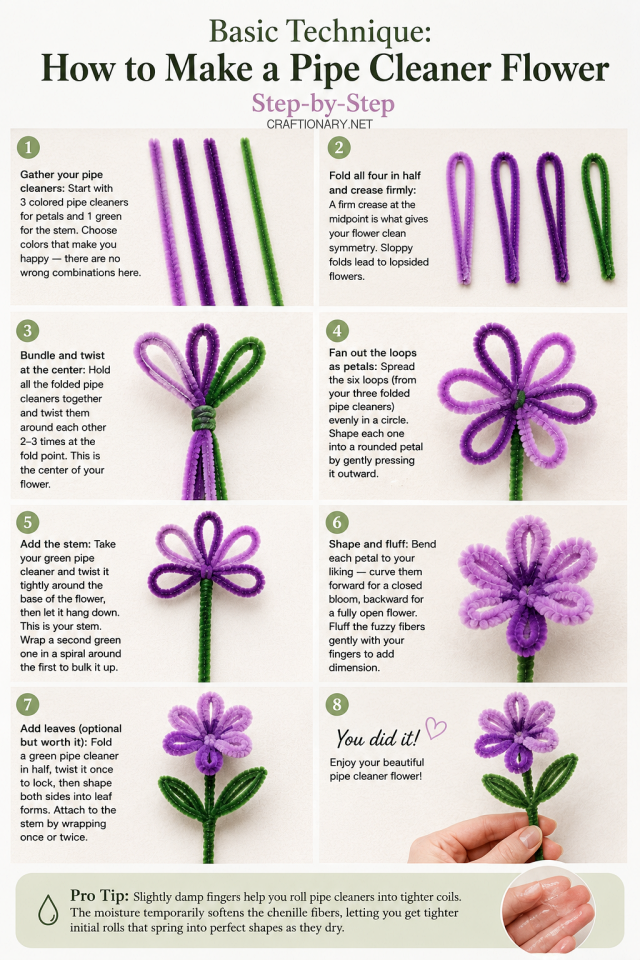
Basic Technique: How to Make a Pipe Cleaner Flower (Step-by-Step)
Before you tackle specific flowers, this foundational method gives you a petal-making technique that works across dozens of designs. Master this and you can build almost anything.
-
Gather your pipe cleaners: Start with 3 colored pipe cleaners for petals and 1 green for the stem. Choose colors that make you happy — there are no wrong combinations here.
-
Fold all four in half and crease firmly: A firm crease at the midpoint is what gives your flower clean symmetry. Sloppy folds lead to lopsided flowers.
-
Bundle and twist at the center: Hold all the folded pipe cleaners together and twist them around each other 2–3 times at the fold point. This is the center of your flower.
-
Fan out the loops as petals: Spread the six loops (from your three folded pipe cleaners) evenly in a circle. Shape each one into a rounded petal by gently pressing it outward.
-
Add the stem: Take your green pipe cleaner and twist it tightly around the base of the flower, then let it hang down. This is your stem. Wrap a second green one in a spiral around the first to bulk it up.
-
Shape and fluff: Bend each petal to your liking — curve them forward for a closed bloom, backward for a fully open flower. Fluff the fuzzy fibers gently with your fingers to add dimension.
-
Add leaves (optional but worth it): Fold a green pipe cleaner in half, twist it once to lock, then shape both sides into leaf forms. Attach to the stem by wrapping once or twice.
Advanced Techniques (For When You’re Ready to Level Up)
Once you’ve nailed the basics, these are the techniques that separate good pipe cleaner flowers from genuinely impressive ones.
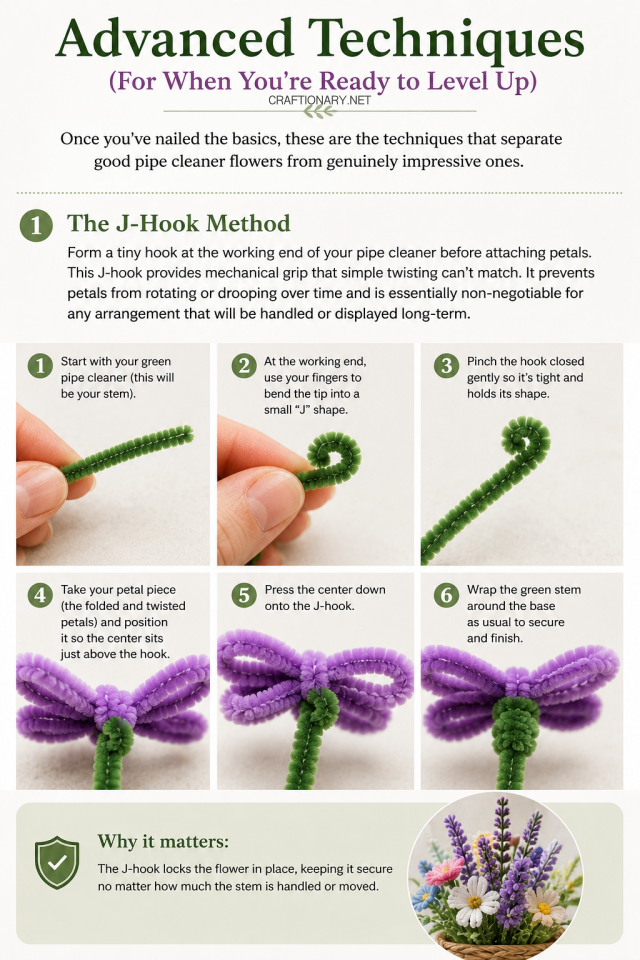
1. The J-Hook Method
Form a tiny hook at the working end of your pipe cleaner before attaching petals. This J-hook provides mechanical grip that simple twisting can’t match. It prevents petals from rotating or drooping over time and is essentially non-negotiable for any arrangement that will be handled or displayed long-term.
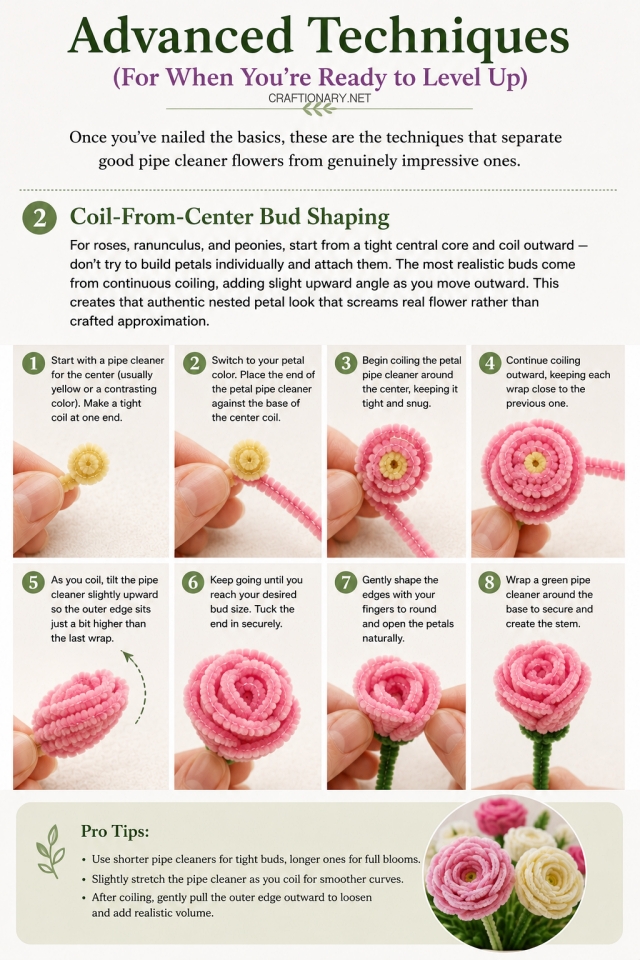
2. Coil-From-Center Bud Shaping
For roses, ranunculus, and peonies, start from a tight central core and coil outward — don’t try to build petals individually and attach them. The most realistic buds come from continuous coiling, adding slight upward angle as you move outward. This creates that authentic nested petal look that screams real flower rather than crafted approximation.
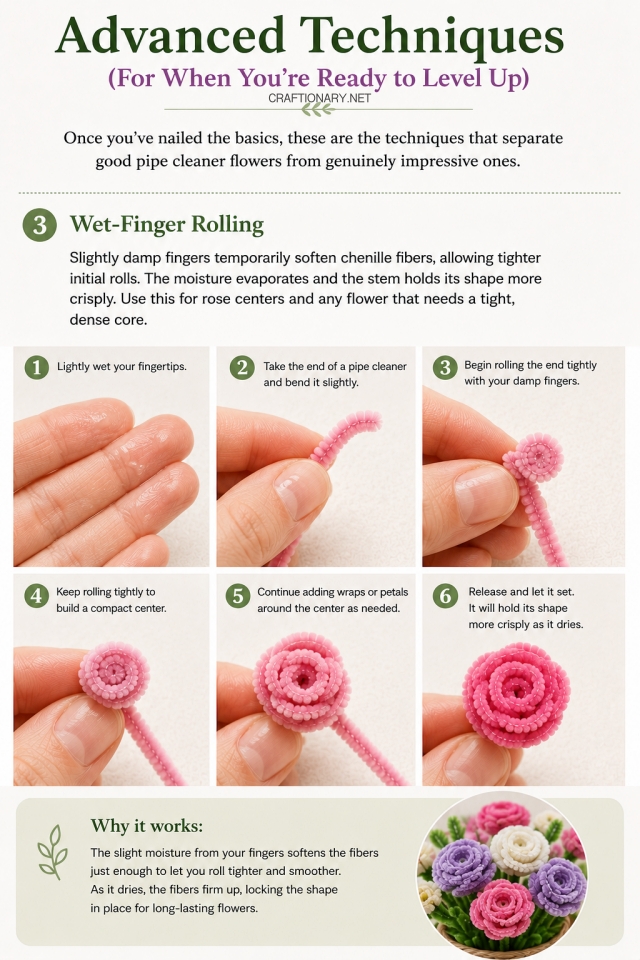
3. Wet-Finger Rolling
Slightly damp fingers temporarily soften chenille fibers, allowing tighter initial rolls. The moisture evaporates and the stem holds its shape more crisply. Use this for rose centers and any flower that needs a tight, dense core.
4. Ombre Coloring
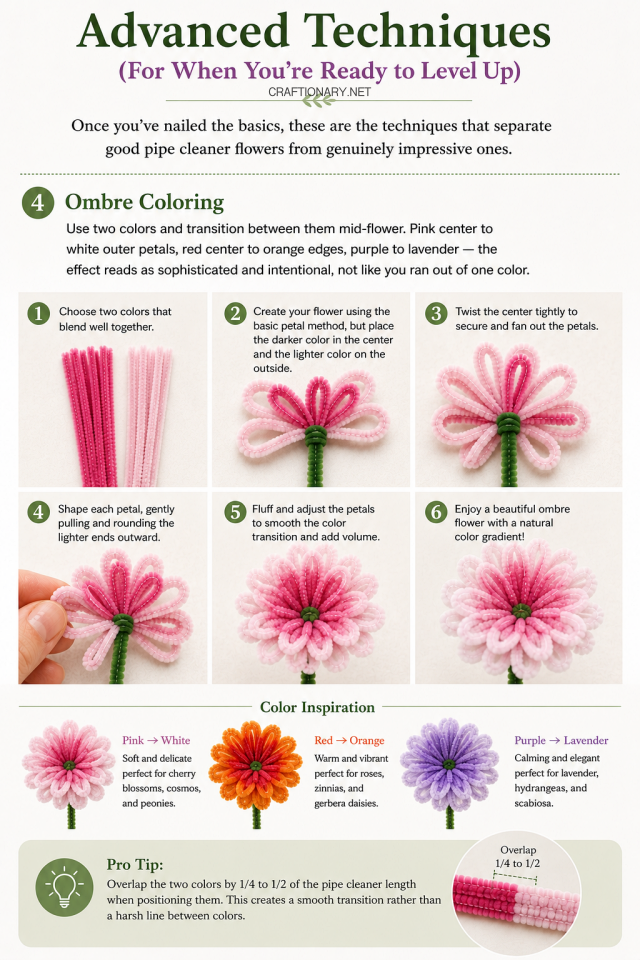
Use two colors and transition between them mid-flower. Pink center to white outer petals, red center to orange edges, purple to lavender — the effect reads as sophisticated and intentional, not like you ran out of one color.
5. Mixing Textures in Arrangements
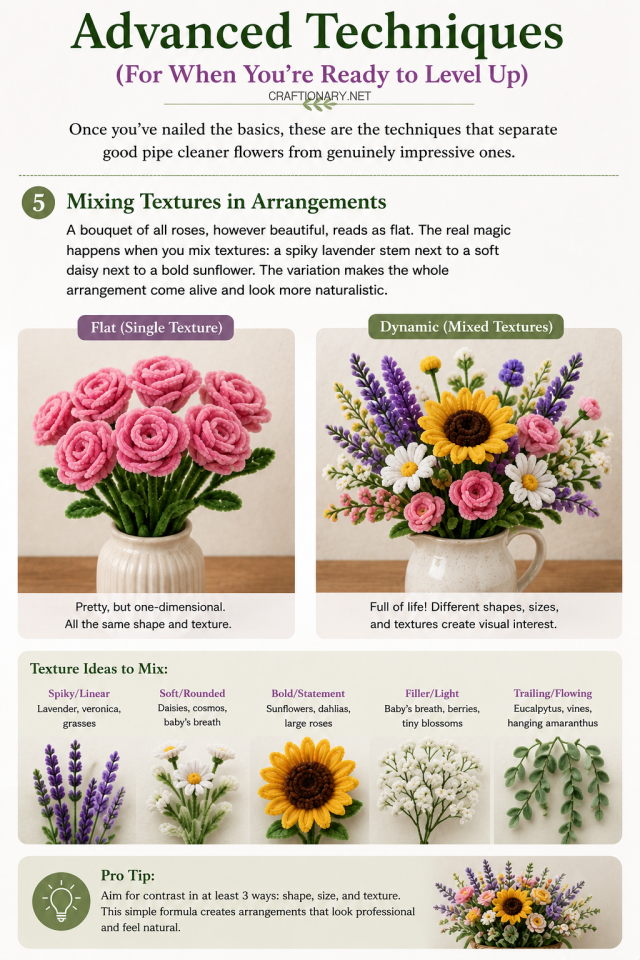
A bouquet of all roses, however beautiful, reads as flat. The real magic happens when you mix textures: a spiky lavender stem next to a soft daisy next to a bold sunflower. The variation makes the whole arrangement come alive and look more naturalistic.
Creative Ideas and Uses for Pipe Cleaner Flowers
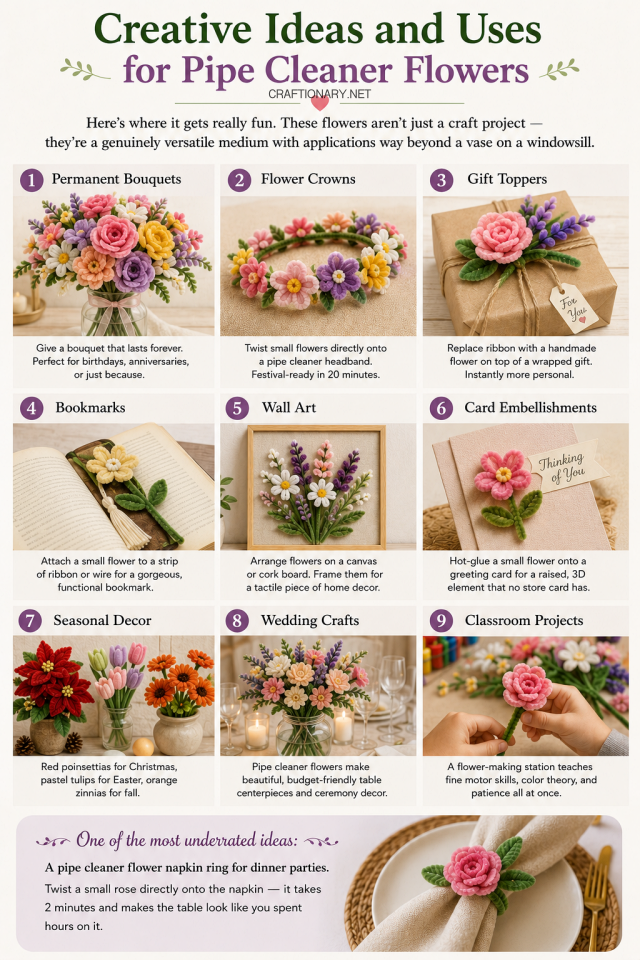
Here’s where it gets really fun. These flowers aren’t just a craft project — they’re a genuinely versatile medium with applications way beyond a vase on a windowsill.
Creative Floral Decor Ideas
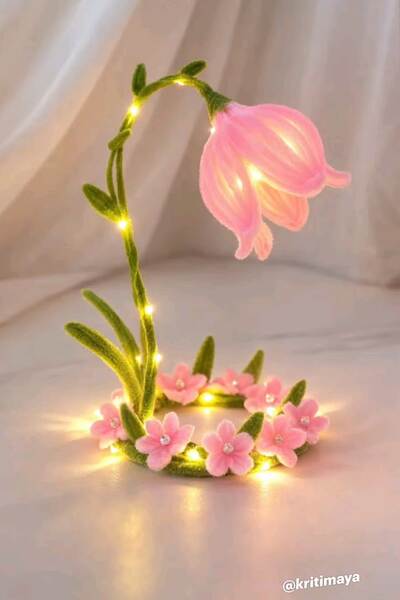
Create various types of flowers as gifts and home decor items. Add LED twinkle lights for cheerful warmth and enchanted soft touch.
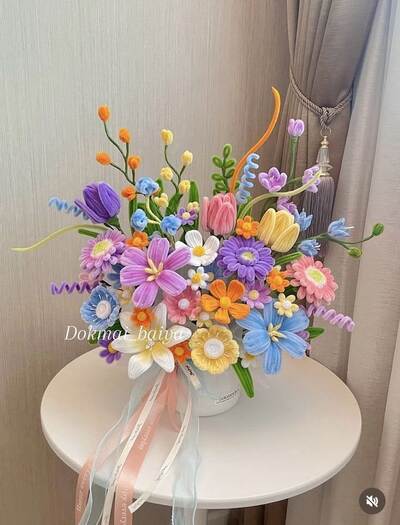
Rainbow Wildflower Bouquet: Create whimsical indoor meadow-inspired floral arrangements by combining vibrant small flowers.
Dokmai Baiya
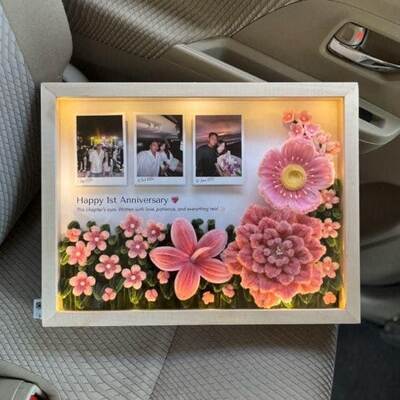
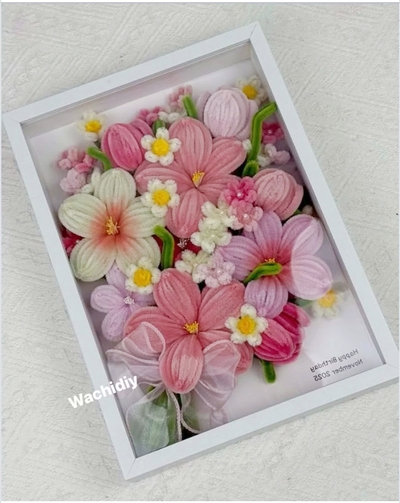
Flower Bouquet Wall Hanging: You can decorate your wall with a simple frame, and you can flower bouquet in it. Makes for keepsake wedding and anniversary gifts.
Lotus Lamp: Create lotus-shaped flowers and add lights around them for a glowing decorative lamp.
Displaying and Arranging Your Pipe Cleaner Flowers
Making beautiful flowers is half the craft. Displaying them well is the other half, and it’s often the bit that gets overlooked.
1. Choosing a Vase
Pipe cleaner stems are lighter than real flower stems, which means they can tip in a vase with nothing holding them down. Fix this by filling the vase with sand, small pebbles, or a piece of Styrofoam cut to fit the base. Push the stems in and arrange from there.
2. Scale to the Vase
Small bud vase: 1–3 flowers. Medium vase: 5–7. Large centerpiece: 10–15 or more. The flowers should always extend above the rim by at least the height of the vase itself — this proportion makes any arrangement look professionally balanced.
3. Mix Textures, Not Just Colors
This is the single most important display tip: mix the textures of your flowers, not just their colors. A spiky lavender stem next to a full peony next to a simple daisy creates visual rhythm. A vase of all roses, however beautifully made, reads as monotonous.
4. Bouquets as Gifts
Wrap a bundle of flowers with tissue paper and a ribbon, exactly like a florist bouquet. Add a card that says these won’t die — genuinely one of the best things about gifting a handmade pipe cleaner bouquet. Recipients keep them for years.
Frequently Asked Questions
1. How many pipe cleaners do you need to make a flower?
2. Are pipe cleaner flowers safe for kids?
3. What’s the difference between pipe cleaners and chenille stems?
4. Do you need glue to make pipe cleaner flowers?
5. How long do pipe cleaner flowers last?
6. What can you use instead of a vase to display them?
7. Can you make realistic-looking flowers?
Drafted by: Alveena Nazir
Edited by: Hani Shabbir
You will also like:
These Pipe Cleaner Crafts Are So Cute It’s Hard To Pick One
A Guide to Needle Felting Animal Ideas – 40 Creative Projects
32 Pom Pom Crafts: Cute and Cozy Ideas for the Season
Learn to make more types of flowers: Handmade flowers