This post may contain affiliate links. Please see our full Disclosure Policy for details.
My story of scrapbooking and artist’s block: I still remember the six-week stretch where I couldn’t make a single thing I was proud of. My sketchbook sat on the desk like an accusation. I’d open it, stare at a blank page, and close it again. I tried every fix I could find online — drawing exercises, painting prompts, doodling, watching tutorials until 2 a.m. None of it touched the real problem, which wasn’t a lack of skill. It was a complete disconnection from the things that made me want to create in the first place.
The thing that eventually pulled me out wasn’t a fancy course or a new set of brushes. It was a beaten-up hardback book, a pair of scissors, and a glue stick.
I started scrapbooking — not in the polished, Instagram-perfect way, but messily and honestly. And somewhere in the act of cutting up an old travel magazine and pressing a faded train ticket onto a page, the urge to make art quietly came back.
If you’re reading this in the middle of your own creative drought, this is for you.
What Is Creative Block, Really?
Artist’s block is one of those experiences that sounds dramatic until it happens to you — and then it feels completely real and frustrating. It’s the creative equivalent of standing in front of a full fridge and having no idea what you want to eat.
Not laziness. Not a lack of talent. Most of the time, artist’s block comes from one of a few core causes:
- Perfectionism pressure — You’ve set such a high standard for your output that starting feels pointless before you’ve even picked up a pen.
- Idea depletion — You’ve been drawing from the same creative well for too long without refilling it.
- Disconnection from joy — Somewhere along the way, art started feeling like a job, a chore, or something you had to justify.
- Overstimulation and under-absorption — Endlessly scrolling other people’s art fills the eyes but starves the hands.
Scrapbooking addresses all of these, but especially the second and third. It’s a way of feeding yourself creatively without any expectation of output. You’re a collector, not a performer.
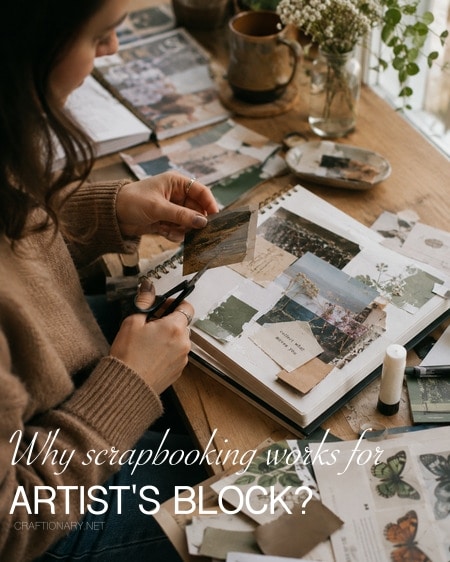
Why Scrapbooking Works for Artist’s Block?
There’s a reason art therapists have used collage and assemblage as therapeutic tools for decades. The act of selecting, arranging, and adhering physical materials bypasses the inner critic in a way that staring at a blank canvas often can’t.
Here’s what happens when you start a scrapbook practice:
You become an active observer. Instead of doom-scrolling, you start noticing the world differently. You tear a corner of a magazine because the color combination is perfect. You pocket a sticker from a boutique because the typography made you feel something. This shift from passive consumption to active curation is huge for creatives.
Your hands stay busy with low stakes. Cutting and gluing doesn’t require you to be good at anything. There’s no judgment. The page accepts whatever you give it. This loosens the grip perfectionism has on your creative process.
You build a physical reference library. Over time, your scrapbook becomes a genuinely useful tool — a curated collection of things that visually excite you, organized so you can return to them when you need a spark.
It’s meditative. This is the mindfulness piece that often gets overlooked. Sitting quietly with scissors, a magazine, and some glue is surprisingly calming. Your nervous system settles. Anxiety about your real art loosens its hold.
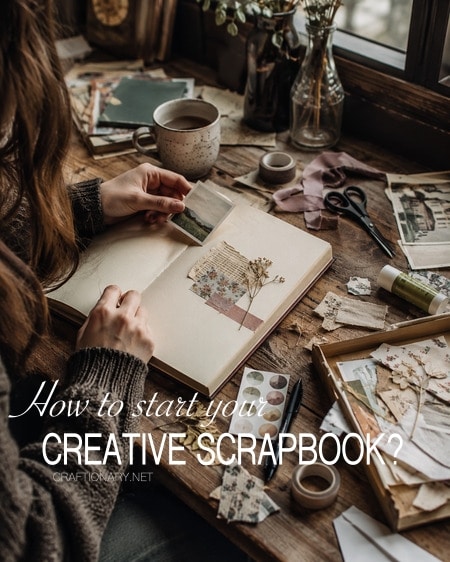
How to Start Your Creative Scrapbook?
You don’t need a special scrapbooking kit for this. In fact, the more unpretentious your materials, the better.
1. Choose Your Book
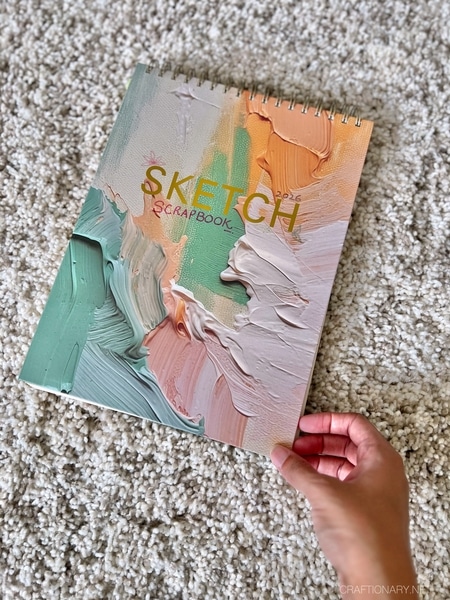
Start with something plain. A thick hardback journal with blank pages works beautifully. So does a large sketchbook, an old ledger book from a charity shop, or even a ring-bound album with clear pockets. Some people prefer a loose-leaf binder so they can reorganize as they go.
The size matters more than you’d think. I switched from a small A5 journal to an A4 sketchbook and it genuinely changed the experience — more room means more freedom to layer things without it feeling cramped.
2. Gather Your Materials (Over Time, Not All at Once)
This is where the real fun lives. You’re not shopping for a project. You’re building a collection. Here’s what I’ve found makes the richest scrapbooks:
- Magazine and newspaper cuttings: Old interiors magazines are gold. Fashion editorials, vintage National Geographics, food magazines, travel supplements. Cut out color palettes, textures, interesting compositions, atmospheric photographs. You’re not looking for pretty necessarily — you’re looking for things that make your eyes stop.
- Newspaper art and print ephemera: The typography and layout of old newspaper pages is incredible visual material. Cut out headlines in interesting fonts. Save illustrated adverts. Pull out weather maps or crossword pages if the visual texture appeals to you.
- Stickers: From everywhere. Stationery shops, bookshops, market stalls, museum gift shops, packaging from products you love. Stickers carry enormous visual variety and they’re endlessly useful for filling gaps, adding accents, or starting a whole page.
3. Continue collecting:
- Travel collectibles: This is where the scrapbook gets personal. Ticket stubs. Luggage tags. Paper napkins from a restaurant where something good happened. Sugar packets. Postcards you never sent. Transit maps. These items carry memory and emotional resonance, which makes them powerful creative fuel.
- Fabric and textile scraps: A small square of wallpaper sample. A snip of lace. Ribbon from a gift. A label cut from a piece of clothing you loved. Fabric adds texture and tactility to pages in a way that nothing else quite does. It also photographs beautifully if you ever share your work.
- Wrapping paper and packaging: Especially anything with interesting pattern work, color, or illustration. Japanese product packaging is exceptional for this. So is wrapping paper from small independent shops.
- Nature finds: Pressed flowers and leaves are the obvious ones, but there’s more. A dried grass stem. A feather. A piece of bark with interesting texture. If you’re collecting these, place them under a heavy book to flatten before sticking.
- Stamps and washi tape: These are optional but incredibly useful for framing, connecting, or decorating elements without needing to draw anything yourself.
- Handwritten notes and quotes: Write down a line that hit you from a book. Jot down a color description from a poem. Tear out a quote from a magazine. These text elements become anchors on the page.
The Organizational System That Makes It Actually Useful
Here’s where most scrapbooks fail as creative tools: they become beautiful but impractical. You flip through the whole thing looking for that perfect floral border you found six months ago and can’t locate it.
The organizational system I’m about to describe is the thing that turns a pretty book into a working creative resource.
1. Use Tabbed Categories
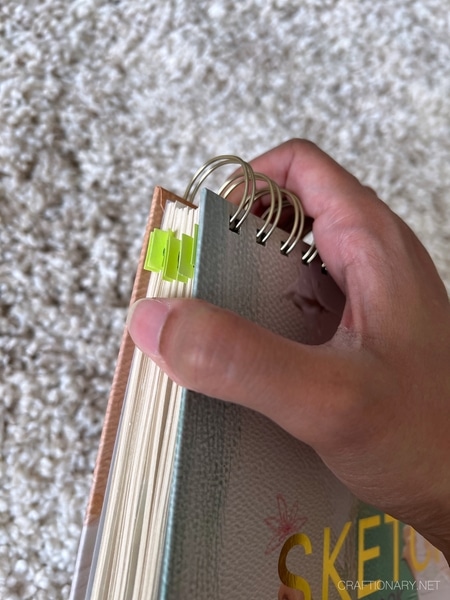
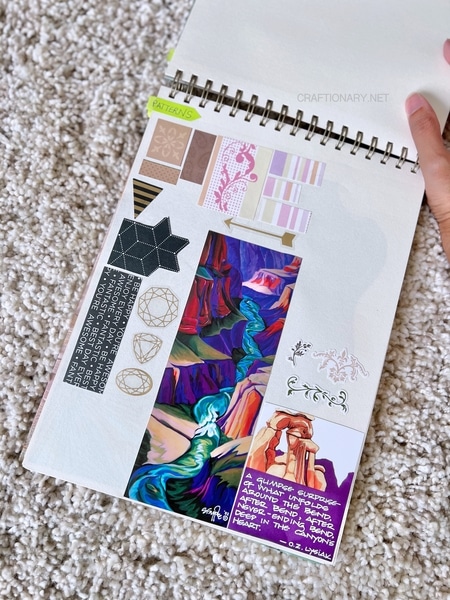
Divide your scrapbook into sections using sticky tabs or cut-out tabs glued directly to page edges. You can buy index tab stickers, or just use pieces of washi tape with written labels.
Here are the category tabs I use, and the logic behind them:
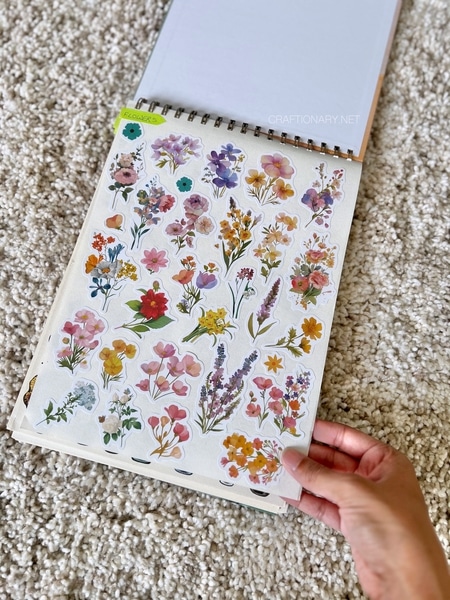
- Flowers and Botanicals: One of the most versatile visual references for any artist. Cut out flowers in every style: photographic, illustrated, vintage botanical drawings, graphic design interpretations. Include interesting leaf shapes and plant forms.
- Animals and Birds: Same principle. Build up a visual vocabulary of creatures rendered in different styles. A fox from a children’s book illustration sits next to a documentary photograph of the same animal and they become a study in interpretation.
- Buildings and Architecture: Facades, windows, doors, archways, rooftops, interiors. The geometry and detail in architecture is endlessly inspiring for composition, pattern, and decorative work.
- Borders and Patterns: Specifically collect things that function as borders: lace edging, geometric tile patterns, decorative frames, repeating motifs from fabric. This section becomes a pattern library.
2. More Tab Ideas:
- Color Palettes: Dedicate pages to specific color groupings. Pale dusty neutrals on one page. Deep moody jewel tones on another. Earthy terracottas on another. When you’re trying to choose a palette for a piece, this section is where you go.
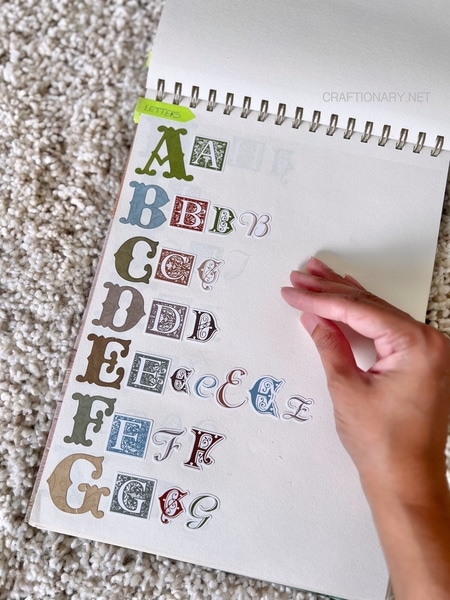
- Decorative Letters and Typography: Alphabets, single large letters, interesting headline fonts, hand lettering examples, monograms. Useful for layout inspiration and for anyone working in illustration, design, or hand lettering.
- Textures: Purely textural things. Rough paper, wood grain, cracked paint from a magazine advert, close-up fabric weave. This section trains your eye to see texture everywhere.
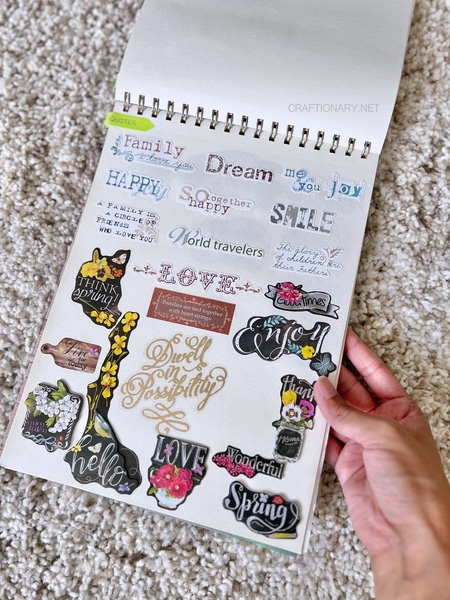
- Quotes and Words: Sentences that stopped you. Phrases that feel like they belong in your work. Single words printed in interesting typefaces. Poetry fragments. This is your word bank.
- Memories and Personal: The personal ephemera. Ticket stubs, receipts, photographs, handwritten notes. These pages are private creative fuel — a record of the specific, particular things your life has actually looked like.
- Seasonal: Some people prefer to organize this way rather than by object type. A spring section filled with pale greens, blossoms, and rain imagery. Autumn’s burnt oranges, heavy shadows, and harvest forms. This approach works especially well if your creative work tends to respond to seasonal energy.
- Decor and Interiors: Rooms, still life, arrangements of objects on surfaces. Especially useful for anyone working in illustration, surface design, or decorative arts.
- Things and Objects: A catch-all for interesting objects that don’t fit elsewhere. Ceramics. Glassware. Books. Lamps. Umbrellas. These object studies are invaluable for still life drawing, illustration, and building visual vocabulary.
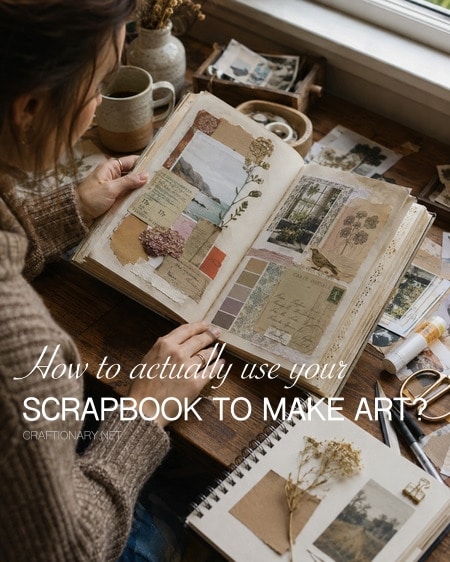
How to Actually Use Your Scrapbook to Make Art?
The book is only useful if you interact with it. Here’s how I use mine when I’m struggling to start:
1. The five-minute browse:
Open the scrapbook at random. Flip slowly through one section without any agenda. Don’t try to extract a concept. Just look. This is the equivalent of stretching before exercise — you’re warming your visual eye up.
2. The prompt method:
Open to your Flowers tab. Challenge yourself to make something that includes exactly three flowers. Open to Borders. Make a piece where a decorative border is the entire focus. The categories become ready-made constraints, and constraints — counter-intuitively — are liberating.
3. The palette pull:
Go to your color Palettes section and choose one page. Work in only those colors today. This eliminates one of the most paralyzing decisions in creative work and gets you moving.
4. The memory start:
Go to your personal section. Pick one item — a ticket stub, a photo, a postcard. Make something based solely on that day or that place. Emotional anchoring often breaks the creative impasse faster than anything else.
5. The style transplant:
Find an image in your book you find compelling and ask: what would my subject look like rendered in this style, or these colors, or this level of detail? You’re not copying. You’re using the visual material as a lens.
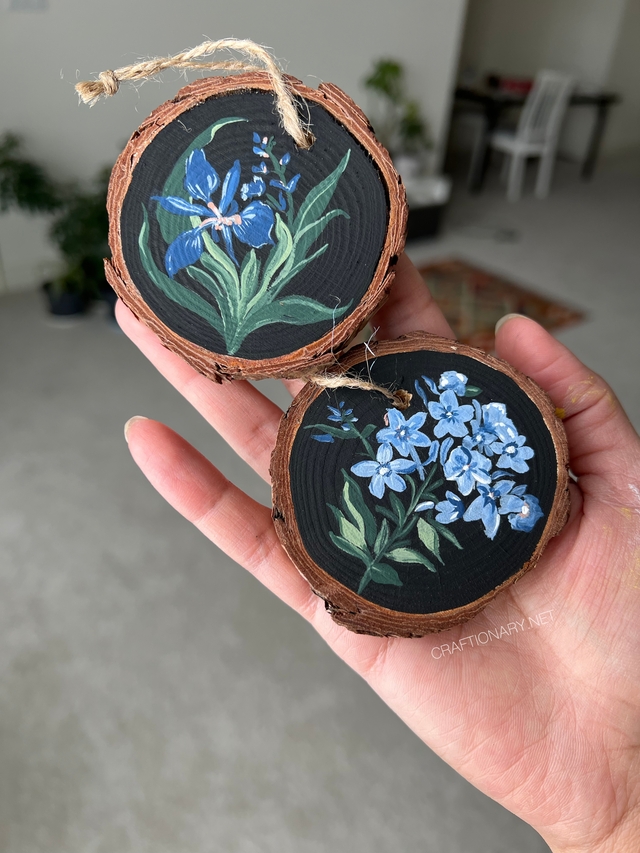
Here’s how I used this floral page:
To paint on wood slice ornaments:
View this post on Instagram
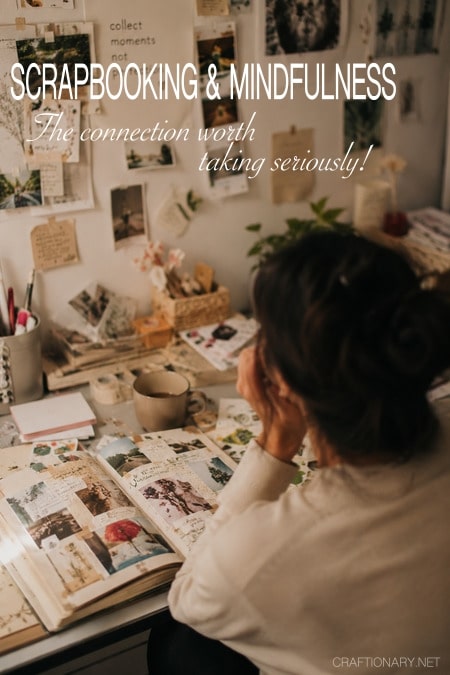
Scrapbooking and Mindfulness: The Connection Worth Taking Seriously
This isn’t a soft add-on to the creative conversation. The mindfulness aspect of scrapbooking is central to why it works.
When you sit with a pile of magazines and start cutting, you enter a particular kind of focused attention that researchers call a flow-adjacent state. You’re not thinking about the future or the past. You’re deciding: this piece, not that one. This corner, not that corner. It’s fully present-tense work.
The tactile quality of the materials matters too. Feeling paper between your fingers, the slight resistance of scissors through cardstock, the cool smoothness of a sticker backing — these physical sensations ground you in your body in a way that screen-based work simply doesn’t. There’s growing evidence that this kind of manual, textural work reduces cortisol and activates the parasympathetic nervous system. In plain language: it calms you down in a real, physical way.
Many people who keep scrapbooks describe the practice as their quiet time. Not productive in any measurable sense. Just present. Just making something for the pleasure of making it. And that’s exactly the energy that feeds the larger creative practice.
Seasonal Scrapbooking: A Special Approach for Cyclical Inspiration
One of my favorite organizational strategies — and one I’ve seen work brilliantly for other artists too — is building your scrapbook seasonally.
Rather than (or in addition to) organizing by category, keep a dedicated section for each season that you actively add to throughout the year.
- Spring section fills with pale acid greens, blossom photographs, images of wet pavements, soft morning light, things newly opened and beginning.
- Summer section holds heat: deep blues against bleached whites, heavy floral abundance, outdoor market imagery, long shadows in late afternoon light.
- Autumn section becomes rich and darkening: amber, rust, umber, the particular smell of damp leaves somehow suggested in imagery, harvest forms, mist and fog.
- Winter section carries quiet and contrast: the graphic qualities of bare branches against sky, the cozy density of indoor spaces, candlelight, deep shadows.
When you’re working on a piece and can’t find your way in, go to the relevant seasonal section and simply spend time there. Seasonal energy is intuitive and immediately accessible — it bypasses the cognitive overload that often causes creative block.
Frequently Asked Questions:
1. Do you need any artistic skill to keep a creative scrapbook?
None at all. You’re cutting and gluing things onto pages. The curation is the skill — and that’s something everyone has an instinct for. You’re just learning to trust it.
2. Can this work alongside other art forms, like digital art or fine art painting?
Absolutely. The scrapbook is a physical reference and inspiration tool. It feeds your work regardless of what medium that work is in. Many digital artists keep physical scrapbooks specifically because the off-screen tactile experience provides a different kind of input.
3. What’s the difference between a scrapbook and an art journal?
An art journal typically involves your own mark-making — drawing, painting, writing — on the pages. A creative scrapbook is predominantly assembled from found and collected materials. The two overlap and many people combine both practices. For artist’s block specifically, the scrapbook approach is often easier to start because it asks nothing of your own skill.
4. How often should you add to my scrapbook?
There’s no rule. Some people add things daily; others go weeks without touching it and then have a big cutting session. What matters is keeping the collecting habit active — noticing things in the world that you want to save. The physical adding-to-the-book can happen on its own schedule.
5. What if your scrapbook starts looking messy or bad?
This is the voice of perfectionism, and it needs to be gently ignored. The scrapbook is a working document, not an exhibition piece. Uneven, layered, crammed, chaotic pages often turn out to be the most useful and interesting ones. Give yourself complete permission.
6. Can children do this too?
Yes, and it’s a wonderful activity for young people who are curious about art. The materials are safe, the process is immediate, and the result is genuinely personal. There are no mistakes.
7. What if you run out of things to collect?
You won’t. Once you start collecting, you see the world differently. But if you want to be intentional about sourcing: charity shops and car boot sales are extraordinary for old magazines and printed ephemera. Stationery and art supply shops often have sample packs or clearance stickers. Ask friends and family to save their old magazines for you.
Artist’s block isn’t a character flaw. It’s a signal — usually that the well needs refilling, that the pressure has gotten too high, or that the joy has been crowded out by expectation.
Scrapbooking won’t solve everything. But it will get your hands moving, your eyes noticing, and your relationship with making things quietly back on track. It’s playful in the best possible sense — the way that the best creative work always is underneath all the effort and technique.
Start with whatever’s to hand: an old magazine, a plain journal, a pair of scissors. Cut out one thing that catches your eye. Stick it on a page.
That’s it. That’s the whole beginning.
Everything else follows from there.
About this article: This guide was written from genuine hands-on experience with both creative block and scrapbook practice. The organizational systems described are tested approaches developed through real use over time, adapted and refined from the communities of artists, illustrators, and makers who’ve shared their own practices openly.
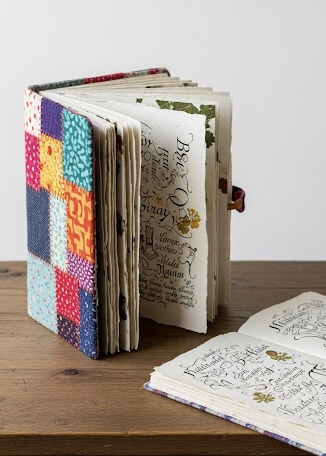
Here’s some ideas to decorate your scrapbook with fabric patchwork and painting:
Written by: Hani Shabbir
You will also like:
Art Journaling Ideas, Prompts and Guide to Art-a-Day Journal
Line Art: Guide to Line Art Drawings and Flower Line Art Ideas
How to Start Doodle-a-Day Journaling: 30 Easy Doodling Ideas