This post may contain affiliate links. Please see our full Disclosure Policy for details.
Discover everything about line art, including techniques, flower line art tutorials, minimalist drawing ideas, tools, and step-by-step tips for beginners and digital artists.
If you’ve ever paused while scrolling through Pinterest or Instagram because of a simple drawing made with just a few flowing lines, you’ve already seen the charm of line art. With just a few confident strokes, artists can capture a face, a flower, or even a small everyday object in a way that feels clean, expressive, and modern.
At its simplest, line art is a drawing style that uses clear outlines instead of shading or heavy color to create an image. It might look effortless, but good line art comes from learning to simplify shapes and draw steady, intentional lines. The good news is that it’s one of the easiest art styles for beginners to try. Most people start with nothing more than a fineliner pen and paper, though many artists also create line art drawings digitally using drawing apps.
Over the past few years, line art has gained immense popularity in modern design. You’ll see it used for wall prints, tattoos, embroidery patterns, Cricut projects, journal pages, and even branding. One style that stands out in particular is flower line art, where simple botanical outlines create elegant designs that work beautifully for decor and creative projects.
In this guide, we’ll walk through what line art really is, how to draw it step by step, the tools artists commonly use, and a curated collection of inspiring line art drawing ideas, including trending flower line art designs.
What Is Line Art?
I got hooked on line art the first time I saw a single, flowing line capture an entire face—it was amazing how much expression you could get with so little. Line art is all about using clean, confident lines to convey shapes, movement, and emotion, without relying on shading or heavy color. A few simple strokes can turn a flower, a hand, or even an abstract idea into something elegant and expressive.
The history of line art is fascinating. From prehistoric cave paintings of Lascaux to Renaissance sketches by artists like Leonardo da Vinci, lines have always been a way to capture form and tell a story. Later, artists like Picasso and Matisse explored contour and continuous lines, showing how a single stroke could be both minimal and powerful.
Line art is different from sketching. When we sketch, we explore, make rough marks, and adjust constantly. With line art, every stroke is deliberate. That focus is what makes it feel clean, polished, and confident.
There are a few main approaches. Contour drawing traces the edges of a subject to capture its shape, while continuous line drawing uses one unbroken line for the whole image, giving it flow and movement. I’ve found both styles to be incredibly versatile—they work for wall prints, tattoos, embroidery, journal designs, and digital art, and they’re surprisingly beginner-friendly once you get the hang of drawing with intention.
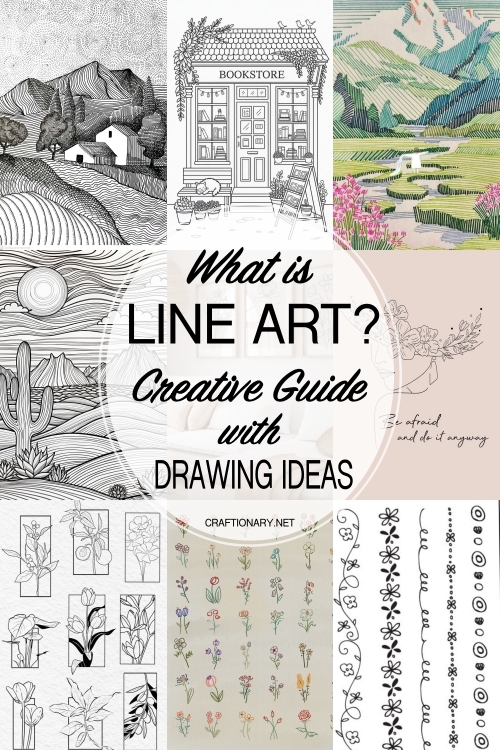
Types of Line Art
Understanding variations helps you explore different styles.
1. Continuous Line Art:
- Also called one-line drawing, this style uses a single uninterrupted line to complete an image.
- It’s popular for abstract faces and floral outlines.
- Perfect for wall prints, tattoos, and modern decor.
- Improves hand control, encourages flow, and builds confidence.
- It is a fantastic exercise for spatial awareness and forced creativity, as you cannot fix a line—you must incorporate it into the flow.
2. Contour Line Drawing:
- Contour drawings follow the visible edges of a subject.
- Artists focus on outlines without shading.
- Lines are deliberate, capturing true shape and form.
- Perfect for botanical sketches, portrait outlines, and object studies.
3. Gesture Line Art:
- Gesture line art captures movement and emotion quickly using loose strokes.
- It’s often used in figure studies.
- Great as a warm-up.
4. Minimalist Line Art:
- Minimalist line art removes unnecessary detail, keeping only essential strokes.
- Bold, intentional lines for abstract faces, shapes, and wall art.
- Popular for wall decor prints, feminine abstract face art, and scandinavian-inspired design.
5. Flower Line Art:
- Highly popular, simple, and versatile.
- Observe shapes, simplify petals and stems, and use clean, confident lines. Less is more.
- Flowers work beautifully with simple lines for tattoos, prints, embroidery, and crafts.
- Great for creative journals, embroidery patterns, cricut vinyl cutting, journal decorations, tattoo inspiration, and modern wall prints
- You can style it with black-and-white for timeless appeal, subtle color accents for a modern twist.
- Works with digital tools (Procreate, Illustrator, Photoshop) and traditional pens (Micron, fineliners, brush pens).
- It is loved because it is easy to learn, expressive, and adaptable for all skill levels.
Styles:
- Simple rose outline – layered petals in a few curves.
- Minimalist daisy – small center, evenly spaced petals.
- Single-line bouquet – stems and flowers in one flowing line.
- Wildflower contour – natural, relaxed edges for an organic feel.
How to Draw Line Art Step-by-Step
Who says you need fancy tools? Some of my favorite line art pieces were done with just a pen and paper at home. The secret is confident, intentional lines.
- Choose a simple reference: A flower, hand, leaf, cup, or any other simple objects work best.
- Identify major shapes: Break the subject into basic shapes before outlining. Circles, ovals, and curves keep your drawing balanced.
- Draw confident lines: Move your arm, not just your wrist, and commit to each stroke. Imperfections add charm. Move smoothly and avoid sketchy repeated lines.
- Simplify details: Line art is about capturing the essence. Avoid overworking. Line art thrives on clarity.
- Vary line weight: Thicker lines can emphasize focal points. Thin lines add delicacy.
Tips: Practice continuous and contour lines, leave negative space, and don’t overwork your drawing.
Recommended Books:
Practice with these books to increase proficiency:
- Faces and Figures Line Art – Step-by-Step Illustrations by Chris Legaspi
- Flowers and Plants Line Art – Step-by-Step Illustrations by Ms. Melissa Washburn
- Botanical Line Drawing – Lear to draw nature finds by Peggy Dean
- Pen and Ink Techniques – Master the line art detailing by Frank J. Lohan
Tools and Materials for Line Art
1. Traditional Tools:
Make clean, precise, and expressive lines with:
- Fineliner Micron pens (0.3 – 0.8mm)
- Ink pens
- brush tip marker pens
- Technical drawing pens
- Mechanical pens (for planning)
Pros: Smooth, versatile, great for most styles.
Cons: Can smudge, require practice, and some are pricey.
2. Digital Tools:
If you are working digitally, your choice of software matters:
- Vector (Adobe Illustrator, Affinity Designer): Lines are mathematical paths. They can be scaled infinitely without losing quality. Ideal for logos and technical illustrations.
- Raster (Procreate, Photoshop, Clip Studio Paint): Lines are made of pixels. This allows for more organic brush textures but cannot be enlarged without pixelation.
Uses: Digital line art is especially useful for selling prints, creating SVG files, designing logos, and making cricut templates.
Pros: Undo option, scalable, easy line adjustments.
Cons: Needs a tablet or software, learning curve, and less natural freehand feel.
Core Techniques: The Fundamentals of Line Art
To create line art that looks professional rather than amateur, you must master these four pillars:
1. Line Weight and Pressure
Line weight refers to the thickness of your lines. A drawing where every line is the same thickness often looks flat and “coloring book-like.
- Thicker lines should be used for the outer silhouette of an object or areas in deep shadow.
- Thinner lines are best for internal details, textures, and areas where light hits the object.
- Tapering: The ability to start a line thick and end it in a sharp, thin point is the hallmark of a skilled hand.
2. Line Quality and Confidence
Chicken scratching—the habit of using many small, overlapping strokes to form a single line—is the enemy of good line art.
- Ghosting: Practice the motion of the line in the air above the paper/tablet before committing.
- The Shoulder Technique: Draw long lines using your shoulder and elbow rather than just your wrist to achieve smoother, more confident curves.
3. Creating Depth Without Shading
Since line art lacks traditional shading, you must use alternative methods to suggest 3D form:
- Hatching and Cross-Hatching: Using parallel or intersecting lines to create areas of perceived value.
- Contour Lines: Drawing lines that follow the wrap of an object’s surface to show its volume.
- Line Breaks: Leaving small gaps in lines where light is most intense to suggest a highlight.
Line Art Drawing Ideas
Simple Line Art Ideas
1. Faces
Capture expressions in a few confident strokes; perfect for prints or journals.
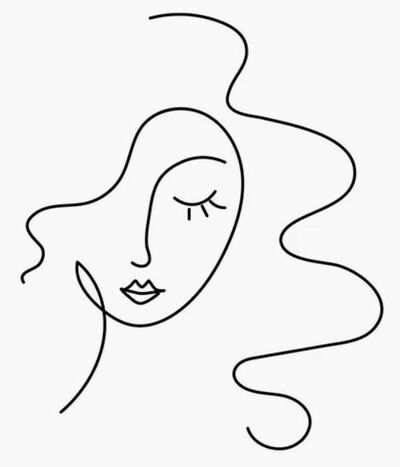
Karyna Julia
2. Hands Line Art
Sketch minimal gestures that feel alive, great for planners or wall decor.
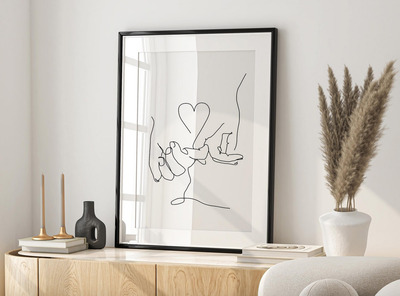
Shop: The Doodle Box Shop
3. Coffee Cup
Draw a cozy mug outline to brighten wall art or stationery.
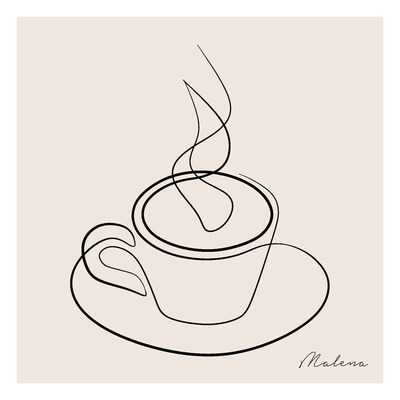
Malena Art
4. Continuity Line Art
Create tiny minimalist hearts for journals, cards, or digital art.
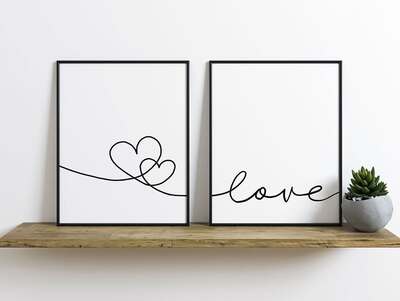
Design NV Design
5. Leaves
Add single leaves or clusters to borders, stickers, or prints.
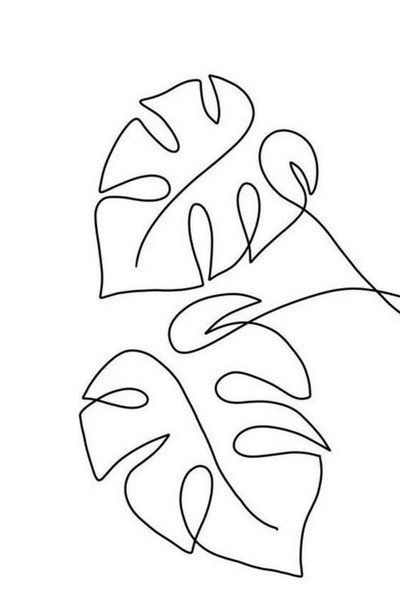
We Like Cute
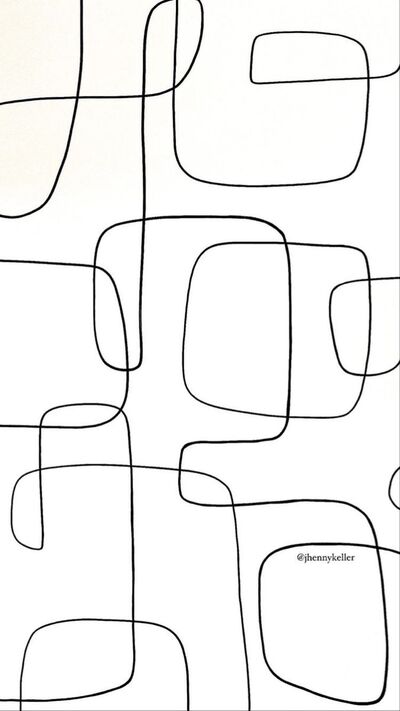
6. Abstract Shapes
Play with geometric forms to decorate walls, notebooks, or planners.
Jhenny Keller
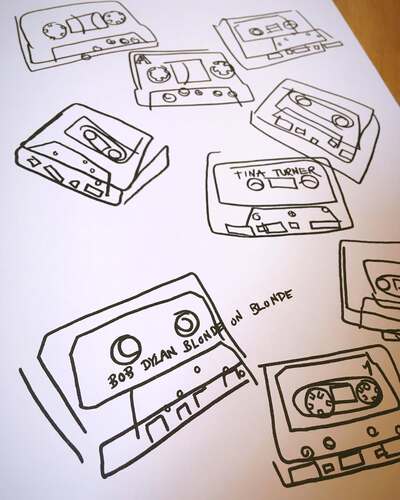
7. Cassette Tape Riso Prints
Outline retro tapes to add a nostalgic touch to decor or journals.
Studio Lobita
Animal Line Art
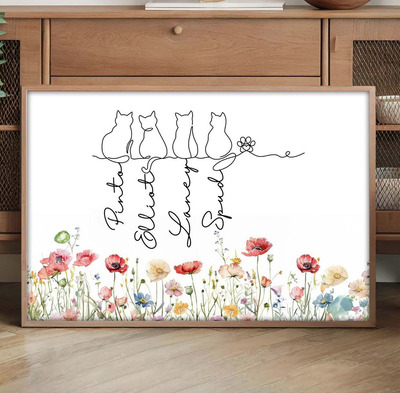
8. Whiskers in the Wildflowers
Add small animals peeking through blooms for fun, whimsical designs.
Shop: Customized Gift 93
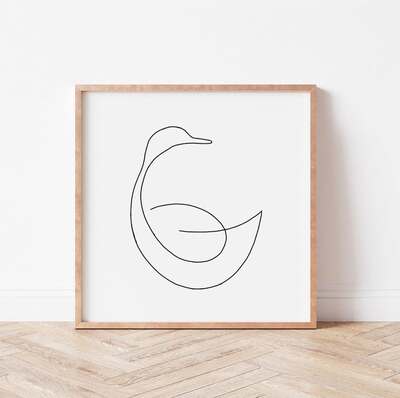
9. Single Line Goose
Draw a flowing goose in one continuous line; minimal and elegant.
Design NV Design
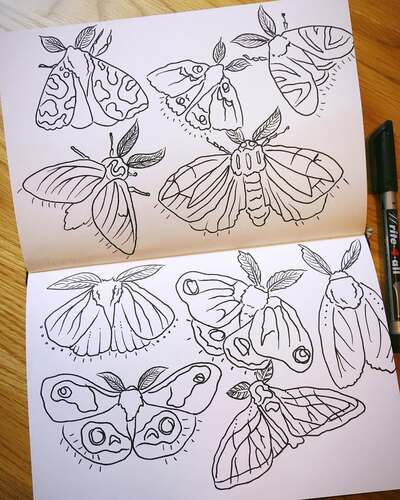
10. Moth Illustrations
Sketch delicate moths for tattoos or wall art.
Studio Lobita
Floral Line Art
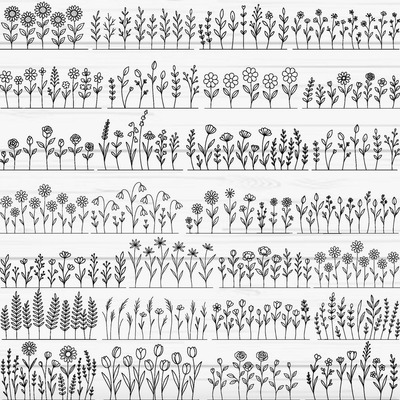
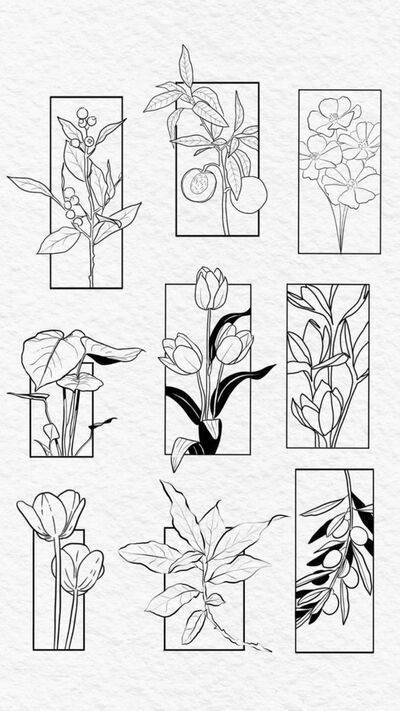
11. Delicate Botanical Line Art Gallery

Shop: The Design Parlour
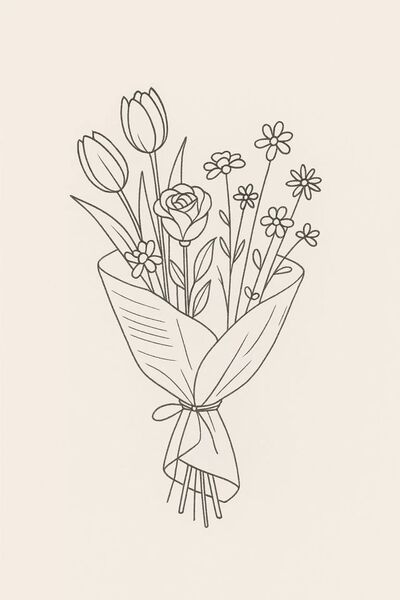
12. Minimal Bouquet Line Art
Arrange small flowers in a few strokes for prints or Cricut projects.
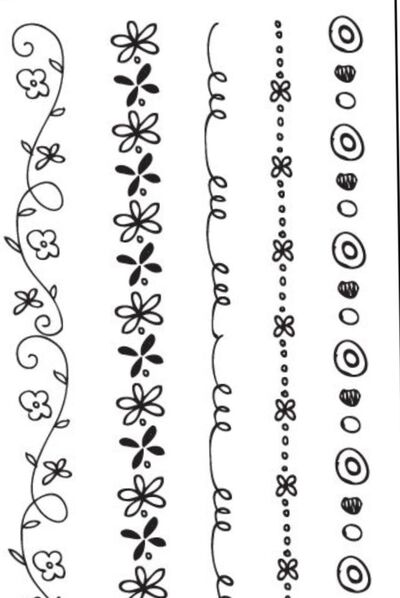
13. Botanical Border Line Art
Create floral borders for cards, journals, or scrapbooks.
Shop: Koko Boutique Designs
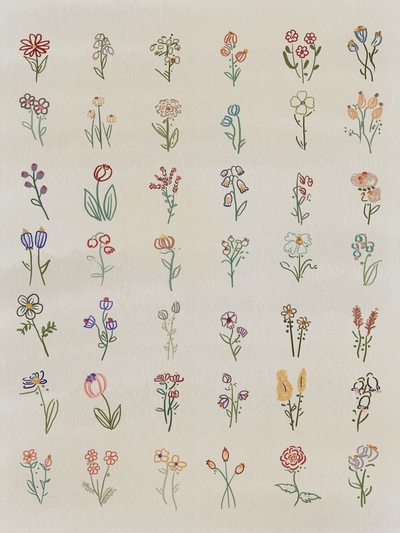
14. Single Stem Line Art
Draw one or more flowers on simple stems; clean, minimal, and easy to adapt for prints or crafts.
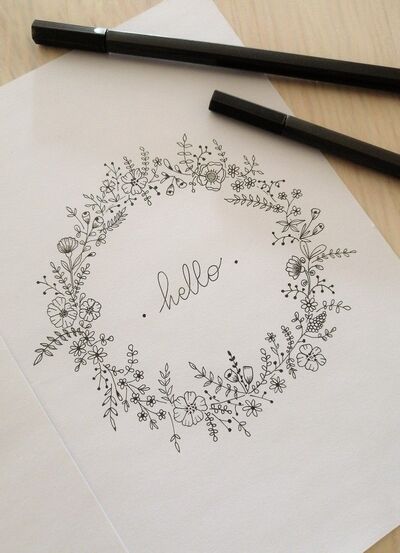
15. Line Art Floral Wreath
Form a circular flower arrangement for wall art or embroidery.
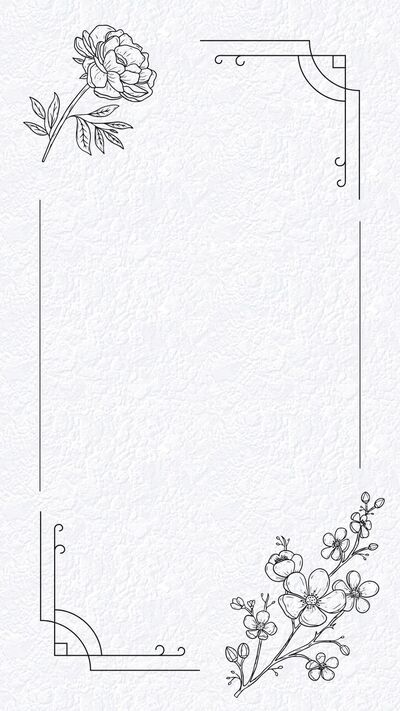
16. Floral Corners with Line Art
Add tiny corner florals to pages or cards for subtle elegance.
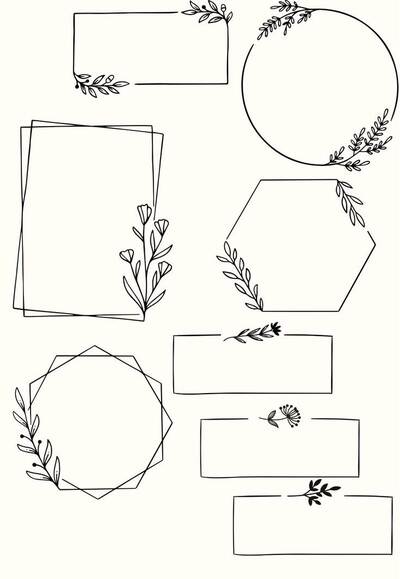
17. Floral Frames with Line Art
Build a full floral frame outline for prints, invites, or journals.
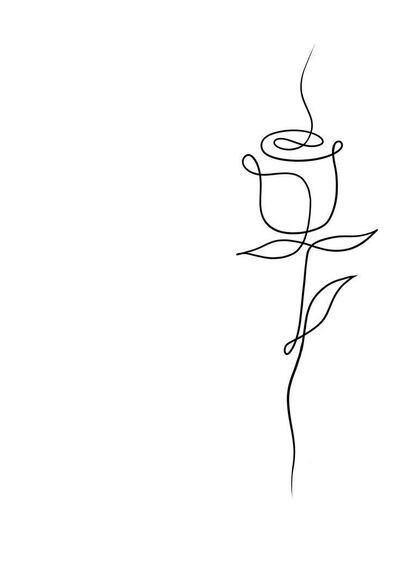
18. Single Line Rose Flower
Capture a rose with one flowing line; minimal yet striking.
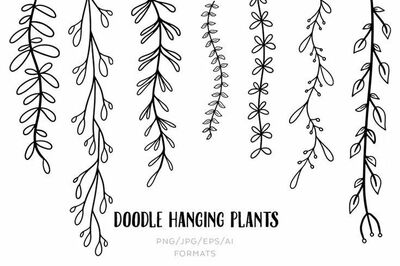
19. Line Art Hanging Vines
Draw trailing vines for a graceful, decorative effect.
Modern Figurative Line Art
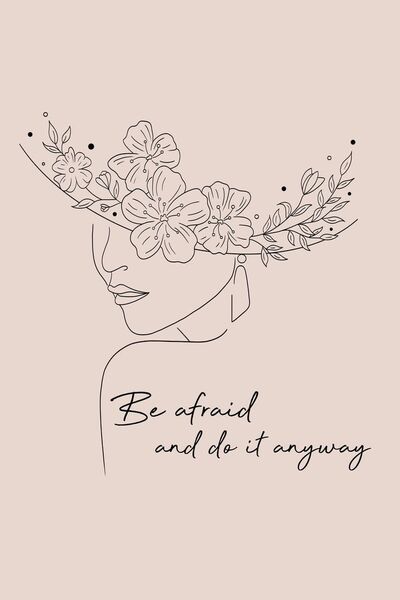
20. Line Art with Quotes
Pair minimal drawings with short phrases for mugs or prints.
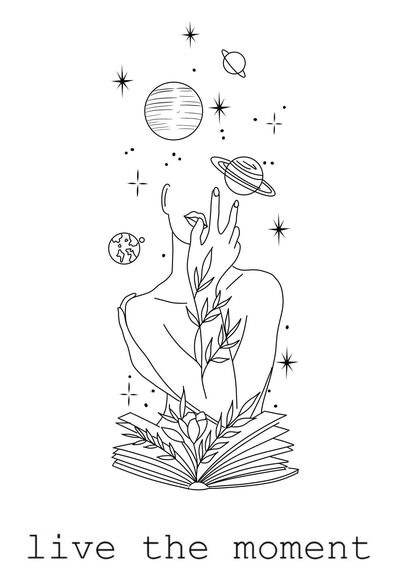
21. Line Art Celestial Designs
Sketch stars, moons, and planets for dreamy journals or wallpapers.
22. Line Art Keepsake
Add subtle color behind line drawings to pop visuals.
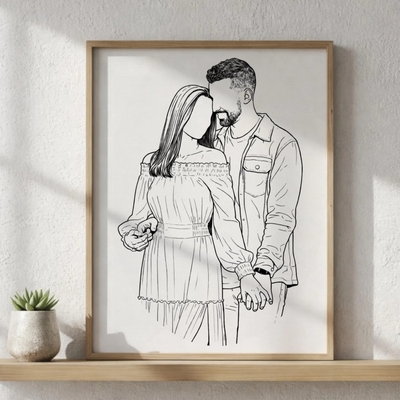
Shop: YG Odka
Related: 40 Meaningful Memory Keepsake Ideas to Treasure Life
23. Continuous Face Line Art
Draw multiple faces in one flowing line; simple, expressive, and perfect for modern wall prints.
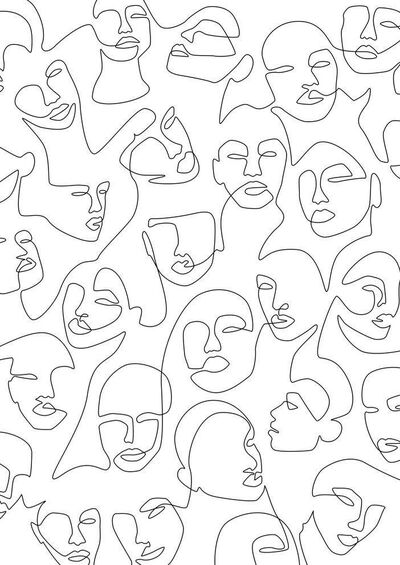
Zephania Hasante
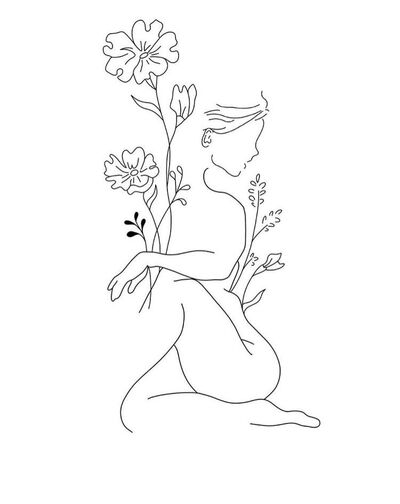
24. Abstract Body Form Line Drawings
Draw minimal human shapes for sketchbooks or decor.
Landscape and Nature Line Art
25. Monochrome Cityscape Outlines
Outline skylines for modern, minimalist wall prints.

26. Line Art Sketch Book
Fill a sketchbook with simple, expressive drawings.
27. Layered Line Art
Overlap lines to create depth and modern interest.
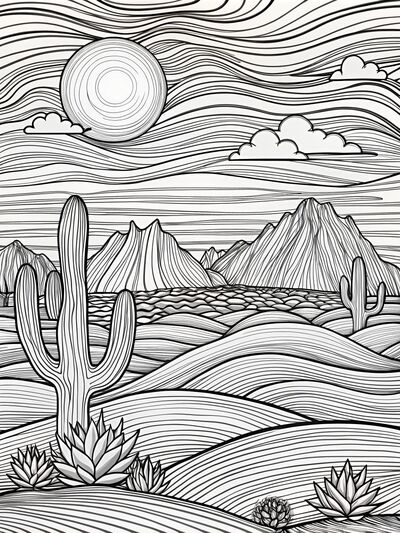
28. In-depth Line Art
Use lines to bring intimate detailing to focus with artistic designs.
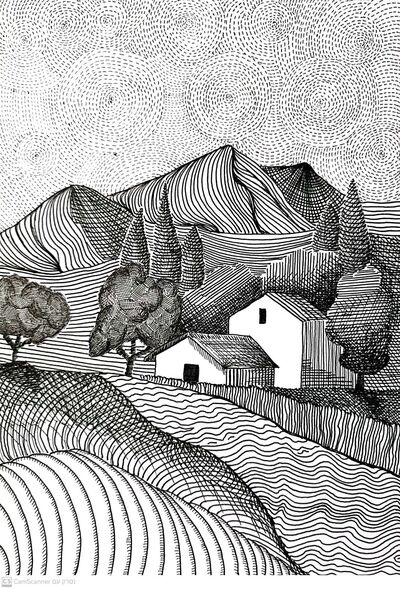
29. Landscapes with Markers
Sketch mountains, horizons, or simple scenes using minimal lines; great for calm, minimal decor.
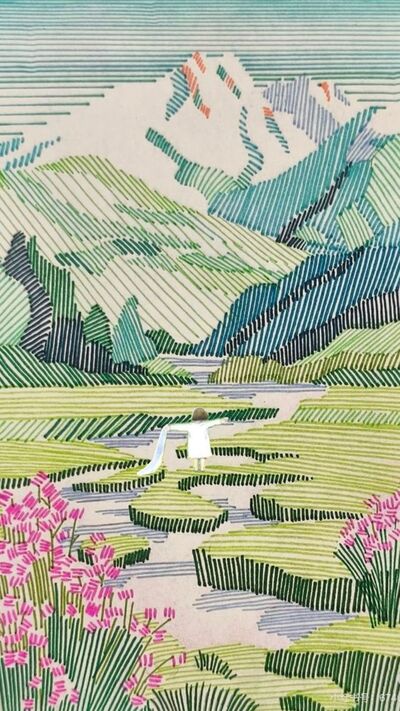
30. Illustrative Line Art
A detailed enchanted or magical experience based on hobby such as a bookstore, flower shop, garden, and so on.
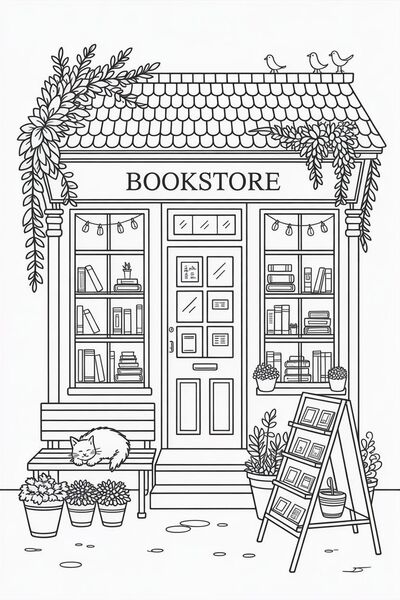
How to Make Line Art Look Professional
These small habits make line art look polished, confident, and expressive, even for beginners.
- Shaky lines: Using full arm movement instead of just the wrist keeps strokes smooth and steady.
- Overworking: Adding too many lines can clutter the drawing—stop while it still looks clean.
- Flat appearance: Vary line thickness and leave space to give depth and dimension.
- Flow: Practicing continuous lines helps strokes feel natural and effortless.
Line Art for Different Creative Uses
Line art isn’t just for drawing—it can be applied to so many creative projects:
- Wall decor
- Embroidery – the outlines are ideal for stitches.
- Cricut cutting machines – line art easily converts to SVG cut files.
- Stickers
- Journal pages – adds clean structure to colorful mixed media pages.
- Coloring pages
- Branding logos
- Greeting cards
- Gift wrapping designs
- Apparel prints (t-shirts, tote bags)
- Digital wallpapers
- Planner and scrapbook elements
- Packaging design
- Social media graphics
It adds a clean, modern, and stylish touch to almost anything you create.
Common Mistakes Beginners Make
- Pressing too hard: Lines end up stiff or smudged—let them flow instead.
- Drawing too slowly: Hesitation shows in shaky strokes.
- Overcomplicating shapes: Simple lines often look better than too many details.
- Ignoring composition: Give your design space to breathe; clutter weakens it.
- Skipping practice: Daily or regular practice makes lines more confident and fluid.
There’s something really calming about line art—no pressure, no rules, just you and a pen. You don’t have to get it perfect. Honestly, most of the time, the imperfect lines look better anyway.
Maybe start with a tiny leaf, or a face, or just random lines on a page. It doesn’t have to be a finished piece. Just something you enjoyed drawing. And that’s kind of enough.
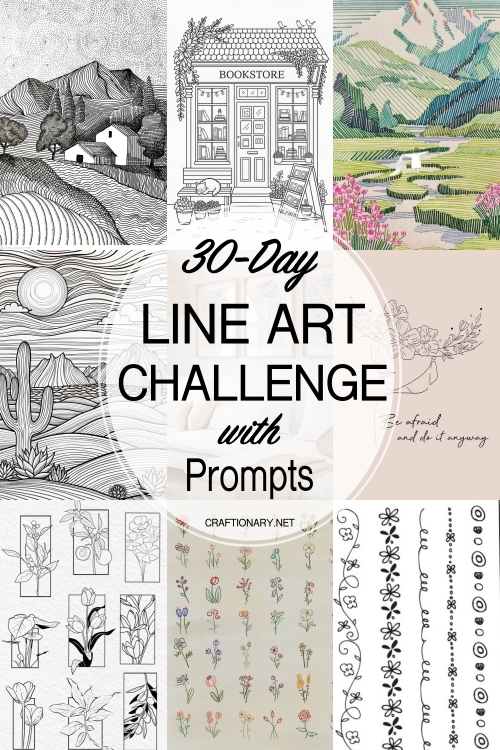
Line Art Challenges
Commit to one prompt a day for a month to see a drastic improvement in your hand-eye coordination and line confidence. Find line art monthly challenges for fun and theme-based and commit to it for 4-weeks to develop a habit of consistency:
30-Day Line Art Challenge (Just for Fun!)
If you’re not sure what to draw next, this little challenge can help. It’s super simple—just one small line art idea a day. No pressure to be perfect, just show up and draw.
- Day 1: A simple leaf
- Day 2: A face (don’t overthink it)
- Day 3: A basic flower outline
- Day 4: Random abstract shapes
- Day 5: Your favorite animal
- Day 6: A coffee mug or cup
- Day 7: Hands (they’re tricky but fun)
- Day 8: A tiny house or building
- Day 9: A heart in your own style
- Day 10: A plant or branch
- Day 11: An eye (keep it minimal)
- Day 12: A couple pose
- Day 13: A butterfly or moth
- Day 14: A simple landscape
- Day 15: A fruit (apple, lemon, anything)
- Day 16: A sitting pose
- Day 17: Stars or moon doodles
- Day 18: A book or journal
- Day 19: A one-line object
- Day 20: Your own pattern
- Day 21: A quick portrait
- Day 22: A city skyline
- Day 23: Flowers in a vase
- Day 24: A dancing pose
- Day 25: Leaves as a border
- Day 26: A minimal face again (you’ll see progress!)
- Day 27: A quote with line art
- Day 28: A small scene from memory
- Day 29: Anything you enjoyed the most
- Day 30: Redraw your Day 1
30-Day Line Art Prompt Challenge (To find your interest)
Use this to build daily consistency.
1st Week: Foundations
- Day 1: Draw a single leaf outline.
- Day 2: Continuous line coffee cup.
- Day 3: Minimal house silhouette.
- Day 4: Hand contour drawing.
- Day 5: Simple rose outline.
- Day 6: Abstract face in one line.
- Day 7: Feather with varied line weight.
2nd Week: Flowers & Nature
Single leaf, wild rose, succulent, weeping willow branch, a full bouquet.
- Day 8: Wildflower bouquet outline.
- Day 9: Tulip line drawing.
- Day 10: Botanical border frame.
- Day 11: Lavender stem cluster.
- Day 12: Floral wreath circle.
- Day 13: Eucalyptus branch.
- Day 14: Daisy close-up.
3rd Week: Everyday Objects
- Coffee mug (ellipses!), old keys, sneakers, a stack of books, a vintage camera.
- Day 15: Teacup and saucer.
- Day 16: Open book.
- Day 17: Window outline.
- Day 18: Plant pot silhouette.
- Day 19: Pair of glasses.
- Day 20: Minimal chair.
- Day 21: Hanging lamp.
4th Week: Creative Exploration
- Day 22: Continuous line portrait.
- Day 23: Sun and moon composition.
- Day 24: Mountain landscape outline.
- Day 25: Geometric animal silhouette.
- Day 26: Quote + small line illustration.
- Day 27: Floral corner decoration.
- Day 28: Abstract shapes page.
- Day 29: Redraw Day 1 and compare progress.
- Day 30: Create a full minimalist wall art piece.
Bonus Week: Animals and Complex Scenes
- Day 31: Bird in flight
- Day 32: Sleeping cat
- Day 33: Koi fish movement
- Day 34: Beetle in symmetry
- Day 35: Textured elephant
- Day 36: A window view
- Day 37: A bicycle
- Day 38: A city skyline
- Day 39: A cluttered desk
- Day 40: Your own hands drawing
Commonly Asked Questions
1. How long does it take to get good at line art?
With consistent practice, you can see improvement in weeks; mastery takes months. Like any skill, improvement depends on practice. Daily 10-minute exercises over 30 days can significantly improve line confidence and control.
2. What is the difference between an outline and line art?
An outline is just the boundary of an object. Line art includes the outline plus internal details, varying line weights, and textural lines that define the subject’s character.
3. What’s the difference between contour and line drawing?
Contour follows the exact edges of a subject; line drawing can be more expressive or abstract.
4. What is the best pen for line art?
For traditional artists, Sakura Pigma Micron or Uni Pin Fineliners are the industry standard due to their archival, waterproof ink. For digital artists, a pressure-sensitive stylus and brushes with stabilization or smoothing enabled are key.
5. How do you stop your lines from looking shaky?
Shakiness usually comes from drawing too slowly or using only your wrist. Speed up your stroke slightly and use your whole arm. In digital programs, increase the Stabilization setting (usually between 10-20%).
6. Can you sell line art?
Absolutely. Line art is highly sought after for SVG cut files (Cricut/Silhouette), tattoo designs, printable coloring pages, and minimalist branding packages.
You can keep it messy, neat, or somewhere in between. The fun part is seeing how your lines change by the end—without even realizing it.
Drafted by: Sabah Waqas
Edited by: Hani Shabbir
You will also like:
Art Journaling Ideas, Prompts and Guide to Art-a-Day Journal
How to Start Doodle-a-Day Journaling: 30 Easy Doodling Ideas