This post may contain affiliate links. Please see our full Disclosure Policy for details.
Search fabric painting ideas and you’ll see the same results over and over: a flower, a heart, maybe a rainbow. Nothing wrong with those, but if you’re going to put hours into a pair of jeans, you deserve something worth wearing.
Denim is one of the best fabrics for painting. It’s thick, so paint doesn’t bleed through. It’s sturdy, so it survives washing. And the indigo base makes light and metallic colors really stand out. You will find what to buy, how to prep, how to stop paint from cracking or washing out, and 20 denim painting ideas with step-by-step directions. I’ve also noted how to adapt each one for other fabrics.
What You Need to Paint on Fabric (Supplies List)
- Fabric Paint or Acrylic paint with fabric medium
Essentials:
- Fabric paint (see the comparison below)
- Brushes: flat for fills, round for detail, a fine liner for outlines, and a stiff stencil brush for stenciling
- Cardboard or a plastic cutting mat to slide inside the garment so paint can’t soak through to the back layer
- Painter’s tape or masking tape
- Freezer paper or stencil film for clean stencils
- Fabric Pencil or chalk pencil for sketching (a white gel pen shows up on dark denim)
- Sponges and sponge brushes for gradients and texture
- Paper plate or palette for mixing
- Iron and a pressing cloth (a thin cotton cloth or parchment paper) for heat setting
Nice to have
- Fabric paint pens or fabric markers for fine lines
- Textile medium (turns regular acrylic into fabric-safe paint)
- Hair dryer to speed drying between layers
- Fine sandpaper for light distressing
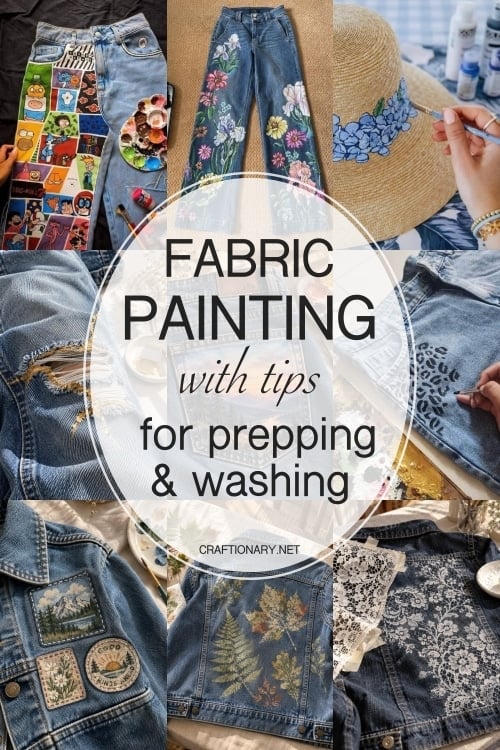
Best Fabric Paints for Denim and Other Fabrics
| Paint type | Best for | Pros | Watch out for? |
| Soft fabric paint (Bluebird, Jacquard Textile Color, DecoArt SoSoft, FolkArt Brush On, Tulip Soft) | Large areas, everyday clothing | Flexible, soft feel, wash-durable once cured | Light colors can look translucent on dark denim; use white underpainting |
| Acrylic paint + textile medium | Custom colors, budget projects | Huge color range, you control the consistency | Follow the medium’s mix ratio; plain acrylic alone gets stiff and cracks |
| Puff / 3D paint (Tulip Puffy, Dimensional) | Raised outlines and faux embroidery | Fun texture | Heat sets differently; follow label directions |
| Metallic and glitter fabric paint | Accents, kintsugi, stars | Shines on dark denim | Thick layers can crack, so thin coats are better |
| Fabric paint pens | Fine lines, lettering | Control, beginner friendly | Press lightly so the nib doesn’t fray |
| Silk or dye-based paints | Silk and very fine fabrics | Beautiful flow | Often need steam setting and don’t suit heavy denim |
| Specialty paints (glow-in-the-dark, UV-reactive, fluorescent, thermochromic)
|
Novelty effects
|
Eye-catching
|
Check that the product is labeled for fabric
|
Can you use regular acrylic paint on fabric?
Yes, but only mixed with textile medium. Mixing ratios vary by brand, so follow the bottle. Straight acrylic on fabric dries stiff and tends to crack with movement.
Tip: On dark denim, paint a thin white or light base layer first, let it dry, then add color on top. Colors stay much more true this way.
How to Prep Fabric Before Painting?
- Pre-wash without fabric softener. Softener and factory sizing can stop paint from bonding. Dry fully.
- Iron smooth. Wrinkles create uneven paint lines.
- Insert cardboard inside the garment (inside pant legs, jacket sleeves, or bag).
- Tape down any area you’re working on so the fabric doesn’t shift.
- Test your paint on a scrap or hidden seam first.
How to Keep Fabric Paint From Washing Off (Heat Setting and Care)?
This is the step most guides rush, and it’s why many painted projects fade or flake.
- Dry completely: Let the paint dry fully, typically several hours or overnight. Thick areas need longer.
- Heat set: Place a pressing cloth over the painted area and iron on the reverse side where possible, using the heat level the paint label recommends for the fabric. Keep the iron moving and don’t use steam unless the label says to. Many brands suggest a few minutes, but always follow your paint’s directions, since products differ. Without an iron, a dryer cycle or hair dryer may work for some paints, but check the label.
- Cure: Many brands recommend waiting about 3 to 7 days before the first wash, and some say 72 hours. Check the bottle.
- Wash gently:
- Turn the garment inside out
- Use cold water and a gentle cycle (or hand wash)
- Skip bleach and harsh detergents
- Air dry or low heat
- Don’t iron directly over paint after setting; flip the garment or use a cloth
Painted denim needs far less washing than regular jeans anyway. Spot clean when you can.
Painting on Denim: What You Need to Know
Prep your denim and supplies first—a little setup prevents stiff, patchy paint and makes painting much easier.
Pick your Paint:
Fabric paint is easiest and stays flexible on denim. You can also mix acrylic paint with fabric medium for a softer finish, while fabric markers work best for outlines, fine details, and lettering.
Think About Your Denim:
Light and medium washes show most colors well, but dark denim needs light or opaque paint. Use thin coats on stretchy denim, so it moves without cracking.
Keep these supplies handy:
- Fabric Paint or Acrylic paint with fabric medium
- Paintbrushes
- Fabric Pencil or Chalk
- Palette or small mixing tray
- Cardboard
- Fabric markers
- Tracing paper, Stencils, or Masking tape for certain designs
How to Prep and Paint Denim for the Best Results?
- Wash first: Avoid fabric softener so paint adheres.
- Block bleed: Put cardboard inside.
- Sketch: Outline lightly with chalk or a fabric marker.
- Paint thin: Apply light coats so fabric doesn’t stiffen or crack.
- Layer and Detail: Let layers dry before detailing with a fine brush or marker.
- Heat-set: Cure completely before washing
How to Keep Painted Denim Fresh After Washing?
When it’s time for a wash, keep these simple tips in mind:
- Turn inside out: Protects the paint from friction during the wash.
- Use cold water: Wash on a gentle cycle with mild detergent.
- Skip the dryer: Air-dry on a rack or line; high heat causes cracking and peeling.
- Iron with care: Iron inside out or cover the design with parchment paper—never let hot metal touch the paint directly.
Always check the care instructions for your particular paint, since some products have specific washing and heat-setting requirements.
30 Denim Painting Ideas
Painting denim is a fun way to give old clothes a new life and add a personal touch to your wardrobe. You can keep it simple with a small design on a pocket or go all out with a bold painting across an entire garment.
Denim Bottoms Painting Ideas
Jeans are one of the easiest denim pieces to customize. Once you’ve tried a few designs, you can branch out to jackets, shorts, skirts, bags, and other denim accessories.
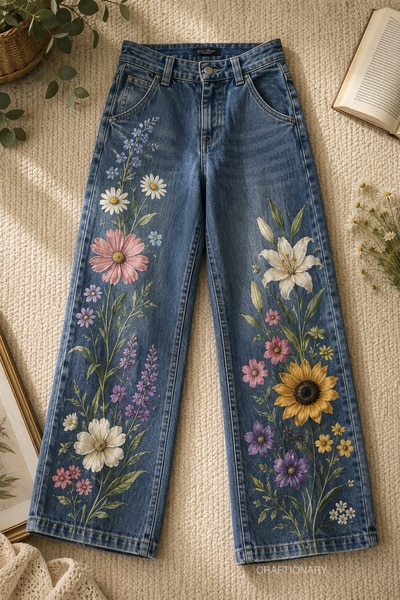
1. Floral Painted Jeans
Give an old pair of jeans a fresh, cheerful look with hand-painted flowers. You can paint around the pockets, scatter blooms down one leg, or add leafy vines for a relaxed, bohemian feel.

Materials:
- Jeans
- Fabric paints
- Small paintbrushes
- Fabric chalk
Instructions:
- Lightly sketch the flowers and leaves with fabric chalk.
- Paint the larger shapes first and let them dry.
- Add petals, leaves, and smaller details with a fine brush.
- Let the paint cure completely before wearing or washing.
2. Celestial Thigh Trail Style
Draw a chalk line down the thigh and paint black planets and stars using a fine brush.

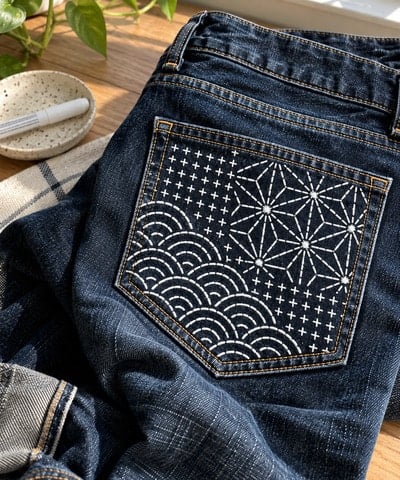
3. Painted Sashiko Stitches
Sashiko is a Japanese stitching tradition. Skip the needlework: pencil a sashiko pattern like waves, hemp leaf, or crossed lines, then paint short dashed “stitches” with a white fabric paint pen. It looks like hand-stitched mending in a fraction of the time. Works well on the knee or back pocket.
4. Sponge Ombré Hem
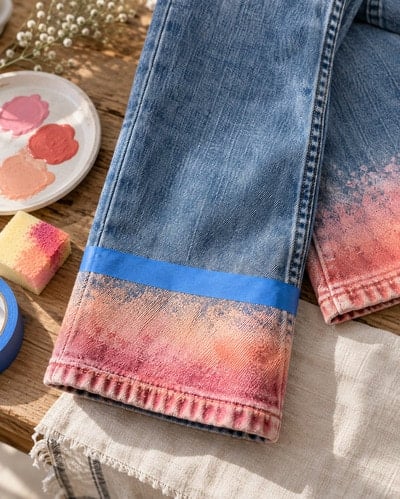
Tape a straight line near the bottom of the jean leg. Dab two or three similar paint colors onto a sponge and press from the hem upward, blending into the denim so it fades out. Dab, don’t swipe. It’s a gorgeous way to turn plain jeans into “designer” ones.
5. Pop Art Swirl Star Motifs
Outline star shapes down the leg with chalk, fill with yellow paint, and layer white spiral details inside.

6. Abstract Geometric Denim Skirt
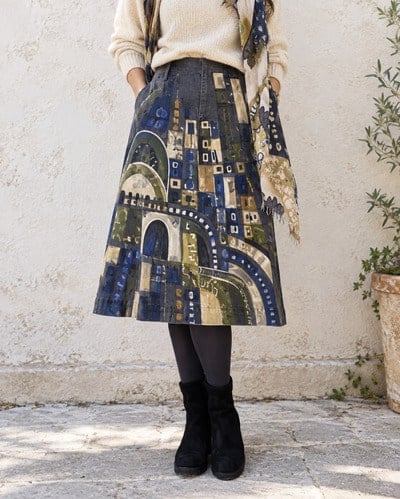
Paint vibrant blue streaks, yellow squares, and geometric shapes onto a grey denim skirt to give it a bold, modern art look.
7. Back-Pocket Mini Landscapes
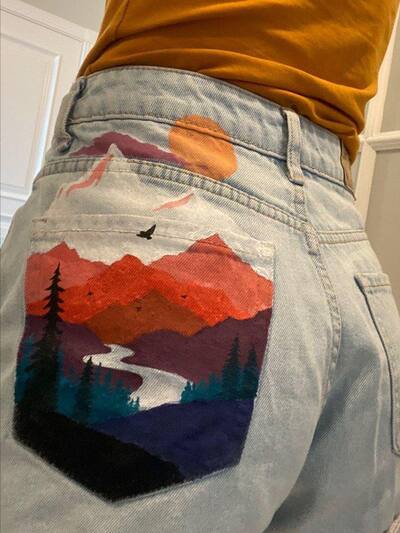
Treat the pocket like a tiny canvas: a sunset over mountains, a cottage in the woods, a desert at dusk. Layer white first for color pop, then build the scene from background to foreground.
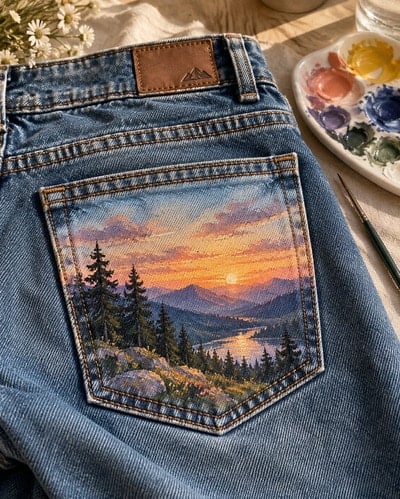

Lilies on a Pond Pocket by Liliya cosmos art
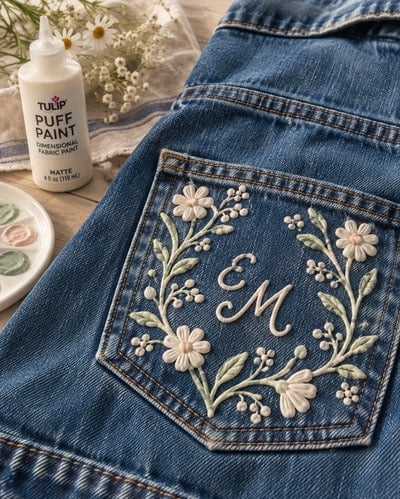
8. Puff-Paint Faux Embroidery
Outline flowers, initials, or a monogram with puff paint. It rises into a raised, stitch-like line that looks like embroidery without thread. Let it dry flat and don’t touch it while wet.
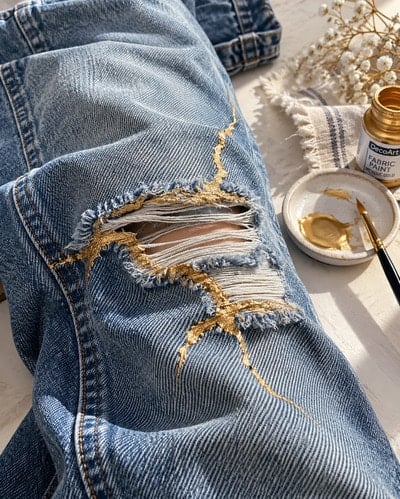
9. Gold Kintsugi Rips
Kintsugi is the Japanese art of repairing broken pottery with gold. On jeans with distressed rips or worn spots, trace along the frayed edges with metallic gold fabric paint, using a fine brush. It makes damage look intentional. Apply thin coats and let them dry between layers to avoid cracking.
10. Freehand Leopard Spot Accent
Dip a small, round brush into black fabric paint and dab freehand, irregular “C” and dot shapes onto the denim to create a quick animal print pattern.

11. Comic Book Art Jeans
Painting an old pair of jeans with memories.
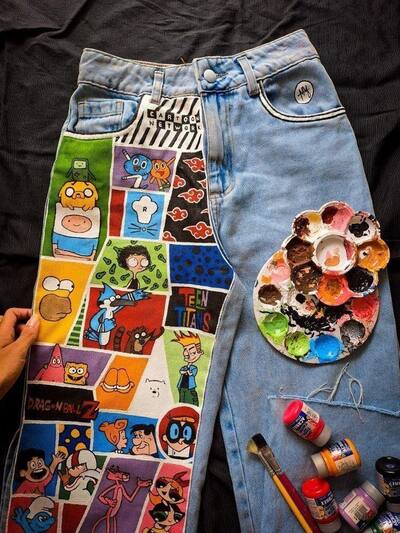

Nostalgic 80s!
Painted Denim Jackets
Jackets give you way more room to mess around with, whether you want a big back panel piece or just a few small details.
12. Snowy River Back Panel
Tape off the middle panel, blend a soft sky, and paint a calm river cutting through snowy pines.

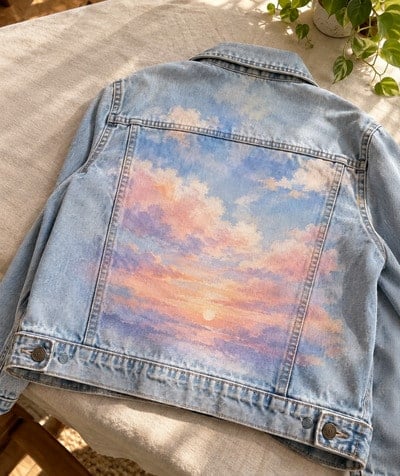
13. Wet-on-Wet Watercolor Sky
On light-wash denim, lightly dampen an area with water, then add diluted paint mixed with textile medium so colors blend like watercolor. Great for clouds, sunsets, or abstract washes. Practice on scrap denim first, since denim absorbs differently than cotton.
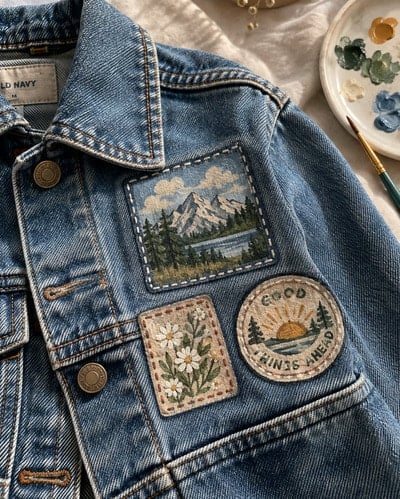
14. Trompe-l’œil Painted Patches
Paint “patches” that look sewn on: a square with a stitched border drawn in thin dashed lines, a faux floral, a badge. Shade the edges slightly darker to fake dimension. Looks like a patch with none of the sewing.
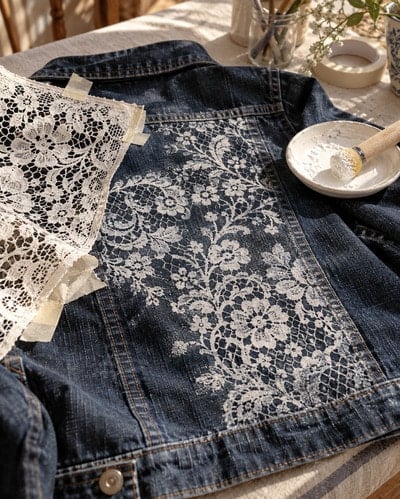
15. Lace Stencil Pattern
Lay a piece of lace flat on denim, tape the edges, and sponge paint over it. Lift to reveal delicate, intricate patterns you could never draw by hand. Works beautifully with white or metallic paint on dark denim.
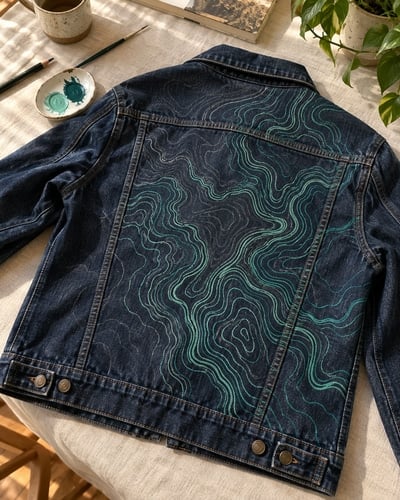
16. Topographic Map Contour Lines
Draw flowing, nested contour lines in pencil across the back of a jacket, like the terrain of your favorite hiking trail. Paint them with a liner brush in two tones of one color. Visually striking and very different from typical designs.
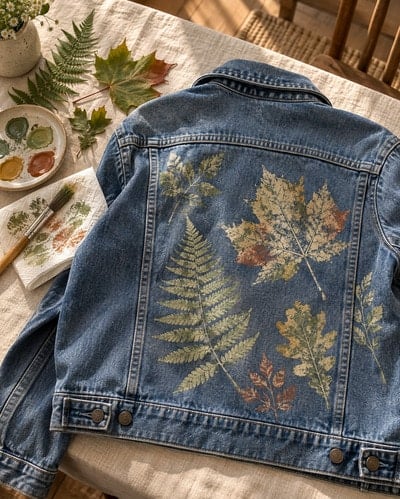
17. Real Leaf Print Stamping
Pick a fresh leaf with strong veins (maple, fern, or oak). Brush paint on the vein side, press it onto the denim through a paper towel, and lift. You get natural, detailed patterns no one can copy exactly. Great for jackets and tote bags.
Painted Denim Accessories
Customize your accessories with hand-painted artwork—paint a bold design on a tote bag, or keep it subtle with a small touch on sneakers and hats.
18. Floral Denim P-Cap
Paint large white daisies with yellow centers across the crown and brim of a denim cap for a fresh, rustic look.

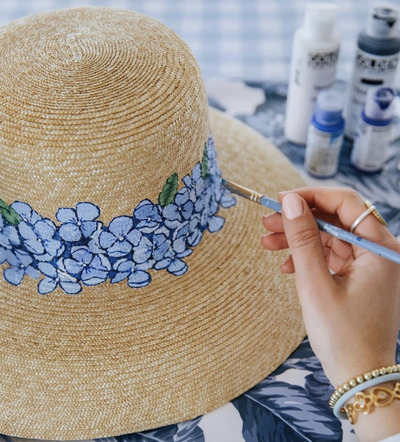
19. Hand Painted Summer Hat
Elevate gift-giving by painting kraft bags with colorful patterns, names, or party themes for a personal touch.
Hope Before Sunrise
20. Travel Game Pouches
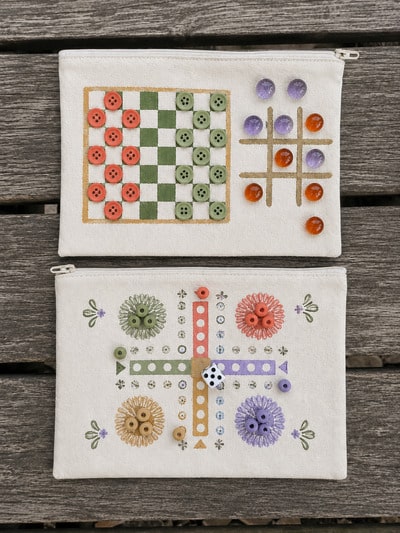
Hand painted travel board game pouches with gemstones and buttons.
Painting on Other Fabrics
| Fabric | What to know |
| Cotton / T-shirts | Easiest surface. Soft fabric paint works great. Put cardboard inside. |
| Canvas (tote bags, shoes) | Thick weave takes paint well. Perfect for beginners. |
| Linen | Takes paint beautifully but can wrinkle; iron before painting. |
| Silk | Use silk paints and follow steam-setting directions. Gutta resist helps keep colors from bleeding. |
| Polyester and synthetics | Harder; paint may not bond well. Look for paint labeled for synthetics and test first. |
| Leather / faux leather
|
Different category; use leather paints, not standard fabric paint.
|
Common Fabric Painting Mistakes (and Fixes)
- Paint cracking: Too thick or not enough textile medium. Use thin layers.
- Colors look dull on dark denim: Add a white base layer first.
- Paint bleeding: Too much water or paint. Use less and work on stable fabric.
- Stiff feel: Soft fabric paints or diluted layers stay more flexible.
- Fading after washing: Skipped heat setting or washed too soon.
- Rough lines: Go with the grain. Pull your brush along the fabric weave for smoother lines.
- Fix slip-ups fast: Keep damp Q-tips nearby to wipe wet paint off instantly.
Frequently Asked Questions:
- What paint is best for denim??
- Soft fabric paints are the easiest choice for jeans and jackets. Acrylic mixed with textile medium also works well and gives more color options.
- Do you have to heat set fabric paint?
- Most fabric paints need heat setting for washability, but always check the brand’s instructions, since some are air-cure only.
- How long should fabric paint dry before washing??
- Check the label. Many brands suggest several days of curing before the first wash.
- Will painted jeans stay soft??
- Thin layers of soft fabric paint stay flexible. Heavy, thick coats feel stiffer.
- Can I wash painted denim in the machine?
- Usually, yes, after curing. Turn inside out, use cold water and a gentle cycle, and air dry.
- What’s the difference between fabric paint and acrylic paint??
- Fabric paint is formulated to stay flexible and bond with fibers. Acrylic is not, unless mixed with textile medium.
You don’t need advanced art skills to make denim that looks like a boutique piece. Pick one idea, test it on a scrap, and take the time to heat set. That patience is what makes the difference between a project that lasts years and one that flakes off in a month.
If you try any of these, share a photo and tell us which one you picked.
Happy Painting!
Written by: Hani Shabbir
Drafted by: Sabah Waqas
You will also like:
100 Things You Can Paint On – Creative Surfaces for Art Lovers