This post may contain affiliate links. Please see our full Disclosure Policy for details.
Let me ask you something. How many decks of cards do you have sitting in a drawer right now? The missing seven of clubs. The bent box. The one you bought for a road trip five years ago.
Most people see something disposable. I started seeing it as something that could turn into real art—and sometimes, something people are willing to pay for.
Here’s the thing. We’ve all handled cards a thousand times—the shuffle, the deal, the snap. But have you ever actually looked at them? The symmetry of the backs. The tiny details in the court cards. The way the Ace of Spades always gets special treatment.
These small pieces of cardboard have been around for centuries. Hand-painted for royalty. Collected, traded, and preserved over time. And now? People pay hundreds for decks they never even shuffle—they just want to own and display them.
Today, brands like Theory11 and Art of Play have taken things further—turning playing cards into carefully designed objects that people collect, display, and sometimes never even open.
So that beat-up deck sitting in your drawer? It’s not necessarily trash. It might just be a canvas.
This guide covers how to tell which decks are worth keeping as they are, which ones you can paint over, how to seal them properly so the artwork lasts, and a set of ideas to help you get started.
The Anatomy of Art: Breaking Down the Deck
- The Face Cards (Courts) — Kings, Queens, Jacks. Most detailed cards. Balance tradition with your own theme.
- The Ace of Spades — The signature card. Make yours stand out.
- The Pips and Indices — Number cards and corner symbols. Keep them readable or nobody will buy your deck.
- The Back Design — Usually symmetrical for gameplay. One-way backs are popular with cardists.
- The Tuck Box — Don’t ignore it. Collectors notice embossing, foil, and custom seals.
A Quick History
Here’s something most people don’t know. Playing cards weren’t invented for poker night.
They showed up in Europe around the 1300s, probably coming through Venice from the Middle East. But the earliest complete deck we still have today wasn’t mass-produced. It was painted by hand. One card at a time.
It’s called the Cloisters Playing Cards — or the Flemish Hunting Deck. Some artists in the Southern Netherlands sat down around 1470 and painted 52 cards on a pasteboard. Not just simple shapes either. Gold and silver highlights. The same technique is used for illuminated manuscripts. Basically, church-level art on playing cards.
Who bought these? Rich people. Nobles and merchants who wanted to impress each other. They weren’t playing Go Fish with them. They were collecting them.
In 1983, that deck went to auction at Sotheby’s in London. Sold for £90,000 — around $143,000 back then. The Met Museum in New York bought it. You can still see it today at The Cloisters.
So why am I telling you this? Because the whole reason that deck is worth anything — the whole reason it survived 500 years — is that someone treated playing cards like art, not trash.
The same principle applies to whatever you’re about to paint.
Before You Paint: Is This Deck Worth Something?
Not every deck should be painted over. Some are worth more as they are.
Do NOT paint over decks that are:
- Sealed and vintage (pre-1970s)
- Limited edition runs (under 1,000 decks)
- Signed by the designer
- First editions or printing errors
- Decks with foil, gilded edges, or embossed boxes
What makes a deck valuable to collectors?
(Source: 52 Plus Joker / The World of Playing Cards)
- Rarity — Under 1,000 printed is good. Under 100 is a jackpot. (Collector community standard via 52 Plus Joker)
- Condition — Sealed sells for 2-5x opened. Grading terms include As Issued, Mint, Excellent, and Good (Hochman Encyclopedia)
- Designer reputation — Names like Lorenzo Gaggiotti, Alex Chin, and Jackson Robinson sell decks on name alone.
Quick check: Search your deck on eBay completed listings (filter by sold items) . If sealed copies sell for $50+, don’t paint it. If they sell for $5-15, go ahead.
What cards you SHOULD paint over:
- Standard Bicycle, Bee, or Tally-Ho decks
- Decks missing cards or with damaged boxes
- Mass-produced decks with no collector value
Why Painted Decks Have Real Value?
- First, scarcity. When you paint a deck by hand, there’s only one. Collectors pay for one of one.
- Second, the artist’s reputation. If you build a name on social media or in collector communities, your work gains value. An unknown artist might sell a deck for $50. A known name could sell for $500.
- The trading card market was valued at $7.8 billion in 2025, with the physical card segment making up the majority of that figure (Research and Markets, 2025). The market is projected to reach $16.9 billion by 2035. Hand-painted decks fit perfectly into this.
How to Paint on Playing Cards (And Make It Last)?
Materials you need:
- Acrylic paint (Golden or Liquitex)
- Fine-tip paint brushes (sizes 0, 00, 1) or beginners fine detail paint brushes
- Matte medium or gesso (for priming)
- Acrylic sealer, Kryton Matte Spray, or Gloss Varnish (you may choose matte finish)
- Fine sandpaper (800-1000 grit)
Step by Step Painting on Cards:
- Prep: Lightly sand each card to remove the glossy factory coating. Wipe off dust. Skip this and the paint will peel.
- Prime: Apply a thin layer of matte medium or gesso. Let dry for 30 minutes.
- Paint: Sketch lightly with a soft pencil. Paint in layers — background, mid-tones, details. Acrylic dries fast, so work in small sections.
- Cure: Let the paint sit 24-72 hours before sealing. Do not rush this step.
- Seal: Use spray sealer for smooth finish or apply varnish with a brush. Spray: Lay cards flat, tape corners, and hold the can 8-12 inches away. Apply 3-4 light coats. Wait 2-3 minutes between coats. Dry 24 hours.
- What NOT to use: Hairspray, nail polish, or Mod Podge. They get sticky, crack, or yellow over time.
- Test your sealed deck: Shuffle one card 50 times with others. If paint doesn’t crack or peel, you’re good.
Related: Best Sealer: How to Waterproof Acrylic Paint
Hand Painted Playing Card Art
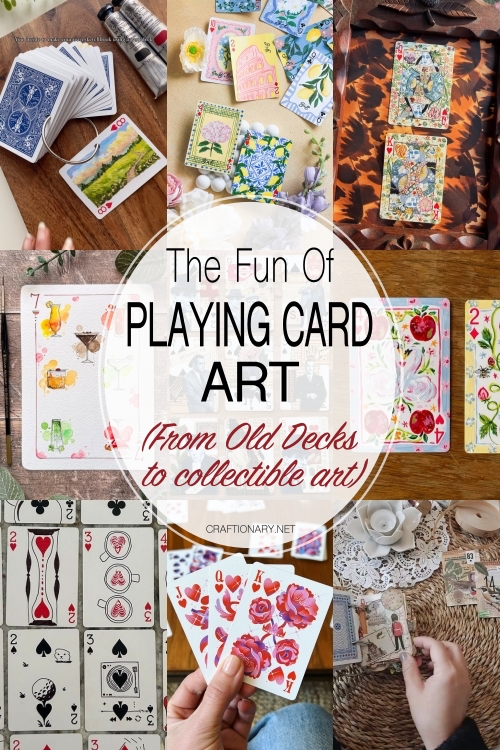
These ideas focus on turning playing cards into collectible art—either through painting or altered art techniques.
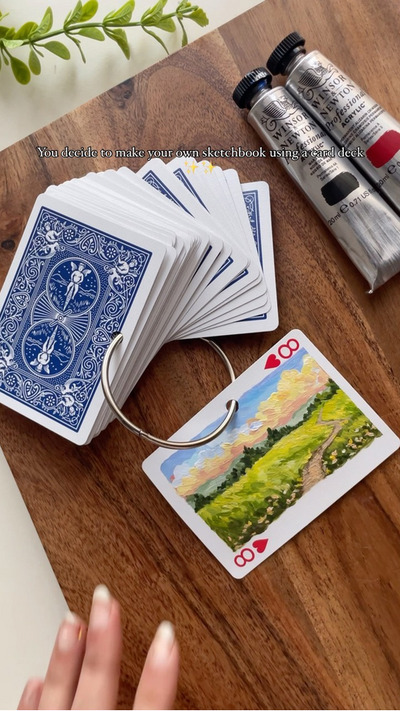
1. Card Deck Sketchbook
Make a collection of art on ring with playing cards.
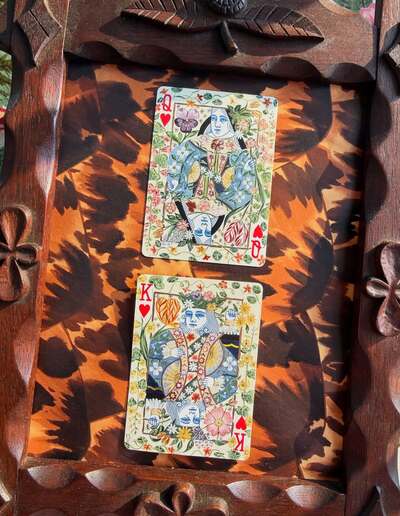
2. Spring Bloom King and Queen Art
Soft base with bright florals layered across the card, creating strong contrast and depth.
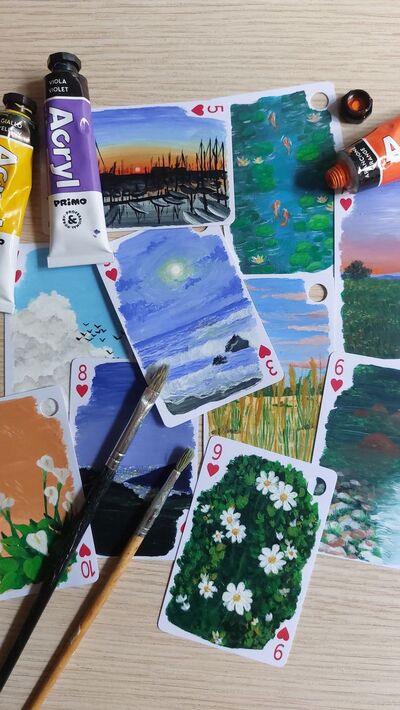
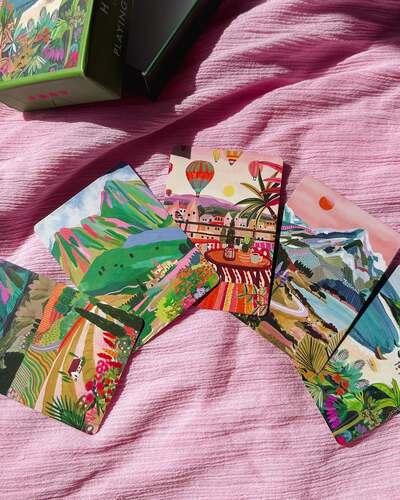
3. Hand Painted Landscape Playing Cards
Mini landscapes painted directly onto cards, turning each one into a small scenic artwork.
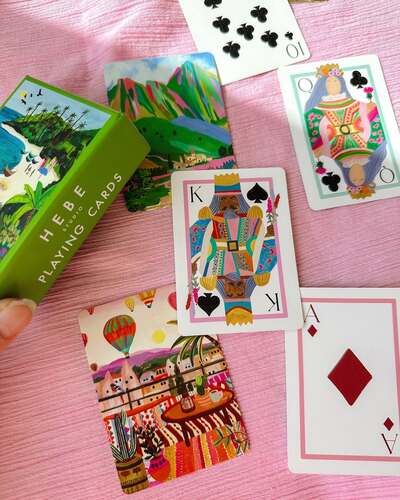
4. Illustrated Travel Scene Playing Cards
Each card captures a place or setting, giving the deck a journey-like visual flow.
5. Western Art Playing Cards
Rustic tones and western imagery create a strong, story-driven deck identity.
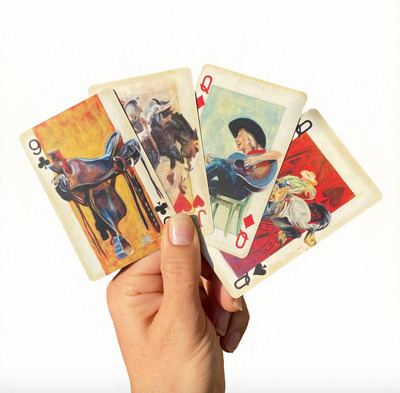
Shop: Andrea Murphy Fine Arts
6. Pack of Dogs Playing Cards Deck
Each court card replaced with a different dog breed. Playful but readable.
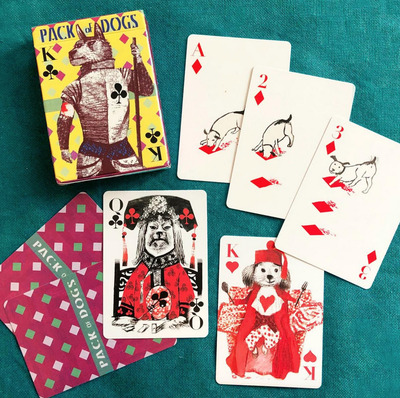
Shop: Artiphany
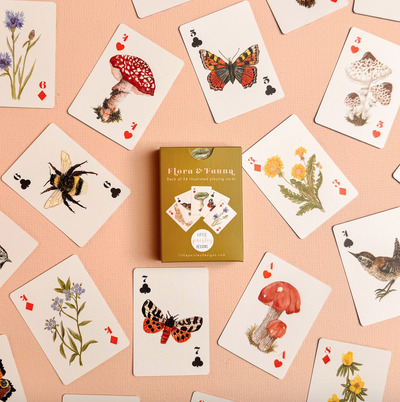
7. Flora and Fauna Playing Card Deck
Plants and animals combined into a cohesive, nature-inspired series.
Shop: Little Paisley Designs
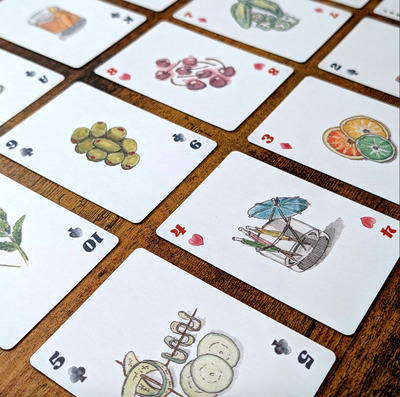
8. Hand-Painted Cocktail Playing Card Deck
Tiny art collection illustrations of classic cocktails and drink garnishes making the deck feel connected without being too heavy or overdone.
Shop: Marshell Baltzell Art
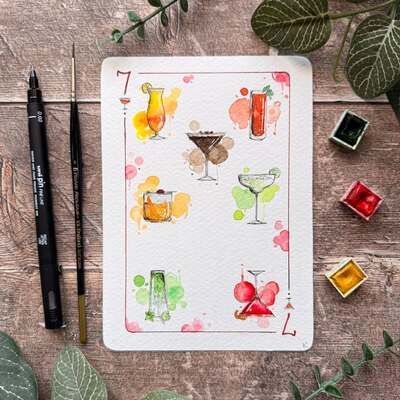
9. Cocktail Themed Playing Card Art
Bright, stylized drink illustrations create a fun, modern themed deck.
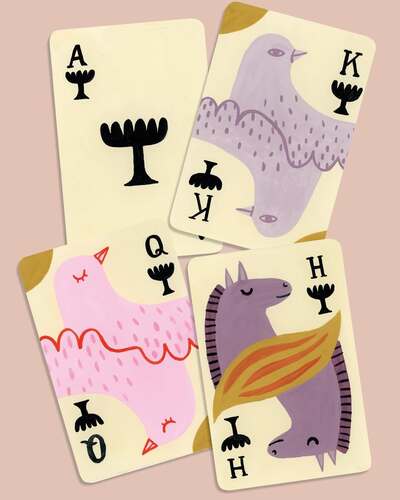
10. Mythical Creature Illustrated Deck
Fantasy-inspired creatures bring a storytelling element across the full deck.
11. Vintage Art Card Deck
Gold foil and nature theme featuring fish, birds, herps, and inverts.
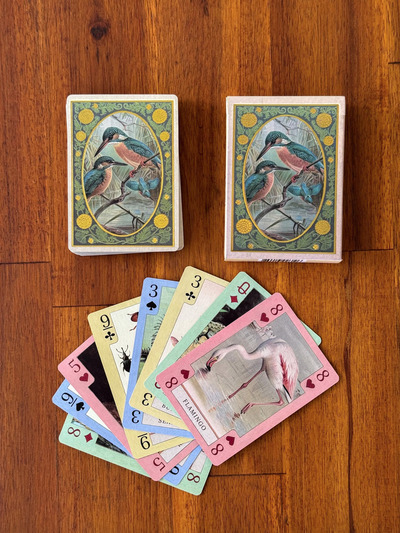
Shop: Montrose Biology
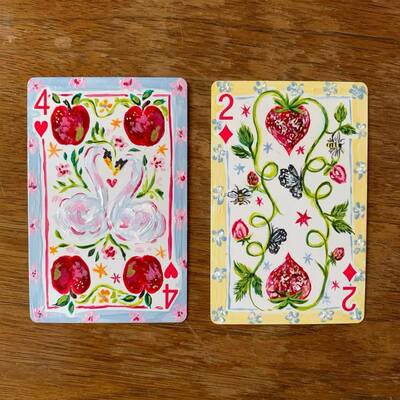
12. Folk Art Playing Card Illustration
Bold patterns and traditional motifs create a decorative, cultural style.
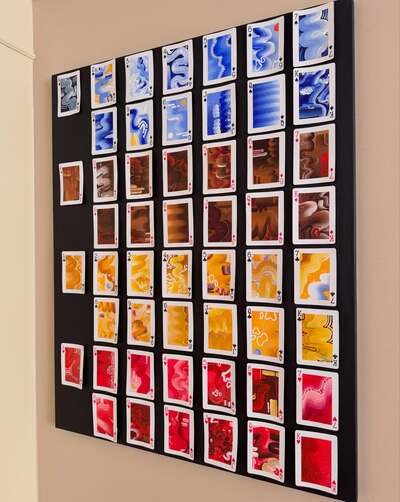
13. Abstract Fluid Art Playing Cards
Flowing paint and organic shapes create unpredictable, modern compositions.
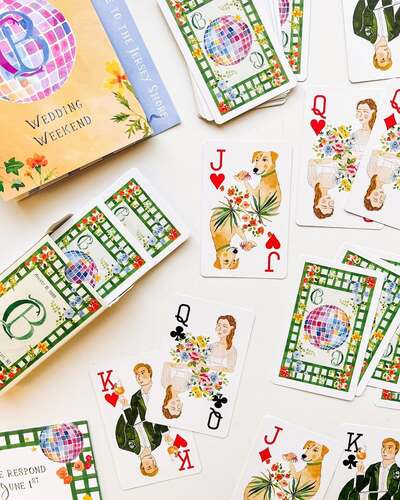
15. Wedding Favor Playing Cards
Bright colors and surreal forms give the deck a bold, contemporary identity that is perfect for custom wedding giveaways.
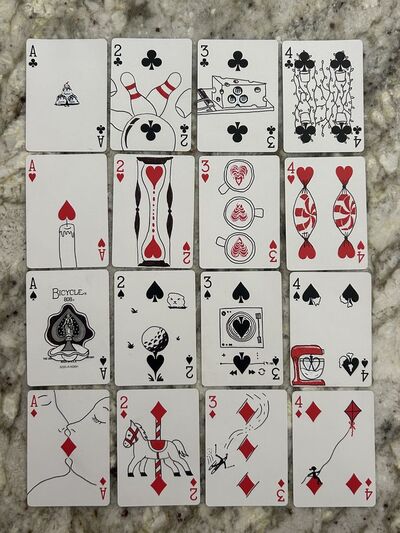
16. Minimal Line Art Playing Card Redesign
Simple line drawings interact with pips to create clean, clever compositions.
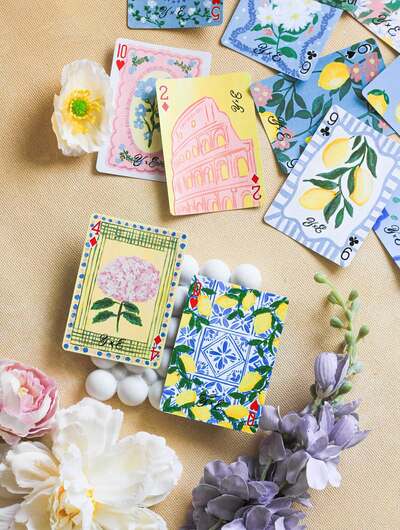
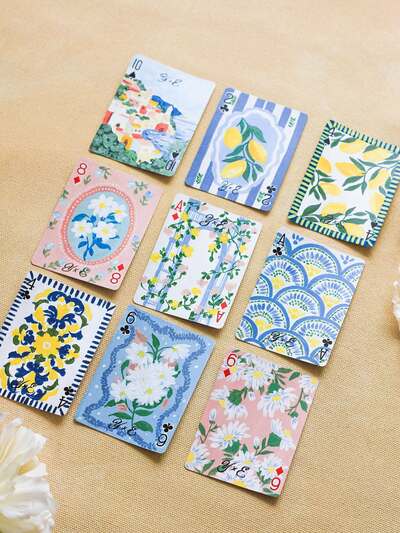
17. Summer Garden Playing Cards
Cards with Italian summer garden vibes and the couple’s initials for wedding invitation. How cute!
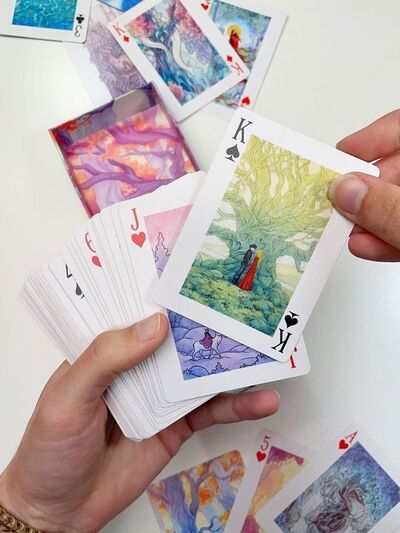
18. Whimsical Fantasy Art Cards
Foxdragon series custom fantasy artwork on every card.
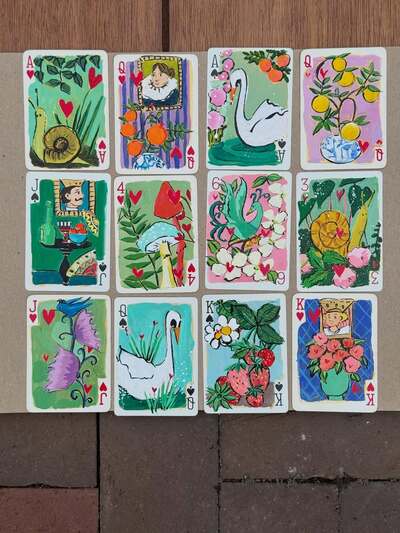
19. Painting on Old Cards
The deck features original painted artwork depicting nature scenes, birds, and decorative botanical patterns.
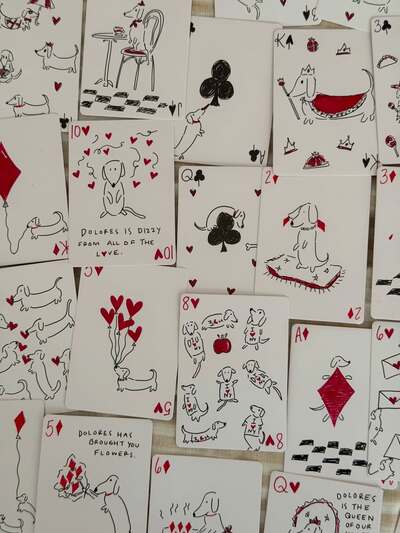
20. Hand-drawn playing card deck
Illustrations of a dachshund named Dolores. The cards are designed as a functional keepsake rather than standard gambling equipment.
21. Birds Playing Deck Cards
Hand painted birds of a feather from elegant sandhill cranes to curious parrots and the ever-charming goose.
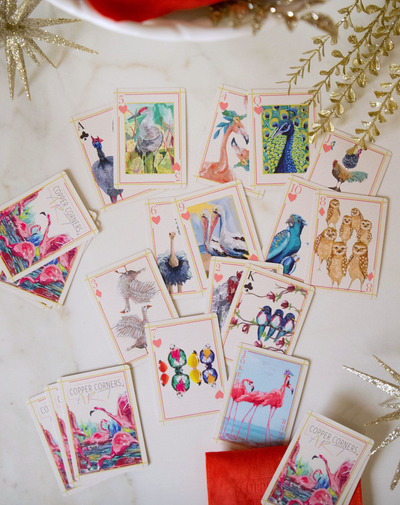
Shop: Copper Corners Art
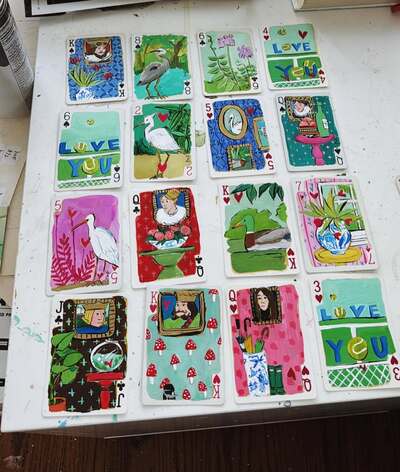
22. Royal Paintings Card Deck
A fun deck of cards with hand-painted illustrations of flora and fauna.
23. At the table playing cards
Hand painted illustrations of experience at the table while playing cards.
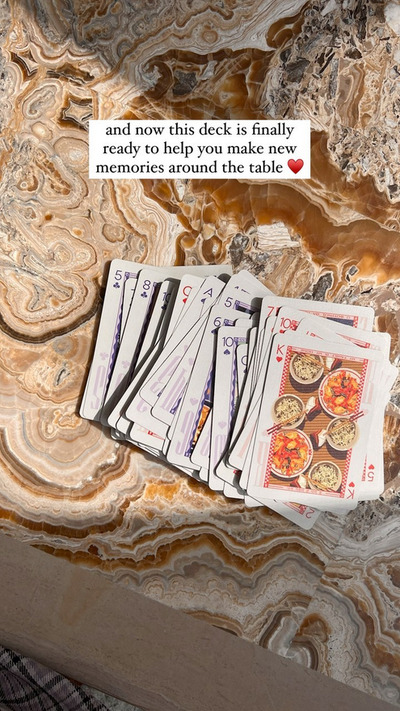
24. Glittering Flowers playing card
The cards prominently feature hand-painted gouache artwork of flowers such as peonies and anemones.
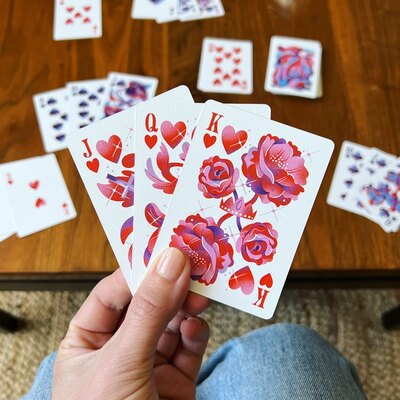
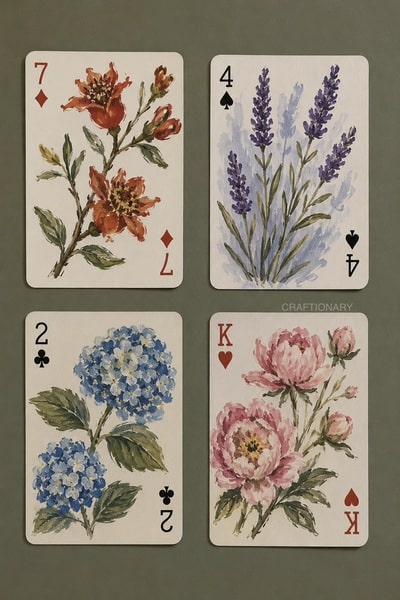
Hand painted traditional flowers inspired by vintage floral magazine.
Altered Playing Card Art
Painting isn’t the only way. These next ideas use collage and layered paper to create depth without a brush.
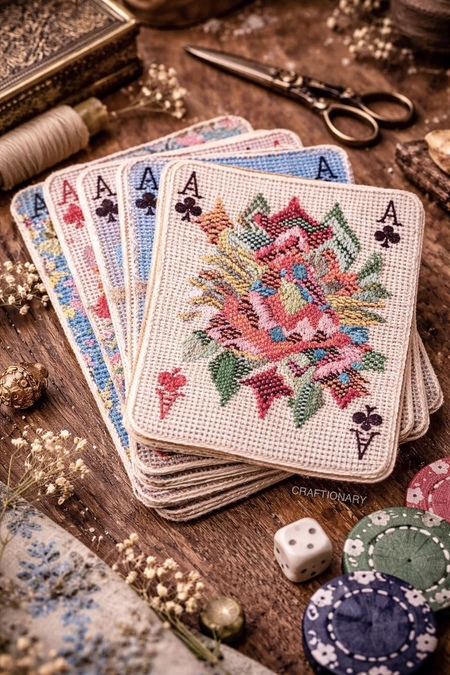
25. Needlepoint Playing Cards
Hand-embroidered playing cards displaying delicate floral cross-stitch patterns in soft pastel tones.
26. Retro Fashion Cards
Layered retro-inspired clothes and vintage flower elements create depth and a focal point.
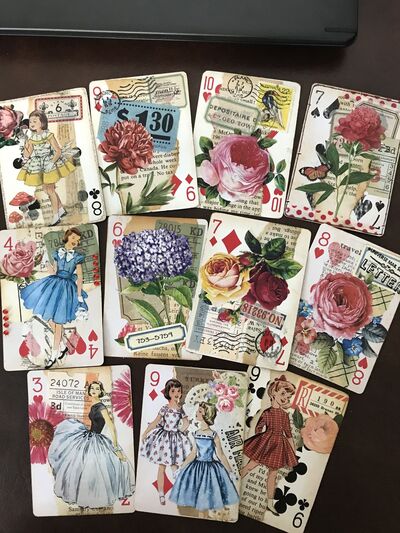
27. Magazine Altered Art Card Deck
Portraits and layered visuals create a strong character-driven collage.
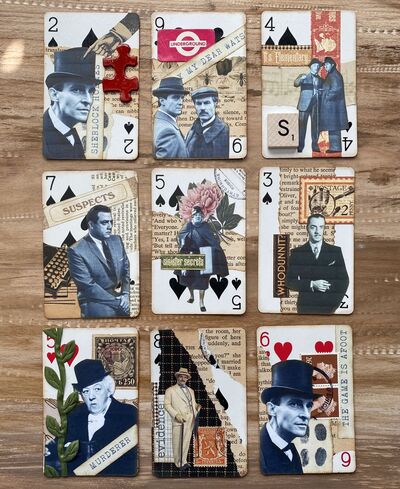
28. Whimsical Storybook Collage Cards
Soft, childlike illustrations layered with paper textures create a nostalgic, storybook-inspired composition on each card.
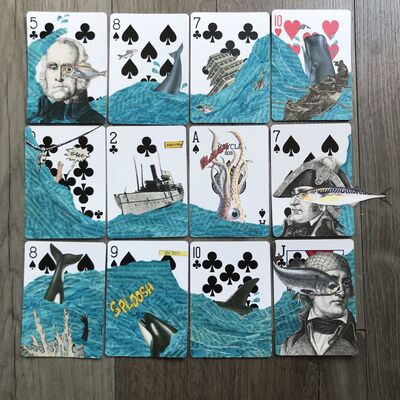
29. Memory-Style Collage Playing Cards
Layered images and textures create a personal, scrapbook-like effect inspired by marine life.
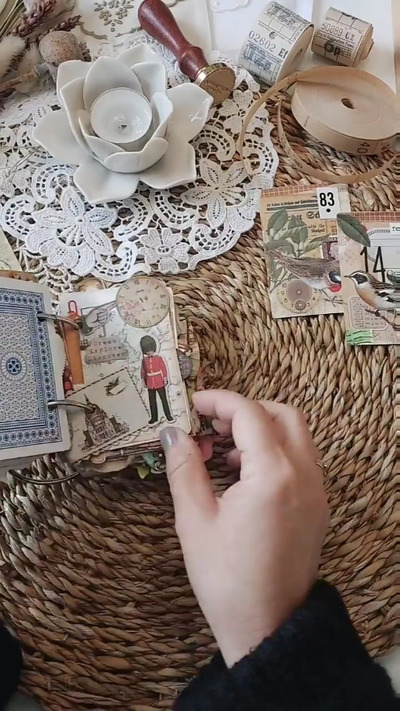
30. Artistic Ephemera Art Cards
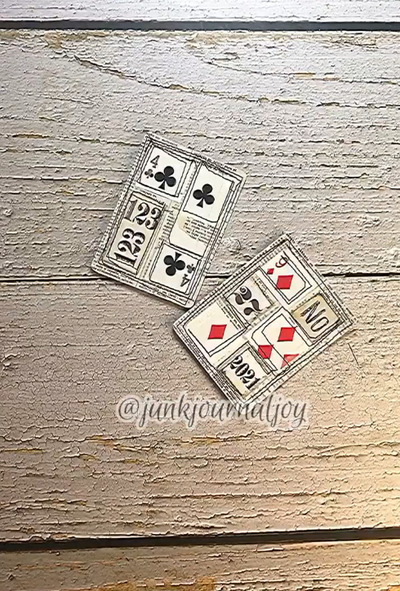
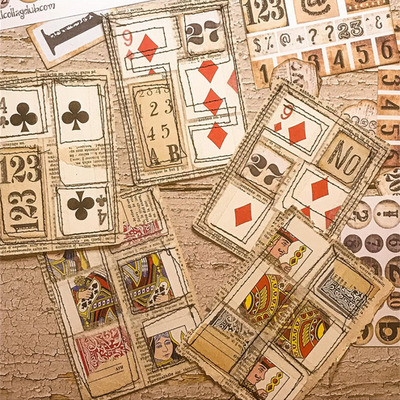
Playing cards designed for scrapbooking and junk journaling.
Preserving Your Work
If you sell painted decks, tell buyers this:
- Store in acrylic display cases (Carat Cases are standard)
- Keep out of direct sunlight
- Avoid humidity above 60%
- Handle with clean, dry hands
- Overhand shuffle only — no riffle shuffling
Common Questions
1. Why are custom playing cards expensive?
Small print runs, detailed artwork, high-end printing techniques. A professionally printed custom deck costs $15-30 to make and sells for $25-75.
2. Can you play games with painted decks?
Yes — if sealed properly and indices are readable. If your art makes cards unreadable, you’ve cut your market in half.
3. Top playing card designers?
Lorenzo Gaggiotti (Stockholm17), Alex Chin (Seasons), Jackson Robinson (Kings Wild Project), Jody Eklund.
Most of us have old decks lying around. Missing cards. Beat-up box. Instead of throwing them away, you’ve got options. A little paint, patience, and proper sealing — that worn deck becomes something someone might pay for.
The artists who succeed take it seriously. Learn history. Respect the technical stuff. Seal properly so it lasts. A poorly sealed deck falls apart in six months. A properly sealed deck could outlive you.
Written by: Hani Shabbir
Drafted by: Sabah Waqas
You will also like:
100 Things You Can Paint On – Creative Surfaces for Art Lovers
Easy Crafts To Do When Bored At Home for Adults
Hand Painted Wood Slices: Easy Flower Painting Mindful Crafting